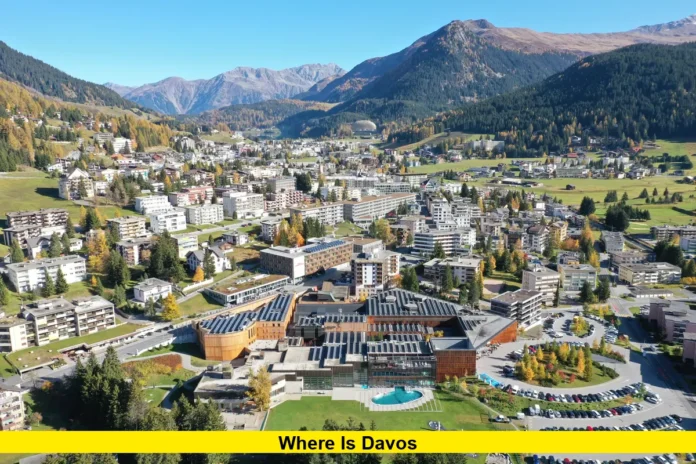

When the world’s most influential leaders gather this year, many Americans are asking a simple question: where is Davos and why does it matter so much? Situated high in the Swiss Alps, Davos is not just a picturesque mountain town. It is the stage for a major global summit that shapes diplomatic agendas, economic strategies, technological priorities, and international cooperation for the year ahead.
This January, Davos is once again in the global spotlight as it hosts the 2026 Annual Meeting of the World Economic Forum, drawing thousands of participants from around the world. Here’s an in-depth look at the location, what’s happening there now, and why it continues to be a focal point in international affairs.
Where Is Davos? A Swiss Mountain Town With Global Relevance
Davos is a well-known town and municipality in eastern Switzerland’s canton of the Grisons (also called Graubünden). Located in a high Alpine valley at approximately 1,560 meters (about 5,100 feet) above sea level, this town is part of the stunning Rhaetian Alps and is surrounded by rugged peaks, deep forests, and ski slopes that draw visitors year-round.
Despite its relatively small resident population, Davos has an international reputation. It is home to a major congress center and a thriving tourism industry. In normal years, it is known for winter sports, natural beauty, and cultural events. But each January, the world’s attention shifts here because Davos becomes the gathering place for political leaders, CEOs, thinkers, innovators, and civil society representatives from across the globe.
Davos and the World Economic Forum: A Partnership That Defines an Era
The Annual Meeting held in Davos has been the signature event of the World Economic Forum since the early 1970s. This meeting takes place over multiple days in January and brings together a cross-section of the world’s most influential voices to confront shared challenges. In 2026, the gathering runs from January 19 through January 23.
Known for its theme this year — “A Spirit of Dialogue” — the forum focuses on fostering cooperation in a world where political tensions, economic transformation, technological disruption, and social change are all intensifying. The goal of these sessions is to create space for conversations that lead to cooperative strategies among nations and industries.
Who’s Attending Davos 2026? A Record-Breaking Global Turnout
Davos 2026 is attracting a record number of participants. The summit brings together roughly 3,000 leaders from more than 130 countries, including government officials, top executives, civil society representatives, and thought leaders. This year also marks the largest U.S. delegation ever to attend.
The American contingent includes the U.S. President, multiple cabinet secretaries, senior advisers, and key diplomatic figures. Other world leaders, including heads of state and government from Europe, Asia, Africa, and the Middle East, are present to discuss pressing global issues. Corporate leaders from major firms in technology, finance, energy, and other sectors have also traveled to Davos to participate in panels and meetings.
These high-level gatherings underscore why the summit is more than symbolic: it serves as a platform for networking, policy discussion, and strategic alignment among power centers that influence global direction each year.
Current Highlights From Davos 2026: What’s Being Discussed and Debated
At Davos this year, the agenda reflects some of the most urgent global questions facing leaders today:
Global Economic Policy and Cooperation
World leaders and finance chiefs are discussing economic coordination at a time when geopolitical tensions have reshaped trade and investment flows. Economic resilience in the face of inflation, market disruption, and shifting alliances is a central topic.
Geopolitical Tensions and Strategic Competition
Debates in Davos this month reflect the current geopolitical climate. Discussions include economic policy disputes among allies, regional security issues, and broader questions about global order and cooperation.
Invitation and Absences
While the summit attracts a broad range of participants, not all invited officials are attending this year. For example, certain foreign ministers have withdrawn their participation due to political and humanitarian concerns unfolding elsewhere.
Technology, Innovation, and Future Industries
Panels on artificial intelligence, digital infrastructure, and innovation are drawing particular attention. Leaders from major tech companies are presenting insights on how emerging technologies can boost productivity, enhance competitiveness, and shape the future workforce.
Security and Logistics
With so many high-profile figures on site, security measures in Davos are extensive. Thousands of personnel, advanced monitoring technologies, and coordination among international security agencies are in place to safeguard participants.
The Setting: How Davos Welcomes the World
The choice of a Swiss Alpine town for this global summit is not accidental. Davos’s remoteness and breathtaking surroundings foster an environment that blends serious discussion with a sense of focus and retreat from everyday political noise.
Delegates typically arrive via major international airports and then travel by ground transportation into the valley. Many of the world’s elite choose private flights to reach the region quickly, reflecting the high level of influence and urgency among participants.
While the congress center in Davos is where formal sessions occur, much of the networking takes place informally in hotels, restaurants, and lounges across town, creating a dynamic backdrop that combines business with the charm of Alpine life.
The Legacy and Evolution of Davos as a Global Forum Hub
Davos has evolved dramatically over time. Once known primarily as a health retreat and then a winter sports destination, the town’s global profile soared with the arrival of the World Economic Forum’s annual meeting. Over the decades, the Davos summit has become synonymous with international dialogue on economic growth, sustainable development, and public-private collaboration.
Today, Davos symbolizes a meeting point where diverse perspectives — from heads of states to nonprofit leaders — are brought into conversation on the world stage.
Why Americans Should Care About Davos in 2026
The conversations happening in Davos have real implications for the U.S. and its citizens. Discussions on trade, technology policy, climate resilience, and international cooperation often inform strategic decisions that affect domestic industries, national security, and global economic trends.
The presence of the largest U.S. delegation ever underscores Washington’s commitment to engaging in these global dialogues. What is debated and agreed upon in this Alpine town can ripple into policymaking, investment strategies, and diplomatic initiatives throughout the year.
What Comes Next After Davos
As the 2026 sessions conclude this week, world leaders will return to their capitals and boardrooms with new insights, potential partnerships, and policy options shaped by the forum’s dialogues. Davos doesn’t legislate or enforce decisions, but it provides a unique moment for alignment, reflection, and priority-setting across sectors.
Because the summit takes place in a remote Alpine town, the impact of what is discussed often extends far beyond the mountains into boardrooms, capitals, and communities around the world.
Let us know what topics you think world leaders should tackle next at Davos or follow along for continuing developments from Switzerland and beyond.