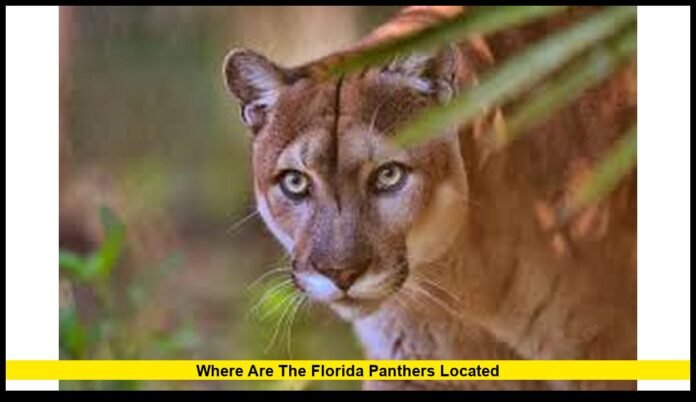

Many people still wonder where are the Florida panthers located today. These rare and secretive big cats live deep in the wildlands of South Florida, where forests, swamps, and wetlands give them room to roam. As of 2026, their main home lies in Collier, Lee, Hendry, and Miami-Dade counties, with the largest numbers found in the Big Cypress National Preserve, Florida Panther National Wildlife Refuge, and Everglades National Park.
Once spread across the entire southeastern United States, Florida panthers now survive only in a small corner of their historic territory. Yet, against all odds, these iconic animals have made an impressive comeback thanks to decades of conservation work.
Where Florida Panthers Live Now
Florida panthers prefer large, undisturbed areas rich in vegetation and prey. In 2026, their confirmed range covers parts of Southwest Florida, where several key preserves protect both the cats and their food sources.
Here’s where they are most often found:
- Big Cypress National Preserve (Collier County):
Spanning more than 720,000 acres, this vast wilderness is a major stronghold for Florida panthers. The preserve’s mix of cypress swamps, prairies, and pinelands provides the perfect combination of cover and hunting ground. - Florida Panther National Wildlife Refuge:
Located east of Naples, this 26,000-acre refuge was created specifically to protect panther habitat. It is home to breeding females and young kittens, making it essential to the population’s survival. - Fakahatchee Strand Preserve State Park:
Known for its dense vegetation and tropical wetlands, this 85,000-acre area supports both panthers and other rare wildlife like black bears and ghost orchids. - Everglades National Park:
Although fewer panthers live here, the park’s western boundaries occasionally host solitary males searching for new territory.
While a few males have been tracked north of the Caloosahatchee River, females remain south of it. This river marks a natural boundary for their core breeding population. So far, there are no verified signs of breeding north of the river, but some scientists are optimistic that could change in the next decade.
Population Status in 2026
The Florida Fish and Wildlife Conservation Commission (FWC) estimates that between 120 and 230 Florida panthers now live in the wild. This number has stayed relatively stable over the last few years.
These panthers represent the only breeding population of cougars east of the Mississippi River. Biologists closely monitor them using GPS collars, trail cameras, and genetic testing to track their movement, health, and survival rates.
Each collared panther provides valuable data about migration patterns and territory use. Adult males can claim up to 200 square miles of range, while females usually stay within 75 square miles near their birth areas.
Even with this progress, the population remains vulnerable due to its limited range and genetic diversity.
The Caloosahatchee River: A Barrier and a Bridge
The Caloosahatchee River, stretching from Lake Okeechobee to the Gulf of Mexico, plays a central role in panther recovery. It divides the main population in South Florida from potential expansion into Central Florida.
Male panthers have occasionally crossed the river, but females have not. Wildlife agencies are working to make safe crossings more common through habitat restoration and wildlife underpasses.
Projects along U.S. 41 and Interstate 75 (Alligator Alley) have already proven successful, allowing panthers, bears, and other species to travel without facing highway dangers. These corridors are key to the future of the species, connecting fragmented habitats across the state.
Why South Florida Works for Panthers
South Florida’s ecosystem offers the perfect blend of conditions for panthers to survive:
- Thick vegetation that provides camouflage and shade.
- Abundant prey, including deer, wild hogs, and raccoons.
- Access to freshwater from the region’s swamps and creeks.
- Low human presence in protected lands.
Panthers need a lot of room to hunt and breed. A single male can roam an area nearly the size of New York City. That’s why the preservation of large, connected wildlands is crucial — every acre counts.
Behavior and Life Cycle
Florida panthers are solitary and mostly nocturnal. They spend their nights hunting and their days resting in dense cover. Their powerful build allows them to leap great distances and quietly stalk prey before striking.
Females typically give birth once every two years, usually to one to four kittens. Kittens stay with their mothers for about 18 to 24 months before setting out to establish their own territory.
In the wild, panthers live around 10 to 12 years, though vehicle collisions and habitat loss often shorten that lifespan.
Panthers and People: Sharing the Landscape
Human-panther encounters are rare, even as Florida’s population grows. Most sightings occur in rural parts of Collier and Hendry counties, near forest edges or agricultural lands.
While these cats avoid people, they occasionally prey on small livestock. In 2025, 36 verified depredation incidents were reported — mostly involving goats, calves, or pets left outdoors overnight.
To reduce conflict, the FWC encourages residents to:
- Keep pets and livestock in secure enclosures after dark.
- Remove outdoor food that attracts deer or raccoons.
- Report sightings to the official Panther Sightings Database.
It’s worth noting that there have been no recorded attacks on humans by Florida panthers in modern times.
A Story of Recovery
By the 1970s, the Florida panther was nearly gone. Fewer than 30 individuals remained due to habitat destruction, hunting, and inbreeding. The species was officially listed as endangered in 1967, and an aggressive recovery plan followed.
One of the biggest turning points came in 1995, when wildlife experts introduced eight female Texas cougars into South Florida. The goal was to boost genetic diversity and strengthen the struggling population. The effort succeeded, and within a decade, healthier kittens began to appear.
Other major conservation steps included:
- Creating protected lands like the Florida Panther National Wildlife Refuge.
- Building wildlife crossings under major highways.
- Enforcing development restrictions near sensitive habitats.
- Launching public education campaigns to raise awareness.
Because of these measures, the Florida panther is now considered one of the greatest wildlife comeback stories in the U.S.
Challenges That Remain in 2026
Despite progress, the Florida panther’s future still hangs in the balance.
1. Road Mortality:
Vehicle collisions remain the top cause of death. In 2025, 23 panther deaths were linked to traffic. Efforts continue to expand underpasses and fencing in key road zones.
2. Habitat Loss:
Rapid development around Naples, Fort Myers, and Immokalee reduces available land for wildlife. Fragmented habitats make it difficult for panthers to find territory and mates.
3. Limited Genetic Diversity:
Although healthier now, the population’s small size means inbreeding remains a long-term risk. Expanding their range is essential for genetic stability.
4. Human Expansion:
Florida’s fast-growing population increases pressure on natural lands. Finding a balance between human development and wildlife conservation will shape the species’ survival over the next two decades.
The Panther’s Role in Florida’s Ecosystem
Florida panthers play a critical role as apex predators. They help regulate deer and wild hog populations, which in turn maintains healthy plant life. Without them, prey populations can grow too quickly, damaging vegetation and altering the ecosystem’s balance.
Their presence also signals the overall health of the environment. Protecting the panther’s habitat means preserving clean water systems, carbon-storing wetlands, and biodiversity that benefit all Floridians.
How Scientists Track and Identify Panthers
Wildlife biologists use several modern tools to study Florida panthers without disturbing them:
- GPS collars send location data every few hours.
- Camera traps record movement and confirm new kittens.
- Genetic testing from fur or scat helps identify individuals and monitor breeding patterns.
Through these methods, scientists can measure survival rates, detect diseases, and plan conservation actions more effectively.
Looking Ahead: The Future of the Florida Panther
The next decade will determine how far the Florida panther’s recovery can go. Biologists are optimistic that, with ongoing protection, the species may slowly expand northward into Central Florida.
The Florida Wildlife Corridor Initiative—a statewide effort to connect fragmented habitats—is one of the most promising developments. By linking parks, preserves, and private lands, this project aims to provide continuous migration routes for panthers, bears, and other wildlife.
If successful, it could mark a turning point in restoring Florida’s wild heritage.
Interesting Facts About Florida Panthers
- The official state animal of Florida since 1982.
- Only breeding population of cougars in the eastern U.S.
- Adult males can weigh up to 160 pounds; females up to 100 pounds.
- Their range once covered eight states before shrinking to South Florida.
- Each adult needs around 200 pounds of meat per week, mostly from deer.
- They communicate using chirps, hisses, and scent marking.
- They are not black — their fur is tan to light brown.
Why the Florida Panther Deserves Protection
Florida’s wild landscapes are part of what makes the state special, and the panther stands as their living symbol. Protecting this species means preserving the essence of natural Florida — the forests, wetlands, and open spaces that define the region’s character.
The panther’s continued existence depends on land conservation, public cooperation, and thoughtful growth planning. Every preserved acre helps keep the balance between people and wildlife intact.
Final Thought
So, where are the Florida panthers located today? They are thriving in South Florida’s wild heart—from the swamps of Big Cypress to the pine forests of the Panther Refuge. Though their range is small, their story is powerful: proof that when people protect nature, nature has the strength to recover.
If you explore Florida’s backcountry, you may never see a panther—but you’ll be walking through the land they helped shape. Their spirit still runs wild beneath the palms and pines of the Sunshine State.