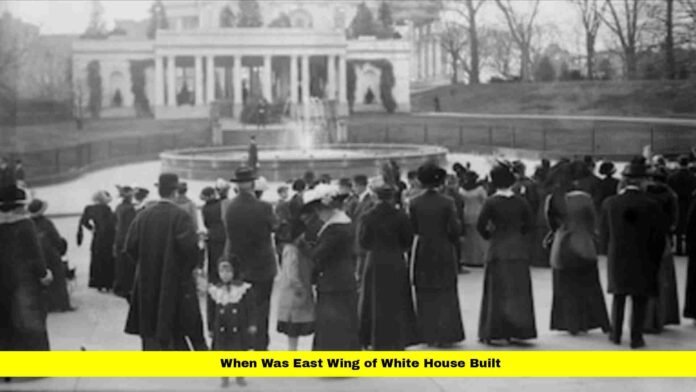

When was east wing of White House built? This question opens a fascinating window into over a century of architectural evolution, presidential history, and national symbolism. The East Wing has transformed from a small corridor to an essential section of the White House complex, playing a vital role in presidential operations and public engagement.
THE ORIGINAL EAST WING: BUILT IN 1902 UNDER THEODORE ROOSEVELT
The East Wing was first constructed in 1902, during President Theodore Roosevelt’s major renovation of the White House. This extensive project aimed to reorganize the executive residence and make it more functional for modern presidential life.
Before this renovation, the White House lacked clear separation between official business and private family spaces. The East Wing provided structure and balance to the overall layout. It was not an office space at the time but rather a formal entrance and reception area designed to accommodate growing numbers of visitors and social events.
Key aspects of the 1902 design included:
- A formal entrance for guests, separate from family and staff pathways.
- A cloakroom and waiting area for social events.
- A connecting corridor to the main residence, improving traffic flow during receptions.
The East Wing was designed to complement the newly built West Wing, which Roosevelt created to house the President’s working offices. Together, the two wings gave the White House a more balanced, functional structure still visible today.
THE 1942 RECONSTRUCTION: FRANKLIN D. ROOSEVELT’S MAJOR UPGRADE
A second, and far more significant, construction of the East Wing occurred in 1942, under President Franklin D. Roosevelt. This was more than just an architectural update—it fundamentally changed the purpose of the East Wing.
During World War II, national security became a top priority, and the East Wing was rebuilt to include essential infrastructure such as a bomb shelter and additional office space.
The 1942 expansion introduced several major changes:
- A larger, two-story structure replaced the earlier, smaller wing.
- Offices for the First Lady and her staff were established.
- The Presidential Emergency Operations Center (PEOC) was built underground as a secure command facility.
- A Family Theater was added for private screenings.
- Visitor facilities were modernized to accommodate increased public access.
This 1942 version remains the foundation of the modern East Wing. Its functional blend of security, hospitality, and family use continues to define how the White House operates today.
KEY POINTS SUMMARY
For those who prefer a quick overview, here are the main takeaways:
- 1902: First East Wing built under Theodore Roosevelt.
- 1942: Rebuilt under Franklin D. Roosevelt during World War II.
- Includes: Offices for the First Lady, Family Theater, and PEOC bunker.
- 2025: Ongoing renovations are updating the structure while maintaining its historic integrity.
This timeline captures the East Wing’s evolution from ceremonial space to an essential part of presidential life.
THE ROLE OF THE EAST WING IN WHITE HOUSE OPERATIONS
The East Wing today serves multiple roles beyond being an architectural counterpart to the West Wing. It functions as a professional, ceremonial, and symbolic space.
The Office of the First Lady occupies much of the East Wing, serving as the headquarters for her staff and initiatives. Over the decades, First Ladies have used this space to advocate for causes such as education, health, military families, and nutrition.
The East Wing also acts as the main entrance for visitors during tours and events. Most guests entering the White House pass through the East Wing before proceeding to the main residence.
Additionally, the White House Family Theater, located inside the wing, is used by the First Family for private movie screenings and small gatherings. Beneath it lies the Presidential Emergency Operations Center, a secure facility designed for crisis management.
This combination of family comfort, public accessibility, and national security makes the East Wing a unique and vital component of the White House.
ARCHITECTURAL STYLE AND DESIGN ELEMENTS
The East Wing’s design seamlessly complements the White House’s neoclassical architecture. The 1942 version, designed under the supervision of Lorenzo Winslow and Louis A. Simon, maintained the same Federal-style façade while expanding the building’s footprint.
Distinctive architectural features include:
- Symmetrical design mirroring the West Wing.
- Colonial Revival elements, consistent with the White House’s historical aesthetic.
- Spacious corridors and grand staircases, enhancing movement and visibility.
- Natural lighting and large windows, promoting a sense of openness and elegance.
Even during modern upgrades, preservation experts have ensured that every detail respects the original aesthetic, blending new technology with historic integrity.
FAMOUS MOMENTS AND EVENTS IN THE EAST WING
Over the decades, the East Wing has witnessed countless moments of national significance. It has hosted dignitaries, cultural figures, and everyday citizens visiting the nation’s most famous residence.
- Jacqueline Kennedy (1960s): She oversaw extensive White House restorations, elevating the East Wing’s cultural prominence.
- Nancy Reagan (1980s): Used the East Wing for anti-drug campaign coordination.
- Michelle Obama (2009–2017): Led the “Let’s Move!” initiative from her East Wing office, focusing on child nutrition and fitness.
- Jill Biden (2021–present): Continues to use the East Wing as her base for education and military family initiatives.
Each First Lady’s tenure adds new meaning to the East Wing, turning it into a living representation of public service, policy, and tradition.
A TIMELINE OF EAST WING DEVELOPMENT
| Year | Event |
|---|---|
| 1800s | Original White House structure completed; no East Wing existed. |
| 1902 | Theodore Roosevelt’s renovation added the first East Wing. |
| 1942 | Franklin D. Roosevelt’s expansion included PEOC and First Lady offices. |
| 1961–1963 | Jacqueline Kennedy restoration era improved interiors and decor. |
| 1990s | Further updates under Hillary Clinton for technology and access. |
| 2001 | PEOC gained attention during 9/11 emergency response. |
| 2025 | Modern renovation focuses on accessibility, sustainability, and security. |
This evolution shows how the East Wing has adapted to the times while maintaining its symbolic role in American governance.
THE EAST WING TODAY: SYMBOL OF TRADITION AND FUNCTIONALITY
In the 21st century, the East Wing stands as both a working space and a symbol of modern presidency. It reflects the balance between private and public life, family and duty, history and innovation.
It remains:
- The primary visitor entrance for tours and ceremonies.
- The workplace of the First Lady and her team.
- A secure yet welcoming space, blending elegance with necessity.
Modern renovations have introduced upgraded communication systems, energy-efficient infrastructure, and enhanced security, ensuring the East Wing remains functional for future generations.
INTERESTING FACTS ABOUT THE EAST WING
- The Family Theater inside the East Wing was first added by Franklin D. Roosevelt and remains in use today.
- Beneath the East Wing lies the Presidential Emergency Operations Center, created during World War II and used during 9/11.
- The East Wing’s colonnade connects to the Executive Residence, providing a direct passage for the First Family.
- It was once primarily a cloakroom and guest entrance before evolving into an office and operational hub.
- The East Wing’s design ensures that it balances the West Wing, giving the White House architectural harmony.
WHY THE EAST WING’S HISTORY STILL MATTERS
Understanding when the East Wing was built provides more than just architectural trivia—it reveals how the American presidency has evolved to meet the nation’s changing needs.
- The 1902 construction under Theodore Roosevelt symbolized modernization and order.
- The 1942 reconstruction during World War II emphasized security and efficiency.
- The 2025 renovations represent preservation and innovation for the digital age.
Each phase reflects the era’s challenges, blending heritage with progress.
FINAL THOUGHTS
So, when was east wing of White House built? The answer spans two pivotal years—1902 for its first construction under Theodore Roosevelt and 1942 for its modern expansion by Franklin D. Roosevelt. Today, the East Wing continues to evolve, serving as both a symbol of tradition and a vital space for America’s First Family and staff.
Its walls have witnessed over a century of leadership, service, and transformation. As renovations continue into the future, the East Wing will remain a cornerstone of both American history and daily presidential life.