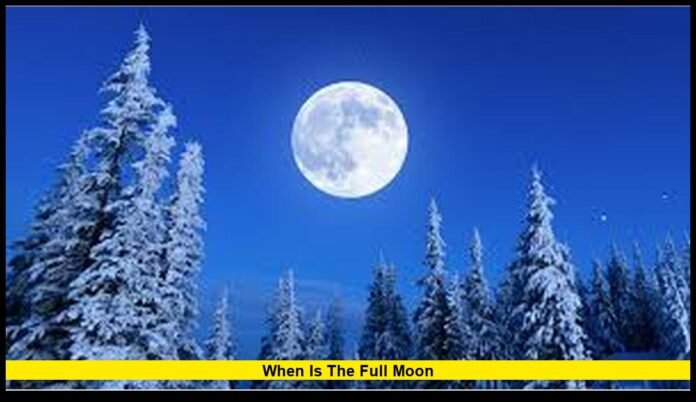

For anyone looking up at the night sky and wondering when is the full moon in 2026, the answer begins with the very first of the year. The next full moon will rise on Thursday, January 8, 2026, at 6:24 p.m. Eastern Standard Time, filling the sky with a radiant glow visible across the United States. This event, known as the Wolf Moon, starts a year filled with 12 breathtaking full moons — each tied to natural cycles and rich cultural history.
From the icy brilliance of January’s Wolf Moon to the frosty shimmer of December’s Cold Moon, every full moon in 2026 carries meaning and timing that reflect the changing seasons. Below is a complete, factual overview of all the full moons of 2026, including what to expect and when to look up.
🌕 What a Full Moon Really Is
A full moon happens when the Moon is on the opposite side of Earth from the Sun. In this position, sunlight fully illuminates the Moon’s face, giving it that unmistakable circular glow.
This alignment takes place about every 29.5 days, marking the length of a lunar month. While the Moon rises and sets each night, it’s only during this full alignment that we see it in full brightness. For skywatchers in the United States, each full moon also has a traditional name based on natural patterns and Indigenous heritage.
📅 When Is the Full Moon in 2026? Complete List of Dates and Times
Here’s the full 2026 lunar schedule, featuring the names, dates, and exact times of each full moon. All times are based on Eastern Standard Time (EST).
| Month | Full Moon Name | Date (2026) | Time (EST) |
|---|---|---|---|
| January | Wolf Moon | January 8 | 6:24 p.m. |
| February | Snow Moon | February 6 | 1:41 p.m. |
| March | Worm Moon | March 8 | 6:38 a.m. |
| April | Pink Moon | April 7 | 11:12 p.m. |
| May | Flower Moon | May 6 | 7:47 a.m. |
| June | Strawberry Moon | June 5 | 8:40 p.m. |
| July | Buck Moon | July 4 | 12:56 p.m. |
| August | Sturgeon Moon | August 3 | 5:22 a.m. |
| September | Harvest Moon | September 2 | 9:08 p.m. |
| October | Hunter’s Moon | October 1 | 3:47 p.m. |
| November | Beaver Moon | November 30 | 11:42 p.m. |
| December | Cold Moon | December 30 | 5:14 a.m. |
Each full moon is unique — some appear closer to Earth, others rise during major holidays, and each one reflects the ongoing rhythm of the seasons.
❄️ January – The Wolf Moon
The Wolf Moon of January 8 kicks off the 2026 lunar year. Its name comes from stories of wolves howling during midwinter nights when food was scarce. The Moon will rise just after sunset and appear larger near the horizon because of the moon illusion — a visual effect that makes it seem enormous and golden.
The Wolf Moon is often viewed as a symbol of resilience and renewal, especially as it shines through the coldest days of the year.
🌨️ February – The Snow Moon
The Snow Moon appears on February 6 at 1:41 p.m. EST. It’s named for the heavy snowfall that covers much of North America this time of year. While its peak illumination happens in daylight, it will look full for two nights surrounding the date.
Cold air in February often makes this moon look sharp and bright, especially for those watching from the Midwest and Northeast.
🌱 March – The Worm Moon
March brings the Worm Moon on March 8 at 6:38 a.m. EST. It marks the end of winter and the start of the thaw, named after the earthworms that reappear as soil softens.
This moon often feels symbolic — a sign that longer days and warmer weather are returning. It’s also a favorite for photographers who capture it rising over early spring landscapes.
🌸 April – The Pink Moon
The Pink Moon lights up the sky on April 7 at 11:12 p.m. EST. The name doesn’t describe the Moon’s color but honors pink wildflowers that bloom across the U.S. during April.
For stargazers, this is one of the most comfortable full moons to watch outdoors, with mild spring temperatures and typically clear skies.
🌼 May – The Flower Moon
The Flower Moon arrives on May 6 at 7:47 a.m. EST. Its name reflects nature’s full bloom and the abundance of color across fields and gardens.
This full moon is often associated with growth and celebration — a favorite for evening walks or late-night skywatching.
🍓 June – The Strawberry Moon
Summer begins with the Strawberry Moon on June 5 at 8:40 p.m. EST. It was named by Indigenous tribes for the short strawberry-picking season.
This full moon typically features warmer tones as it rises, creating one of the most photogenic lunar views of the year. Expect it to glow in orange or pink hues near the horizon before turning bright white higher up.
🦌 July – The Buck Moon
The Buck Moon rises on July 4, 2026, at 12:56 p.m. EST, making it a special Independence Day full moon. Its name comes from the time when young male deer begin growing new antlers.
For those celebrating outdoors, the Buck Moon adds a natural highlight to Fourth of July fireworks and warm summer nights.
🐟 August – The Sturgeon Moon
On August 3 at 5:22 a.m. EST, the Sturgeon Moon will reach full brightness. It takes its name from the large sturgeon fish historically caught in North American lakes during late summer.
In 2026, this moon will be bright and low in the sky before dawn, perfect for early risers or campers enjoying the last weeks of summer.
🌾 September – The Harvest Moon
The Harvest Moon will shine on September 2 at 9:08 p.m. EST. It’s one of the year’s most famous full moons, known for its rich orange glow and its practical role in helping farmers bring in crops late into the evening.
The Harvest Moon rises earlier than usual, staying bright for several nights in a row, creating the illusion of a longer, glowing twilight.
🦉 October – The Hunter’s Moon
The Hunter’s Moon reaches its peak on October 1 at 3:47 p.m. EST. After the harvest, this moon provided light for hunting and preparing food for winter.
In 2026, it will appear strikingly golden near the horizon, gradually turning white as it rises higher — a favorite among fall skywatchers.
🦫 November – The Beaver Moon
The Beaver Moon appears on November 30 at 11:42 p.m. EST. It’s named for the time when beavers finish preparing their lodges for the cold months ahead.
It’s a calm, serene moon — ideal for reflection before the rush of the holiday season begins.
❄️ December – The Cold Moon
Finally, the Cold Moon will appear on December 30, 2026, at 5:14 a.m. EST. This full moon reflects the heart of winter, with long nights and crisp air creating perfect visibility.
Its glow across frosty fields and snow makes it one of the most beautiful sights of the year, closing the lunar calendar on a peaceful note.
🌊 The Science Behind Full Moons and Tides
Full moons don’t just affect light — they also influence the tides. When the Sun, Earth, and Moon align, their combined gravity creates spring tides, which are higher and lower than normal tides.
For U.S. coastlines — from the Atlantic to the Pacific — these variations are slight but measurable, especially in the days surrounding each full moon.
🦇 Wildlife and Full Moon Behavior
Many nocturnal animals respond to full moons. The increased brightness changes hunting and feeding habits. Some animals become more cautious, while others take advantage of the light.
Humans, too, have long felt drawn to the Moon — using its light for guidance, storytelling, and timekeeping long before artificial illumination existed.
Read Also-What Is Wolf Moon: The First Full Moon of 2026 Brings Winter Light to the American Sky
🔭 Best Ways to Watch the Full Moon
You don’t need expensive equipment to enjoy the full moon. Just a few simple tips make all the difference:
- Check moonrise times: Watch as it appears on the horizon for its largest look.
- Choose a dark location: Rural or beach areas reveal more detail.
- Use binoculars: Even small lenses show craters and mountain shadows.
- Take photographs: Include trees or buildings for depth and contrast.
- Be patient: The best light occurs right after sunset or before dawn.
Mobile apps like Sky Guide and Stellarium make tracking the full moon’s position easy from anywhere in the U.S.
🌎 Why Full Moons Matter
People ask when is the full moon because it connects us to the rhythm of time and the natural world. It’s not just a light in the sky — it’s a monthly reminder of Earth’s constant motion and balance.
Full moons mark seasonal transitions, influence ocean tides, and inspire countless cultural traditions. In 2026, they’ll serve once again as nature’s calendar, guiding us through another orbit around the Sun.
🌒 A Look Ahead: Big Sky Moments in 2026
In addition to its 12 full moons, 2026 will bring another remarkable celestial event — a total solar eclipse on August 12, visible from parts of the western United States. For sky enthusiasts, this makes 2026 one of the most exciting years for observation and photography in recent memory.
Final Reflection
Each full moon in 2026 carries its own story — a mix of science, folklore, and simple wonder. From January’s frosty glow to December’s cold brilliance, these moons will continue to remind us of the beauty and rhythm of the universe we share.
The next full moon rises on January 8, 2026. Step outside, look up, and let the glow of the Wolf Moon start your year with light and clarity.