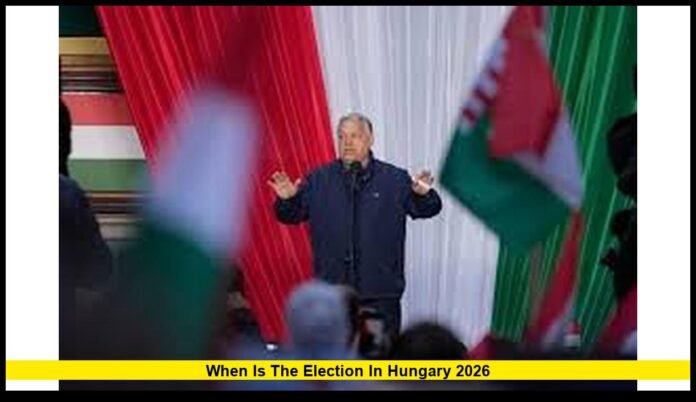

The question when is the election in hungary is drawing growing attention in 2026 as the country approaches a pivotal parliamentary vote that could shape its political direction for years. With strong leadership continuity on one side and an energized opposition on the other, Hungary’s upcoming election is not just a domestic event—it is a moment being closely watched across Europe and beyond.
Hungarian voters will head to the polls on April 12, 2026, to elect all 199 members of the National Assembly. The outcome will determine the next government and set the tone for Hungary’s policies on economic growth, governance, and international relations.
If you want a clear, in-depth understanding of what’s at stake and why this election matters globally, keep reading as we break down the key details, candidates, and forces shaping this critical vote.
Stay with this analysis to understand how the results could impact not just Hungary, but the broader political landscape across Europe.
Understanding Hungary’s Election System
Hungary’s parliamentary elections follow a mixed electoral system designed to balance local representation with proportional outcomes.
Voters cast ballots that contribute to two main components:
- Single-member constituencies: 106 representatives are elected directly from districts across the country.
- Party lists: 93 seats are distributed based on national vote totals among political parties.
This hybrid system means that both individual candidates and party popularity play a crucial role in determining the final makeup of parliament.
To form a government, a party or coalition must secure at least 100 seats, ensuring a working majority in the National Assembly.
Why the 2026 Election Is So Important
Every election carries weight, but the 2026 vote stands out due to the political context in Hungary.
Prime Minister Viktor Orbán has led the country since 2010, maintaining a strong grip on power through successive election victories. His leadership has shaped Hungary’s domestic policies and its relationships within Europe.
Now, after more than a decade of dominance, the political environment has shifted.
A stronger and more unified opposition has emerged, bringing renewed competition and uncertainty to the election outcome. This shift has turned the vote into a genuine contest rather than a predictable result.
The stakes are high:
- The future direction of Hungary’s governance
- Its role within the European Union
- Economic and social policy priorities
These factors have elevated the election into one of the most closely followed political events in the region.
Key Candidates and Political Forces
The 2026 election centers around two major political figures representing contrasting visions for Hungary’s future.
Viktor Orbán and the Incumbent Leadership
Orbán remains one of Europe’s most recognizable political leaders. His party, Fidesz, has built a strong political base over the years, emphasizing stability, national identity, and economic development.
Supporters credit his leadership with maintaining order and advancing national interests. His campaign continues to focus on:
- Economic stability
- National sovereignty
- Maintaining Hungary’s current political direction
Péter Magyar and the Rising Opposition
On the other side is Péter Magyar, a figure whose rapid rise has reshaped the political landscape.
Leading a growing opposition movement, Magyar has attracted support from voters seeking change. His campaign has focused on:
- Accountability in government
- Economic reforms
- Strengthening Hungary’s ties within Europe
His appeal is particularly strong among younger voters and urban populations, making him a significant challenger in this election.
A Generational Divide Among Voters
One of the most defining features of the 2026 election is the clear divide between age groups.
Younger voters are increasingly leaning toward opposition movements, driven by a desire for reform and new leadership. Many in this group prioritize issues such as transparency, modernization, and international cooperation.
Older voters, meanwhile, tend to support the current leadership, valuing stability and continuity. For many, the existing government represents predictability in uncertain times.
This generational split could play a decisive role in the final outcome.
High voter turnout among younger citizens could shift the balance, while strong participation from older demographics could reinforce the status quo.
Major Issues Driving the Election
Several key issues are shaping voter decisions across Hungary.
Economic Concerns
Economic performance remains a central topic in the campaign. Voters are focused on:
- Cost of living
- Job opportunities
- Long-term growth
Both major sides have presented different approaches to addressing these concerns.
Governance and Transparency
Questions about how the country is governed have become increasingly important.
Debates around accountability, institutional independence, and transparency have gained prominence, especially among younger voters.
Foreign Policy and EU Relations
Hungary’s position within Europe continues to be a major issue.
The country’s relationship with the European Union has been a point of discussion, with differing views on how closely Hungary should align with broader EU policies.
Social and Cultural Policies
Cultural values and social policies also play a role in shaping voter preferences.
These issues often reflect broader ideological differences between political groups and contribute to the overall tone of the campaign.
Campaign Momentum and Final Stretch
As election day approaches, campaign activity has intensified across the country.
Candidates are holding rallies, engaging with voters, and increasing their visibility through media appearances. The final phase of the campaign is focused on mobilizing supporters and persuading undecided voters.
Key battleground areas are receiving particular attention, as small shifts in these regions could influence the overall outcome.
The energy surrounding the campaign reflects both the competitiveness of the race and the importance of the decision facing voters.
What Happens on Election Day
On April 12, polling stations across Hungary will open to allow citizens to cast their votes.
The process is straightforward:
- Voters select candidates in their local constituencies
- They also vote for party lists at the national level
Once voting concludes, ballots are counted, and results begin to emerge.
The final composition of parliament will determine which party or coalition forms the next government.
Possible Outcomes and Their Impact
While the outcome remains uncertain, the election could lead to several scenarios:
- Continuation of current leadership: This would maintain existing policies and political direction.
- Shift in power: A change in leadership could bring new approaches to governance and international relations.
- Coalition government: If no single party achieves a majority, alliances may be necessary.
Each scenario carries different implications for Hungary’s future.
Global Significance of the Election
The importance of this election extends beyond Hungary’s borders.
As a member of the European Union, Hungary plays a role in shaping regional policies and decisions. Changes in leadership or direction could influence:
- EU policy discussions
- Regional cooperation
- Economic partnerships
For this reason, the election is being closely watched by governments, analysts, and observers around the world.
The Bigger Picture for Hungary
The answer to when is the election in hungary is simple—April 12, 2026—but the broader significance goes far deeper.
This vote represents a crossroads for the country.
It reflects competing visions for Hungary’s future, from maintaining continuity to pursuing change. It also highlights the evolving priorities of voters and the shifting dynamics of the political landscape.
No matter the outcome, the election will shape the country’s path for years to come.
Why Voter Turnout Will Be Critical
One of the most important factors in this election is voter participation.
High turnout can amplify the impact of changing political preferences, particularly among younger voters. At the same time, strong participation from traditional voter bases can reinforce existing trends.
The balance between these groups will play a key role in determining the final result.
Final Thoughts on Hungary’s Defining Vote
Hungary’s 2026 parliamentary election is more than a routine political event. It is a defining moment that will influence the country’s direction, leadership, and role in the world.
With strong competition, clear policy differences, and high public interest, the stage is set for a significant decision.
As April 12 approaches, attention will remain focused on Hungary—and the outcome that will shape its future.
What do you think this election means for Hungary’s future? Share your perspective and stay connected for ongoing updates as the results unfold.