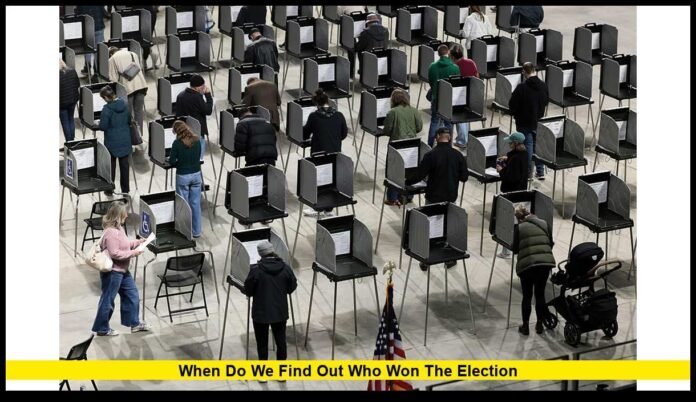

The November 3, 2026, midterm elections are now moving through the vote-counting and result-reporting stage. The timing of each winner announcement depends on the contest, the remaining ballots, and the rules governing the state where the election took place.
Some races can be called relatively quickly after polls close. Others need more time because election officials must count additional ballots and assess whether the remaining votes could change the result.
In congressional elections, the national picture may become clear before every individual district has a confirmed winner. The same applies to the Senate, where a small number of competitive statewide contests can determine which party controls the chamber.
Election results also emerge at different times because polling places close at different hours. States in the Eastern time zone begin reporting results before many polling locations in the West have finished voting. Early totals therefore provide an incomplete picture of the nationwide outcome.
The key distinction is between knowing which candidate appears to have won and having a final result established through the official election process.
How the 2026 Midterm Results Affect Control of Congress
The midterm elections determine which lawmakers will serve in Congress during the final two years of President Donald Trump’s current term. Unlike a presidential election, the midterms do not determine who occupies the White House. Instead, voters choose members of Congress and candidates for numerous state and local offices.
The House of Representatives
All 435 voting seats in the House are contested in regular elections every two years. A party generally needs 218 seats to hold a majority when all seats are filled.
Because the pre-election balance is close, relatively few district results can change which party controls the chamber. That makes competitive House races particularly important when assessing the national outcome.
The Senate
The Senate has 100 seats, with senators serving six-year terms. Approximately one-third of the chamber normally faces election every two years, although special elections can add further contests.
A party needs a majority of Senate seats to control the chamber. The final balance depends on which candidates win the seats contested this cycle and the status of the remaining seats.
Governors and state elections
Voters also decide numerous gubernatorial, state legislative, and other contests. These races have separate counting and certification schedules, so their results do not necessarily become official alongside congressional outcomes.
For readers following when do we find out who won the election, it is important to track the House, Senate, and state races separately. A result in one category does not settle the others.
What Happens After Polls Close on Election Day?
The closing of polling locations marks the beginning of the public results-reporting period, not the end of the election process. Election workers secure ballots, complete required records, and transfer vote totals through established procedures.
Depending on the jurisdiction, officials may count ballots at individual polling places, at centralized election offices, or through a combination of methods. Voting systems produce preliminary totals, which election officials report as part of the initial results.
Officials then combine returns from precincts and other voting locations. As more totals arrive, the public receives a clearer picture of which candidates are ahead.
However, an early lead does not guarantee victory. A candidate who leads in the first reported counties may lose ground when larger urban areas, mail ballots, or other outstanding votes are counted.
Election offices update their results as additional eligible ballots enter the count. The totals can change throughout the night and during the days that follow.
This process explains why voters should avoid treating the first reported numbers as a final verdict. The order in which results appear reflects counting and reporting procedures, not necessarily the overall preferences of every voter in a state.
How Mail-In Ballots Affect the Election Results Timeline
Mail-in and absentee ballots are an important reason why some election results take longer to establish. States have different rules for processing these ballots, including when officials can verify envelopes, prepare ballots for tabulation, and begin counting.
In jurisdictions that allow early processing, election workers can complete some administrative tasks before Election Day. Other jurisdictions restrict certain activities until Election Day or later.
These differences can influence how quickly results become available.
Mail ballots also involve eligibility checks and procedures designed to protect the integrity of the vote. Officials may need to verify signatures, confirm that ballots meet legal requirements, or resolve other issues before including them in the count.
Some states allow voters to correct specific problems with submitted ballots under established procedures. Where permitted, those processes can affect when the final total becomes clear.
The important point is that mail ballots follow the same overarching objective as other eligible ballots: officials must count valid votes accurately and according to the law.
A race that remains undecided after Election Day may simply have enough outstanding ballots to make the margin uncertain. The delay alone does not establish that anything improper has happened.
Why Close Elections Take Longer to Call
Election projections depend on more than the percentage of precincts reporting. News organizations also consider the number of outstanding votes, where those votes are located, and how much the remaining ballots could change the result.
Consider a hypothetical congressional race in which Candidate A leads Candidate B by 8,000 votes. If only 2,000 eligible ballots remain uncounted, the reported margin may be sufficient to establish that Candidate A has won, assuming no other outstanding votes or procedural issues could change the outcome.
Now consider a different contest in which Candidate A leads by just 500 votes and thousands of ballots remain uncounted. In that situation, the outcome may remain uncertain until additional totals become available.
These examples illustrate why a large reporting percentage does not automatically mean a race can be called. The remaining ballots matter just as much as the ballots already counted.
Recounts can add another stage to the process. State law may require a recount when the margin falls within a specified threshold, or a candidate may be entitled to request one under certain conditions.
A recount does not automatically mean the original count was inaccurate. It provides an additional opportunity to determine the correct tally under the applicable rules.
The Difference Between Election Projections and Official Results
News organizations play a major role in helping the public understand election night. Their analysts evaluate vote totals and other available information to determine when the evidence supports a winner projection.
However, media organizations do not certify election results.
A projection represents an editorial and analytical judgment based on the information available at that time. Different organizations may call a race at different moments because they use their own reporting systems and decision-making procedures.
Unofficial government results are also preliminary. Election offices may publish them quickly to inform the public, but they can change as officials count outstanding ballots and complete required checks.
Official certification comes after the responsible authorities complete the required canvass and other procedures.
This distinction is especially relevant when headlines use words such as wins, leads, projected, or too close to call. Each describes a different stage or level of certainty.
Readers who understand these distinctions can follow election coverage without confusing an early forecast with a final legal outcome.
When Will States Certify the 2026 Election Results?
There is no single national certification date for every race in the 2026 midterm elections. State laws establish the schedules and procedures that govern local and statewide election results.
In many jurisdictions, officials spend days or weeks after Election Day completing the canvass, reconciling records, conducting required audits, and addressing outstanding administrative issues.
Local officials may certify county or municipal results before state authorities complete certification for statewide and federal contests. The sequence depends on the relevant laws and election procedures.
Post-election audits can provide additional checks on vote-counting accuracy. Their methods and timing vary by state, and they may involve comparing voting-system totals with paper ballots or other election records.
If a recount occurs, officials must also follow the applicable deadlines and requirements before completing the final result.
These steps help establish an accurate record of the election. Although the process may take longer than voters expect, the legal deadline and procedures depend on the particular jurisdiction and contest.
Anyone tracking when do we find out who won the election should therefore distinguish between the date a winner is projected and the date the relevant authorities certify the result.
How to Check the Latest Election Results
Readers can follow the results through several types of reporting, each serving a different purpose.
Official state election offices provide government-reported totals, information about outstanding ballots, and notices concerning canvassing and certification. These are particularly useful when checking the status of a specific statewide or federal race.
County election offices can provide more localized information about precinct returns, ballot processing, and the progress of the count.
Established news organizations offer national summaries, live updates, and projections that help readers understand which races may determine control of Congress.
When comparing updates, pay attention to the time of publication and whether the information concerns a projected winner, an unofficial count, or a certified result.
Avoid relying on isolated screenshots or social media posts without checking whether the figures reflect the latest available information. An older total may no longer represent the current margin.
It is also useful to look at the number of outstanding ballots when a race remains close. The lead alone may not reveal how much uncertainty remains.
What Election Night Results Mean for the Country
The results of the 2026 midterm elections will shape the political environment for the remainder of the current congressional term. Control of Congress influences legislative priorities, oversight activities, committee leadership, and the ability of lawmakers to advance their agendas.
The House and Senate have distinct responsibilities, so the outcome in each chamber matters independently. A party may control one chamber without controlling the other, creating a different set of political and legislative considerations.
State-level outcomes also have important consequences. Governors and state lawmakers make decisions involving budgets, education, infrastructure, public safety, and other policy areas.
The political implications become clearer as enough contests are decided to establish the balance of power. However, the significance of an individual race depends on its specific office and the wider composition of the relevant government body.
Election results also provide information about voter participation and the issues that influenced individual contests. A careful assessment requires final vote totals and context rather than conclusions based solely on early returns.
For this reason, election coverage remains important after the first major announcements. The final results offer a more complete record of voter decisions than preliminary totals alone.
Final Outlook for the 2026 Election Results
The answer to when do we find out who won the election varies from one contest to another. Some races can be projected on Election Night, while close contests may require additional ballot counting, verification, recounts, or other procedures before officials establish the final outcome.
The November 3, 2026, midterm elections are being reported through preliminary results and race-by-race projections, with official certification following the schedules established by the relevant jurisdictions. No single announcement settles every congressional, gubernatorial, and local contest at once.
For readers following the results on November 4 and beyond, the most useful approach is to monitor current vote totals, identify which races remain uncalled, and distinguish media projections from official certification.
Accurate reporting takes time, particularly when margins are narrow. Waiting for the required procedures to finish helps ensure that the final outcome reflects the eligible votes counted under election law.
Join the conversation in the comments and stay informed as officials complete the count and confirm the remaining election results.