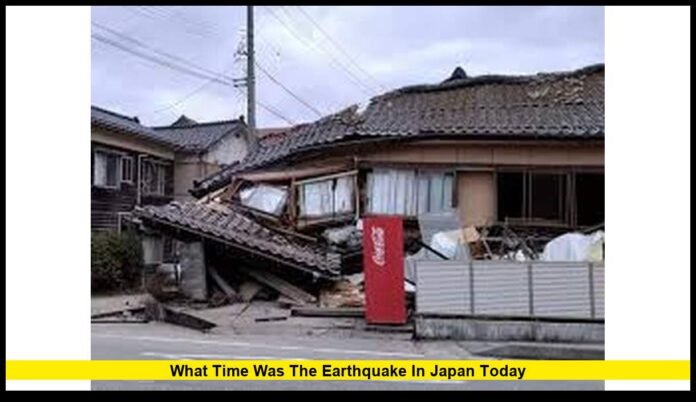

As of December 8, 2025, many are asking, what time was the earthquake in Japan today? Based on official updates from the Japan Meteorological Agency (JMA) and international seismic networks, no major earthquake has been recorded in Japan today.
While Japan experiences frequent tremors due to its position on the Pacific Ring of Fire, today’s seismic activity has remained normal, with only minor, low-magnitude tremors detected across various regions. These small quakes are common and typically go unnoticed by residents.
Japan’s advanced seismic monitoring systems have confirmed stable conditions across the country, with no tsunami alerts or reports of structural damage.
Japan’s Seismic Situation Today
Japan’s earthquake monitoring network, managed by the JMA, tracks thousands of seismic events each year. Most of these are so minor that only sensitive instruments detect them.
As of this morning, December 8, 2025, Japan recorded no large-scale earthquakes or quakes of magnitude 5.0 or higher. Minor tremors, generally between magnitude 2.5 and 3.5, were detected off the coasts of Hokkaido and Honshu, but they caused no disruption to normal life.
Here’s a snapshot of today’s observed activity:
| Region | Magnitude | Time (Local JST) | Depth | Impact |
|---|---|---|---|---|
| Hokkaido | 3.2 | 03:47 a.m. | 45 km | Not felt |
| Ibaraki Prefecture | 2.9 | 06:25 a.m. | 30 km | Not felt |
| Kyushu | 3.1 | 09:12 a.m. | 38 km | Not felt |
Each tremor was minor, and no tsunami warnings were issued. Residents in these areas went about their day as usual, reflecting the country’s readiness and resilience in dealing with daily seismic fluctuations.
Why Earthquakes Are So Common in Japan
To understand why Japan experiences so many earthquakes, it helps to know its location on the Pacific Ring of Fire. This is the world’s most active seismic zone, stretching around the Pacific Ocean and responsible for nearly 90% of global earthquakes.
Japan lies at the junction of four tectonic plates:
- The Pacific Plate
- The Philippine Sea Plate
- The Eurasian Plate
- The North American Plate
These plates constantly push and slide against each other beneath the Earth’s surface. When the pressure builds up and releases, it creates an earthquake.
This geological setup makes Japan one of the most earthquake-prone nations in the world—but also one of the best prepared.
How Japan Detects and Reports Earthquakes
One of the reasons people worldwide often ask “what time was the earthquake in Japan today” is because Japan’s earthquake detection and alert systems are some of the fastest and most reliable on Earth.
The Japan Meteorological Agency (JMA) operates a nationwide network of seismic sensors that detect tremors almost instantly. Within seconds, JMA calculates:
- The exact location of the quake’s epicenter.
- The magnitude and depth.
- The potential shaking intensity in each region.
- Whether a tsunami warning is necessary.
This information is shared immediately with local governments, news outlets, and mobile networks. People in Japan receive emergency alerts on their smartphones seconds before strong shaking reaches them—a system that has saved countless lives.
Japan’s Earthquake Preparedness
Even though there was no major earthquake in Japan today, the country remains constantly prepared for seismic events. Earthquake awareness and readiness are part of daily life.
Some of Japan’s strongest safety measures include:
- Earthquake-Resistant Buildings: Japan’s construction laws are among the strictest in the world. Buildings use flexible materials and shock-absorbing bases that minimize damage.
- Tsunami Evacuation Routes: Coastal cities have marked escape paths and designated high-ground shelters.
- Public Drills: Schools and businesses regularly conduct earthquake drills to keep everyone familiar with emergency procedures.
- Emergency Broadcast Systems: Alerts are automatically broadcast on television, radio, and through smartphones nationwide.
Japan’s combination of technology, education, and civic discipline makes it the global standard for earthquake preparedness.
No Tsunami Warnings in Effect
Alongside today’s stable seismic readings, no tsunami warnings or advisories are currently in effect for Japan. Coastal monitoring stations and ocean sensors report no unusual wave patterns in the Pacific.
Japan’s tsunami detection network remains on alert 24/7. It can identify undersea disturbances and issue evacuation warnings within minutes if a major quake occurs offshore.
Thankfully, all readings today show normal ocean activity, confirming that residents and visitors are safe from tsunami threats.
Recent Earthquakes in Japan (Past Year Overview)
While today brought no major quake, Japan has experienced several notable seismic events in 2025, all handled efficiently by authorities.
- February 10, 2025 – Miyagi Prefecture: A magnitude 5.8 quake struck off the northeast coast. Shaking was felt in Sendai but caused no significant damage.
- July 29, 2025 – Tokyo Region: A magnitude 4.9 tremor briefly rattled the capital and nearby areas. Buildings swayed mildly, but there were no injuries.
- October 5, 2025 – Kagoshima, Kyushu: A magnitude 5.1 earthquake occurred offshore, prompting short-lived tsunami advisories later cleared.
These events remind residents that even though Japan experiences frequent seismic activity, the country’s infrastructure and emergency response systems minimize risk and disruption.
Lessons from Japan’s Earthquake Response
For U.S. readers, Japan’s experience offers valuable insight into how to live safely in earthquake-prone areas.
States like California, Oregon, and Washington share similar geological risks due to the Cascadia Subduction Zone, which resembles Japan’s tectonic setup.
Here are a few lessons Japan’s approach can teach the world:
- Invest in Early Warning Systems: Even a few seconds of warning can save lives.
- Strengthen Building Codes: Structures built with seismic resistance in mind significantly reduce casualties.
- Promote Education: Regular public drills ensure that citizens know exactly what to do when tremors start.
- Use Technology Wisely: Automated alerts, AI prediction tools, and live seismic mapping improve response times.
These principles have helped Japan maintain low casualty rates even during large earthquakes.
The Role of Technology in Seismic Monitoring
Japan continues to lead in the use of AI and satellite data to study seismic activity. The country operates one of the most extensive sensor networks on the planet, collecting real-time data on ground motion, plate stress, and vibration frequency.
This information allows scientists to better understand long-term fault behavior. Although predicting exact earthquakes is impossible, these advancements help narrow down high-risk zones and enhance preparedness for future events.
For example, Tokyo University’s Earthquake Research Institute uses high-speed data analysis to simulate quake scenarios. These studies influence building designs and public safety plans across the country.
The Human Side of Earthquake Awareness
For many Japanese residents, earthquake alerts have become a normal part of life. People remain calm when their phones buzz with seismic notifications, knowing the systems are there to protect them.
This cultural resilience is key to Japan’s ongoing safety. Schools, communities, and families routinely discuss evacuation plans, reinforcing readiness. Children learn from a young age how to respond calmly when tremors start.
Even during larger quakes, Japan’s population tends to stay composed and cooperative—a reflection of decades of education and experience.
U.S. and Global Reactions
Whenever Japan experiences a strong quake, it draws global attention, particularly from U.S. audiences. American agencies such as the U.S. Geological Survey (USGS) closely monitor Japanese seismic data because of both nations’ shared risk of large earthquakes.
Japan’s innovations in disaster technology often inspire upgrades to U.S. systems, including California’s ShakeAlert early warning program.
Today’s calm seismic conditions in Japan serve as a reminder that while major quakes can’t be prevented, preparedness and technology are powerful tools for minimizing damage. What Time Was the Earthquake in Japan Today
What to Do During an Earthquake
For U.S. readers living in quake-prone regions, these key safety steps are worth remembering:
- Drop, Cover, and Hold On: Get low, protect your head, and take shelter under sturdy furniture.
- Avoid Windows and Heavy Objects: Stay away from anything that can shatter or fall.
- Stay Indoors: Do not rush outside while the ground is shaking.
- Wait for Official Updates: Follow emergency alerts and avoid spreading unverified information.
- Keep an Emergency Kit Ready: Include essentials like food, water, flashlights, and first aid supplies.
These guidelines, used widely in Japan, have proven effective in saving lives during strong earthquakes.
Final Overview
To answer the main question—what time was the earthquake in Japan today?—there was no significant earthquake recorded in Japan on December 8, 2025.
Minor tremors were detected, but none were strong enough to affect daily life or trigger tsunami alerts. Japan’s monitoring systems remain fully active, ensuring public safety and rapid response to any seismic changes.
Japan continues to set the global standard for earthquake preparedness, blending innovation, engineering, and community awareness to protect its people from one of nature’s most unpredictable forces. What Time Was the Earthquake in Japan Today
No major earthquake was reported in Japan today, December 8, 2025. Seismic activity remains stable, with no damage or tsunami risk nationwide.