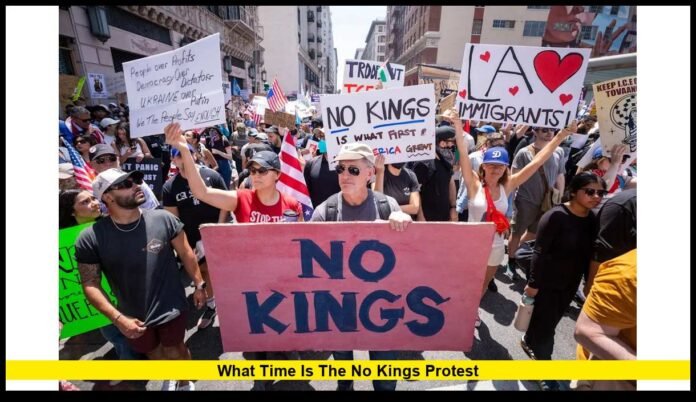

Recent News- Typical Timing (March 28, 2026)
- Most protests happen midday to afternoon
- Common start windows:
- 11:00 AM – 1:00 PM (many local rallies)
- Around 1:00 PM (large city events, e.g., Boston)
- 2:00 PM (some major marches like NYC)
- Some cities also host evening events (5–6 PM)
📍 What This Means for You
- The protest is happening all day nationwide on Saturday, March 28, 2026
- Your exact time depends on your local event
👉 To get the exact time , you’ll need to check the specific listing for your city—events can vary widely even within the same region.
Understanding the No Kings Movement
The No Kings protest movement reflects widespread concerns about executive power, democratic norms, and civic rights. Participants are united by one message: no monarchs, no kings, no unchecked rulers.
This edition of the protests builds on earlier mobilizations. More than 2,600 events are planned in all 50 states, underscoring the scale of this effort. Organizers from groups such as Indivisible, American Civil Liberties Union and the coalition known as the “50–50–1 Movement” are declaring the October 18 date a national moment of civic power.
What Time You Should Arrive for the “No Kings” Protest
Because “No Kings” protests are organized at the local level rather than coordinated under a single national schedule, there is no universal start time that applies across all cities. Each location sets its own timing based on permits, local coordination, and expected turnout. However, there are clear patterns and best practices that can help you plan your arrival effectively and avoid missing key moments.
Across most locations, rallies are expected to begin sometime between 10:00 a.m. and 2:00 p.m. in the local time zone. This window reflects the most common scheduling choice, as it allows for maximum participation during daylight hours while accommodating travel and public gathering logistics. In many cities, especially larger ones, organizers aim for a midday start to ensure higher attendance and better visibility.
That said, variations do exist. Some smaller or community-led gatherings may begin earlier in the day, occasionally starting as early as 9:00 a.m. These earlier start times are often chosen to avoid crowd congestion, heat, or scheduling conflicts with other events. On the other end of the spectrum, certain protests—particularly in major metropolitan areas—may begin later in the day, extending into the mid-afternoon. These later events may also include longer programs, multiple speakers, or extended marches.
To ensure you are present for the full experience, it is strongly recommended that you arrive 30 to 45 minutes before the listed start time for your local event. Arriving early serves several important purposes. It allows you time to locate the exact meeting point, navigate parking or public transportation, and adjust to any last-minute logistical changes. It also helps you secure a good position within the crowd, especially in high-attendance areas where space can fill quickly.
Most importantly, early arrival ensures that you do not miss the opening remarks, which often set the tone for the event and provide essential information such as march routes, safety guidelines, and key messages. In many cases, marches and processions begin promptly after these initial announcements, meaning late arrivals risk missing the start entirely.
In practical terms, if your local protest is scheduled to begin at 12:00 p.m., a good target would be to arrive between 11:15 a.m. and 11:30 a.m. This buffer gives you enough time to settle in without feeling rushed and ensures you are fully prepared when the event begins.
By following this approach—anticipating the general time window, accounting for local variations, and arriving early—you can participate more smoothly and make the most of the experience.
Examples of Known Start Times by City
Here’s a snapshot of how start times differ across major U.S. cities:
| City | Local Start Time | Notes |
|---|---|---|
| New York City | ~2:00 p.m. ET | Bryant Park gathering, march planned. |
| Los Angeles | ~10:00 a.m.–11:00 a.m. PT | Morning rally downtown. |
| Pittsburgh | ~12:30 p.m. ET | City-County Building start point. |
These examples show that while many start around midday, local variation is strong — always verify your city’s listing.
How to Check Your Local Time & Location
To make sure you attend the correct “No Kings” protest in your area, it’s important to rely on official listings and local event pages. Because each rally is independently organized, details like start time, meeting point, and instructions can vary widely—even within the same region. Following a simple step-by-step approach will help you get accurate, up-to-date information.
Start by visiting the official No Kings website or a verified local event page associated with your city. These platforms typically provide the most reliable and current details, including any last-minute updates or changes.
Once there, use the event locator tool—usually a search bar where you can enter your city name or ZIP code. This will pull up the closest events near you and help you identify the one you plan to attend.
After selecting your event, carefully review all listed details. Pay close attention to the start time, as well as the exact meeting location—this could be a park, public square, or specific street intersection. In addition, organizers may include important instructions such as recommended attire, sign guidelines, safety information, or transportation tips. These details can significantly affect your experience, so it’s worth reading them thoroughly.
With this information in hand, you can then plan your arrival time accordingly. Factor in travel time, parking or transit delays, and the recommended early arrival window so you don’t miss the beginning of the event. It’s also a good idea to mark the event on your calendar or set a reminder to stay organized.
Keep in mind that in smaller towns and suburban areas, event details may be less precise. Instead of a specific start time, listings might simply say “afternoon” or provide a broader time range. In these cases, arriving on the earlier side of that window is usually the safest choice to ensure you don’t miss anything.
By taking a few minutes to check these details in advance, you can avoid confusion and confidently show up at the right place and time.
Why Timing Is Key for This Protest
The timing of the “No Kings” protest is not random—it is intentionally structured to maximize turnout, visibility, and overall impact. Organizers have aligned schedules across the country in a way that strengthens both participation and messaging.
One of the most important factors is weekend scheduling. By holding events on a Saturday, organizers remove many of the barriers that would otherwise limit attendance. Participants are less likely to face conflicts with work, school, or daily responsibilities, making it easier for a broader and more diverse group of people to join. This increases crowd size and helps ensure the protest reflects a wide cross-section of the public.
The choice of a mid-morning to early afternoon timeframe also plays a strategic role. Daylight hours provide safer conditions for travel and gathering, while also making the events more accessible for families and individuals who may not feel comfortable attending late-night demonstrations. Additionally, this timing aligns with peak hours for media coverage, increasing the likelihood that rallies will be seen, recorded, and shared across news platforms and social media. Greater visibility amplifies the message far beyond those physically attend.
Another key element is the coordination of simultaneous protests across all 50 states. Even though exact start times vary by location, the general overlap in timing creates a rolling wave effect throughout the day. As one region begins and another follows, momentum builds nationwide. This continuous stream of activity reinforces a sense of unity and scale, signaling that the movement is not isolated to a single city but is instead a widespread, coordinated effort.
Together, these timing decisions help transform individual local gatherings into a cohesive national moment—one designed to be seen, heard, and felt across the country.
What Happens When the Rally Starts?
Typical No Kings rallies begin with the following pattern:
- Opening remarks: Local organizers, speakers or invited community figures.
- March or march-start: Many protests transition into a march along a pre-approved route.
- Main rally: Speeches, chants, music or performance art tied to protest themes.
- Conclusion: Return to the starting point or disperse under monitorised conditions.
Most rallies are planned for 2–4 hours; some may end earlier or continue into late afternoon depending on local logistics.
Safety, Timing & Participation Tips
If you are attending a local protest and wondering what time is the No Kings protest in your area, here are some helpful tips:
- Arrive early: 30–45 minutes before the listed start time gives you time to settle.
- Bring essentials: Water, weather-appropriate clothing, comfortable shoes.
- Check transportation: Some cities will restrict roads — plan your route accordingly.
- Know the local schedule: If the start time says “11 a.m.” but it’s your first rally, aim for “10:30 a.m.” just to be safe.
- Stay informed: Organisers may update times or start-locations based on weather or permit changes.
What Time Are Smaller Town & Suburban Rallies?
Not all protests will align with large-city schedules. In suburbs and smaller towns:
- Some may begin as early as 9 a.m., especially if organizers expect shorter events.
- Others may start in the late afternoon (3 p.m.–5 p.m.) for more informal gatherings.
- Always check your local event listing, as generic “afternoon rally” notes may hide a specific time.
Key Takeaway: Be Local-Time Ready
So when you ask “what time is the No Kings protest?” the answer depends on your location — but arriving sometime between 10:00 a.m. and 2:00 p.m. (local time) is a strong rule of thumb.
Arrive early, check your city’s listing, and prepare for an experience of collective action.
Will you be participating in your local rally on October 18? Share your city and what time you plan to arrive — and help others join the movement.
Read Also-No Kings Protest St Louis