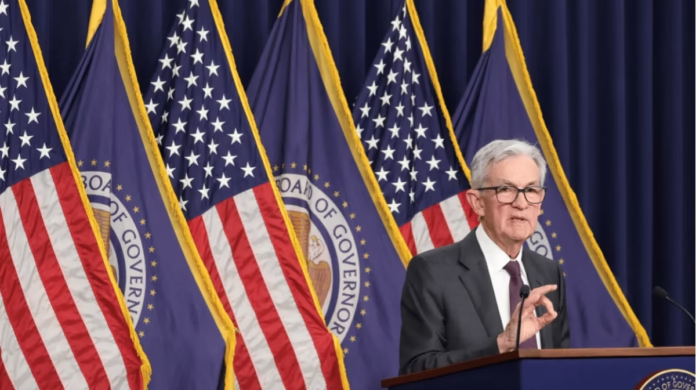

Millions of Americans are asking what time is the Fed announcement today, as the U.S. central bank prepares to reveal its latest decision on interest rates. The Federal Reserve will publish its October monetary policy statement at 2:00 p.m. Eastern Time on Wednesday, October 29, 2025, followed by a live press conference with Fed Chair Jerome Powell at 2:30 p.m. ET.
This announcement is among the most closely watched economic events of the year. It affects everything from mortgage rates and credit-card costs to stock prices and the value of the U.S. dollar. Traders, economists, and everyday citizens alike will tune in as policymakers decide whether to keep interest rates high or signal the start of a long-awaited rate-cut cycle.
Exact Timing and How to Watch
For those specifically searching what time is the Fed announcement today, here are the details at a glance:
| Event | Time (ET) | Where to Watch |
|---|---|---|
| Federal Open Market Committee (FOMC) Statement | 2:00 p.m. | Federal Reserve website & official YouTube channel |
| Chair Jerome Powell Press Conference | 2:30 p.m. | CNBC, Bloomberg TV, Fox Business, Federal Reserve YouTube |
| Market Close (Reaction Period) | 4:00 p.m. | Major U.S. stock exchanges |
Financial media outlets such as CNBC, Bloomberg, Reuters, and The Wall Street Journal will provide continuous live coverage, including analysis of every word in the Fed’s statement.
Why Today’s Fed Announcement Matters
The Fed’s October decision carries added weight because the economy stands at a delicate balance. Inflation has cooled from its 2022 highs, yet consumer prices remain above the Fed’s 2 percent goal. Meanwhile, job growth continues, but certain sectors—like manufacturing and housing—show signs of slowing.
The central question today is whether policymakers believe inflation has eased enough to justify rate cuts in early 2026, or whether interest rates should remain at current highs to ensure price stability.
Current Federal Funds Rate and Market Expectations
The federal funds rate currently sits in a target range of 5.25 to 5.50 percent, its highest level in more than 20 years. According to the CME FedWatch Tool, futures markets this morning implied a 91 percent probability that the Fed will hold rates steady, and a 9 percent chance of a small cut.
Investors expect Chair Powell to emphasize patience and data-driven policy decisions. The Fed’s strategy has shifted from aggressive tightening in 2022-23 to cautious observation through 2025. Although inflation has moderated, officials remain wary of declaring victory too soon.
Recent Economic Data Ahead of the Meeting
Several key reports released in October shaped expectations for today’s announcement:
- Consumer Price Index (CPI): Up 3.1 percent year over year in September, down from 3.3 percent in August.
- Core CPI (excluding food and energy): 2.8 percent, its lowest reading since 2021.
- Unemployment Rate: 3.9 percent, near historic lows.
- GDP Growth (Q3 Estimate): 2.0 percent annualized, reflecting steady consumer spending.
These numbers show that inflation is easing while economic growth remains moderate—a combination that supports the Fed’s cautious stance.
Jerome Powell’s Balancing Act
In public remarks earlier this month, Chair Jerome Powell struck a careful tone. He praised progress on inflation but cautioned that “sustained evidence” of lower prices is necessary before easing policy.
“We are encouraged by the decline in inflation,” Powell said during an event at the Economic Club of New York. “However, the job is not done. Our task is to ensure that price stability is restored and maintained.”
Powell’s words signal that rate cuts remain unlikely this year. Nonetheless, markets will listen closely to every phrase at his 2:30 p.m. press conference for hints about the Fed’s 2026 outlook.
Impact on Borrowing and Everyday Finances
For ordinary Americans, the question what time is the Fed announcement today has real-world consequences. Fed decisions influence:
- Mortgage Rates: Fixed rates hover around 7 percent, making home purchases more expensive.
- Auto Loans: Average rates are above 8 percent, stretching monthly budgets.
- Credit Cards: Annual percentage rates average over 20 percent, the highest on record.
- Savings Accounts and CDs: Many offer returns above 5 percent, rewarding savers.
Thus, whether the Fed signals cuts or holds steady can immediately shift costs across the economy.
Market Mood Ahead of the Announcement
U.S. markets opened cautiously this morning. The Dow Jones Industrial Average inched up 0.1 percent, the S&P 500 rose 0.3 percent, and the Nasdaq Composite gained 0.4 percent driven by technology stocks.
Bond yields remained steady, with the 10-year Treasury trading near 4.58 percent. Traders expect a burst of volatility around 2:00 p.m., when the policy statement is released. Even minor wording changes—like shifting from “remain attentive to inflation risks” to “monitoring progress”—can move markets instantly.
Global Implications
The Fed’s influence extends well beyond U.S. borders. When American interest rates stay high, global capital tends to flow into the dollar, strengthening it against other currencies.
A strong dollar can make U.S. exports more expensive overseas while lowering import costs for American consumers. Consequently, foreign central banks—from the European Central Bank to the Bank of Japan—closely watch today’s decision to guide their own monetary strategies.
Emerging-market economies are particularly sensitive. High U.S. rates can trigger capital outflows and raise borrowing costs abroad. Therefore, international investors will also be watching what time is the Fed announcement today and how the outcome affects global liquidity.
Economic Outlook for 2026
Analysts believe the Fed’s next steps depend on how inflation and employment evolve through the winter. If prices continue cooling while unemployment stays low, rate cuts could begin as early as March 2026.
However, a resurgence in inflation or signs of overheating could delay easing. The Fed’s preferred inflation gauge—the Personal Consumption Expenditures (PCE) index—will be central to that decision. As of September, the PCE showed 2.6 percent annual growth, a positive trend but still above target.
Several Fed governors have publicly stressed caution. Governor Lisa Cook recently stated that “premature easing could reverse hard-won progress,” while Governor Christopher Waller emphasized flexibility and the importance of “keeping all options open.”
What to Watch in Powell’s Press Conference
When the cameras turn to Jerome Powell at 2:30 p.m. ET, economists will dissect his tone and phrasing. Key questions include:
- Is the Fed confident inflation will continue falling?
- How does the Fed view current labor-market strength?
- Will policymakers discuss the timing of future rate cuts?
- Are there concerns about global financial stability?
If Powell hints at growing confidence in inflation control, markets may rally. Conversely, if he warns about persistent risks, bond yields could rise and stocks might slip.
Technology, Housing, and Consumer Impacts
Beyond macroeconomics, sectors across the economy feel the ripple effects of Fed policy.
- Technology: High rates pressure growth stocks by raising borrowing costs and reducing future profit valuations.
- Housing: Builders face slower sales and higher financing expenses, though inventory shortages support prices.
- Consumer Spending: Credit-card debt has hit record levels. Lower rates next year could offer some relief.
Because of these links, industries nationwide await today’s decision for signs of stability.
Historical Perspective
The last time the Fed paused this long was in 2006 – 2007, just before the financial crisis. However, today’s conditions differ markedly. Banks remain well-capitalized, unemployment is low, and inflation is declining gradually. Still, the Fed is determined to avoid both recession and renewed price surges.
Economists often recall the mistakes of the 1970s, when rates were cut too early and inflation returned. This history explains why Powell and his colleagues prefer to hold steady until the data clearly confirms sustained progress.
Public Sentiment and Political Context
With the 2026 midterm elections approaching, the Fed’s moves have political undertones. Although the central bank is independent, its decisions affect public perception of economic leadership. Higher borrowing costs have frustrated many homebuyers and small-business owners. At the same time, stable prices have helped restore consumer confidence after the inflation spike of 2022.
Still, Fed officials maintain that policy decisions are based solely on economic data—not politics. As Powell often reiterates, “price stability is our responsibility and our mandate.”
How the Announcement Could Affect You
While market professionals analyze bond spreads and Fed funds futures, the decision will impact every household budget. Here’s how:
- Homeowners could see changes in refinancing rates within weeks.
- Investors will adjust portfolios based on Fed guidance.
- Savers might lock in high CD rates before potential cuts.
- Borrowers should compare lenders for better terms if rates begin to ease.
Financial advisers recommend monitoring today’s announcement to plan ahead for the next six months.
Timeline: What Happens Next
- 2:00 p.m. ET – Policy Statement Released
Markets react within seconds to any change in wording. - 2:30 p.m. ET – Powell Press Conference
Journalists question the chair about inflation, jobs, and future policy. - 4:00 p.m. ET – U.S. Markets Close
Analysts publish instant summaries and forecasts. - Tomorrow Morning – Global Markets React
Asian and European exchanges adjust to the Fed’s tone.
This timeline shows why knowing exactly what time is the Fed announcement today matters to investors and ordinary citizens alike.
Final Thoughts
The Federal Reserve’s October 2025 announcement is more than a routine update—it sets the tone for America’s economic path into 2026. By confirming the exact time and details of today’s meeting, the Fed ensures that markets and citizens can follow decisions that directly affect their financial lives.
As Jerome Powell steps to the podium this afternoon, investors will listen for signs of optimism or caution. Whether rates stay high or start to fall, the announcement at 2:00 p.m. ET will shape monetary policy and economic confidence well into next year.
Have thoughts about today’s decision or its impact on your finances? Share your opinions below and stay tuned for updates after the Fed’s statement is released.