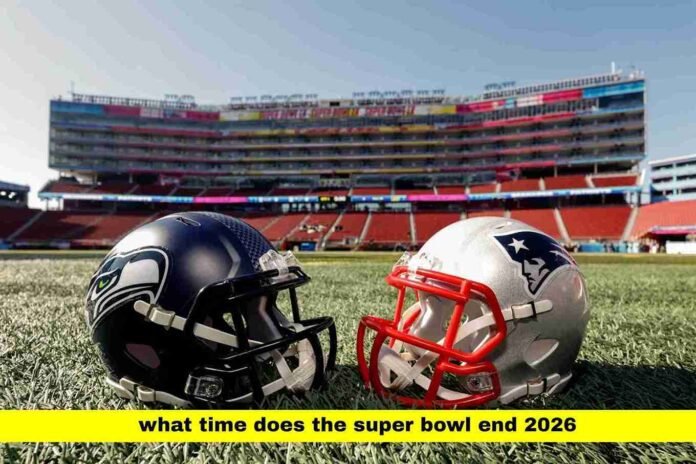

The Super Bowl typically ends between 10:00 and 10:30 p.m. Eastern Time, depending on game flow, halftime length, and commercial breaks. Viewers planning watch parties should expect the broadcast to run well into late evening across all U.S. time zones.
Every year, football fans all across the United States plan their Sunday around one pivotal question: what time does the super bowl end 2026? Knowing when the game is likely to finish helps families plan meals, drives, and celebrations around kickoff and the festivities that come afterward. For Super Bowl LX on February 8, 2026, that question has an answer based on the game’s official schedule and typical broadcast timing patterns.
Super Bowl LX kicks off at 6:30 p.m. Eastern Time (ET), and because this is the NFL’s biggest annual event — complete with extended entertainment, commercials, and an elaborate halftime show — the game’s conclusion stretches well into primetime television hours and late evening for fans across the country.
This in-depth guide breaks down the full timeline of the day, explains why the game ends when it does, and offers exact expectations for viewers in every U.S. time zone.
Super Bowl Kickoff Time and Event Schedule
The Super Bowl traditionally begins at the same kickoff time most years, and 2026 is no exception. Fans watching in the U.S. will see the annual championship game start at 6:30 p.m. ET. That time places the game squarely in evening primetime, making it easy for viewers on the East Coast to tune in after dinner and for West Coast fans to enjoy the early afternoon action.
Broadcasters typically begin their coverage hours earlier, offering pregame shows, expert analysis, and live access to performances and player interviews. For viewers, this means that while the game itself kicks off at 6:30 p.m., the full day of Super Bowl entertainment begins much earlier in many markets.
Average Length of a Super Bowl Broadcast
Unlike a regular NFL game, which lasts a little over three hours on average, the Super Bowl generally runs longer due to additional content embedded within the broadcast. These special events include extended national anthem performances, a lengthy halftime show with world-class entertainment, and commercial breaks that are longer or more frequent than in typical games.
In 2026, the halftime show is expected to start between roughly 8:00 p.m. and 8:30 p.m. ET, with performances that can last upwards of thirty minutes. All of these factors contribute to a significantly longer viewing experience than a typical regular-season matchup.
On average, experts estimate Super Bowl broadcasts run about 3 hours and 45 minutes from kickoff to the final whistle and immediate celebration content. That means even without overtime, the broadcast — and for most viewers, the live event — is expected to continue past late evening.
Estimated End Time in Eastern Time
Given the scheduled kickoff of 6:30 p.m. ET and the typical length of the broadcast, the most reasonable estimate for the game’s conclusion falls between approximately 10:00 p.m. and 10:30 p.m. Eastern Time. This range accounts for typical scoring patterns, halftime show duration, and the extended nature of Super Bowl television coverage.
If the game remains competitive through the fourth quarter with multiple stoppages, the finish could easily edge toward the later end of that window. Because the NFL allows for overtime if the score is tied at the end of regulation, this estimated ending assumes a standard game without extra periods.
How Post-Game Activities Extend the Evening
While the final whistle marks the official end of play on the field, the evening doesn’t necessarily end there for viewers or broadcasters. After the game finishes, television coverage continues with on-field interviews, trophy presentations, and post-game analysis.
In many cases, these segments add additional time to the broadcast schedule. For viewers who stay tuned, this means the official network coverage might continue for several minutes after the teams finish playing.
For viewers planning their evening around the Super Bowl, it’s useful to remember that most households will still be engaged with post-game content well after the game’s conclusion.
Central Time Zone Viewing and End Time Expectations
For viewers in the Central Time Zone, the schedule shifts earlier by one hour. Kickoff occurs at 5:30 p.m. Central Time (CT), with the game likely to conclude between 9:00 p.m. and 9:30 p.m. CT if it follows typical Super Bowl timing patterns.
Because Central Time viewers are watching an hour earlier than Eastern Time audiences, both the concrete moments like halftime and the final whistle occur relatively earlier in the evening, making it more convenient for families who prefer a slightly earlier finish.
Mountain Time Zone Dynamics
In the Mountain Time Zone, the Super Bowl begins at 4:30 p.m., also aligning with an early evening experience for viewers. That timing makes it feasible for fans to host watch parties or view the game in the late afternoon.
Assuming similar broadcast length trends, the game’s conclusion for Mountain Time watchers is expected around 8:00 p.m. to 8:30 p.m. This timing opens up earlier post-game opportunities, giving viewers time to wind down before nighttime.
Pacific Time Zone Timing and End Window
On the West Coast, Pacific Time fans tune in at 3:30 p.m. PT for kickoff. Due to the four-quarter structure of the game and extended show elements, the expected end time in the Pacific Time Zone falls in the early evening, between about 7:00 p.m. and 7:30 p.m. PT.
This earlier finish time makes the Super Bowl feel more like a full afternoon and evening event on the West Coast, allowing fans to enjoy the game without it stretching too late into the night.
International Considerations for Global Viewers
Viewers outside the United States also follow the game, and the ending time will vary widely by region. In the United Kingdom, for example, a 6:30 p.m. ET kickoff means an 11:30 p.m. GMT start, with the conclusion likely near 3:15–3:30 a.m. local time.
In Tokyo, where the game begins in the morning of the following day, the ending time extends past lunchtime. Fans around the world calibrate their schedules based on Eastern Time broadcast windows to plan viewing and social gatherings.
Halftime Show’s Influence on Timing
A hallmark of every Super Bowl is the halftime show, and 2026 continues that tradition with a major performance that draws viewers well beyond football fans. The halftime production often lasts substantially longer than the typical 12-minute break seen in regular NFL games, partly due to elaborate choreography, stage setup, and extended performance segments.
Because halftime can impact the flow of the game and overall broadcast duration, it plays a major role in when viewers can realistically expect the game to end. Many hosts plan their halftime meals or celebrations around this window because it usually occurs near the halfway point of the evening’s viewing experience.
Length of Gameplay Versus Broadcast Time
It’s important to understand that the clock shown during the game — four 15-minute quarters — does not reflect the total time viewers will spend watching. Actual elapsed time includes stoppages for officiating reviews, commercials, player substitutions, and other broadcast requirements.
In a typical Super Bowl broadcast, the television experience incorporates all of these elements, resulting in an event that lasts significantly longer than the sum of game clock time. For viewers, this means planning for a multi-hour experience rather than a quick evening football game.
Potential Impacts of Overtime on End Time
The NFL’s postseason rules allow for overtime if the game is tied at the end of regulation. In this scenario, the added period — and any ensuing action — naturally extends the broadcast.
While overtime is not guaranteed, fans should be aware that even a closely contested regulation game can surpass typical ending windows due to additional stoppages. In cases where overtime occurs, the conclusion of the game may stretch toward the later evening across all U.S. time zones.
Planning Your Evening Around the Game
Fans hosting watch parties or planning social gatherings can use these projected end times to schedule food, activities, and post-game celebrations accordingly. Because Super Bowl broadcasts cover pregame analysis, performances, and extended coverage after play concludes, viewers often find themselves engaged with the event for the better part of the evening.
By understanding when the game is likely to conclude in their area, viewers can better plan transitions to other activities, transportation schedules, or evening wind-down routines.
Why Fans Follow Every Minute of the Super Bowl
Beyond the action on the field, the Super Bowl has become a cultural event that draws people together across different interests. Music performances, celebrity appearances, and elaborate commercials add layers of entertainment value that extend beyond the sport itself.
Because of this broad appeal, many viewers remain engaged throughout the entire broadcast — from pregame buildup to post-game celebrations — making it the most watched event in American television each year.
Key Times to Remember for Super Bowl 2026
For viewers planning their day around the game on February 8, 2026:
- Pregame programming and festivities start hours before kickoff.
- The game begins at 6:30 p.m. Eastern Time, with potential delays between pregame ceremonies and the first snap.
- Halftime typically occurs in the early half of the evening and adds to overall broadcast length.
- Estimated end time ranges from late evening to early night depending on location and game flow.
By keeping these time markers in mind, fans can structure their viewing experience around the moments that matter most.
What are you most excited to see during this year’s game and entertainment lineup, and how are you planning your Super Bowl viewing experience? Share your thoughts and let the countdown to kickoff continue!