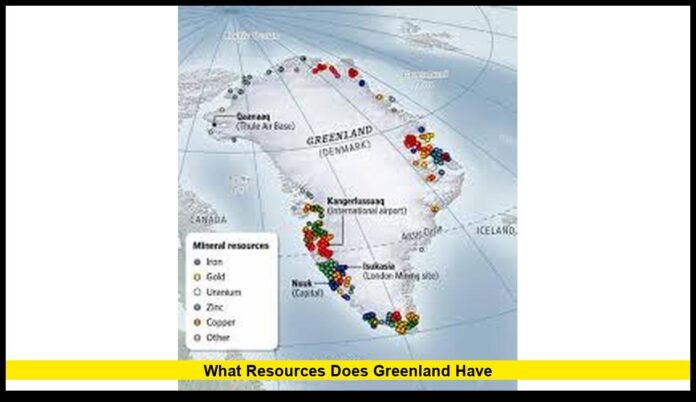

The question of what resources does Greenland have is no longer limited to scientists or explorers — it’s now a key topic in global economics and sustainability. Beneath its frozen surface, Greenland holds vast natural riches: valuable minerals, rare earth elements, pristine freshwater, and some of the world’s cleanest renewable energy potential.
In 2026, Greenland stands out as a region with enormous promise and equally strong environmental caution, balancing economic opportunity with the protection of its Arctic environment.
Greenland’s Rising Role in Global Resources
Greenland, an autonomous territory within the Kingdom of Denmark, has steadily increased its influence over the management and development of its natural resources. As global supply chains face pressure from geopolitical tensions and rising demand for strategic materials, Greenland’s geographic position between North America and Europe gives it growing importance as a reliable and politically stable partner. This location not only enhances trade potential but also strengthens its relevance in transatlantic economic and security discussions.
The accelerating global transition toward renewable energy and electrification has placed Greenland firmly in the international spotlight. Beneath its vast ice-covered landscape lie significant deposits of rare earth elements, graphite, lithium, and other critical minerals. These materials are essential for manufacturing batteries, electric vehicles, wind turbines, and advanced electronics—technologies that underpin climate goals and energy independence strategies worldwide.
Beyond minerals, Greenland’s expanding role reflects broader ambitions for economic self-sufficiency. Local authorities are seeking to balance responsible resource extraction with environmental protection and Indigenous community interests. Investments in infrastructure, ports, and scientific exploration are also increasing, signaling long-term planning rather than short-term exploitation.
As nations race to secure stable supplies of critical resources, Greenland is emerging not just as a remote Arctic territory, but as a key player in shaping the future of clean energy, global industry, and sustainable development.
Riches Beneath the Ice: Minerals and Rare Earth Elements
Rare Earth Elements — The Core of Modern Technology
Beneath the vast ice sheets and rugged mountains of Greenland lies one of the most geologically significant regions on Earth. Much of Greenland’s exposed bedrock is among the oldest on the planet, formed during its earliest geological eras. This ancient foundation has preserved an extraordinary concentration of minerals that are now becoming central to the modern global economy. As the world accelerates toward electrification, digitalization, and renewable energy, Greenland’s mineral wealth has shifted from scientific curiosity to strategic necessity.
At the center of this global attention are rare earth elements (REEs), a group of 17 metals that play a crucial role in advanced technology. Although they are relatively abundant in the Earth’s crust, they rarely occur in concentrations high enough for economical extraction. Greenland is one of the few regions where geology, scale, and accessibility combine to make large-scale REE development viable outside Asia.
Why Rare Earth Elements Matter
Rare earth elements are indispensable to modern life. Neodymium, dysprosium, and terbium—three of the most valuable REEs—are essential for producing powerful permanent magnets. These magnets are critical components in electric vehicle motors, wind turbines, robotics, medical imaging devices, and a wide range of defense technologies. Without them, many clean energy systems would be less efficient, heavier, and far more expensive.
REEs also play a role in smartphones, fiber-optic communications, lasers, radar systems, and energy-efficient lighting. As governments around the world commit to decarbonization and invest heavily in renewable infrastructure, demand for these materials continues to rise. This growing demand has exposed vulnerabilities in existing supply chains, which remain heavily concentrated in a small number of producer countries.
Greenland’s Strategic Advantage
Greenland’s mineral potential is significant not only because of its size, but also because of its geopolitical position. Situated between North America and Europe, the island occupies a strategic midpoint between major industrial economies. For Western nations seeking to diversify supply chains and reduce dependence on limited sources, Greenland represents a rare alternative that combines political stability with resource abundance.
Two of the most closely studied mineral regions are the Kvanefjeld and Kringlerne sites in southern Greenland. These areas form part of the Ilimaussaq alkaline complex, a unique geological formation known for concentrating rare earth elements at exceptionally high levels. Geological assessments indicate substantial deposits of neodymium, dysprosium, and terbium, placing these sites among the largest known REE resources outside Asia.
Extraction Challenges and Supply Chain Risks
Despite their importance, rare earth elements are notoriously difficult to extract and refine. Mining typically involves complex chemical processes, large volumes of waste material, and strict handling requirements. Without proper safeguards, REE extraction can pose serious environmental risks, including soil contamination and water pollution.
These challenges have historically limited production to a small number of countries with established infrastructure and processing capacity. As a result, global markets have become highly sensitive to political tensions, export controls, and logistical disruptions. Even minor supply interruptions can ripple through manufacturing sectors, affecting everything from electric vehicles to consumer electronics.
In this context, Greenland’s reserves represent more than economic opportunity. They offer a potential pathway toward stabilizing global access to materials that are essential for clean energy, technological innovation, and national security.
Environmental Concerns and Political Decisions
While Greenland’s mineral wealth is considerable, its development has been approached with caution. Public debate around mining intensified in the late 2010s, particularly over environmental protection, radioactive byproducts, and long-term public health risks. These concerns culminated in a landmark decision in 2022, when Greenland’s parliament passed legislation banning uranium mining.
This policy had significant implications for the mining sector. Some REE deposits naturally contain uranium as a byproduct, making them incompatible with the new legal framework. Mining companies were forced to reevaluate project plans, abandon certain prospects, and redirect exploration toward zones free of radioactive materials.
Rather than halting development, the ban reshaped Greenland’s mining strategy. It signaled a clear priority: economic growth would not come at the expense of environmental safety or public trust.
A Shift Toward Sustainable Exploration
In the years following the uranium ban, Greenland has emphasized sustainable and responsible exploration. Companies are increasingly required to adopt low-impact drilling methods that minimize surface disturbance and reduce waste. Advanced remote sensing technologies, including satellite imaging and geophysical surveys, are being used to map mineral deposits with greater accuracy before any physical excavation begins.
Environmental impact assessments have become more comprehensive, accounting for fragile Arctic ecosystems and the accelerating effects of climate change. Community consultation has also become a central element of project approval, ensuring that local populations—many of whom depend on fishing and traditional livelihoods—have meaningful input into development decisions.
This approach reflects a broader effort to align mineral extraction with modern environmental and ethical standards. Greenland is positioning itself not just as a supplier of critical materials, but as a responsible partner in the global clean energy transition.
Economic Independence and Long-Term Vision
Mineral development is closely tied to Greenland’s long-term economic goals. While fishing remains the backbone of the economy, reliance on a single sector leaves the island vulnerable to market fluctuations and environmental change. Carefully managed mining projects could provide new revenue streams to support infrastructure, education, healthcare, and scientific research.
At the same time, Greenland’s leadership has emphasized the importance of avoiding the boom-and-bust cycles that have affected resource-rich regions elsewhere. By limiting projects to those that meet strict environmental, safety, and social criteria, the government aims to ensure that mineral wealth contributes to sustainable, long-term development rather than short-term gains.
Global Significance
As global demand for rare earth elements continues to grow, Greenland’s role in the international resource landscape is likely to expand. Its reserves offer Western economies a chance to build more transparent and resilient supply chains while reducing geopolitical and environmental risks.
Greenland’s approach also carries wider implications. It demonstrates that resource-rich regions can pursue economic development without sacrificing environmental integrity. Through careful regulation, technological innovation, and public engagement, high-value mining can be aligned with sustainability goals.
In an era defined by climate urgency and technological transformation, the riches beneath Greenland’s ice are no longer just remnants of geological history. They are becoming critical components of the world’s future—shaping how energy is produced, how technology evolves, and how nations balance progress with responsibility.
Base Metals and Precious Finds
Beyond rare earth elements, Greenland possesses a broad spectrum of base and precious metals that underscore its geological richness. These resources have long underpinned industrial development worldwide and now offer Greenland an opportunity to diversify its economy beyond its traditional dependence on fishing. As global demand for raw materials accelerates—driven by infrastructure expansion, clean energy technologies, and advanced manufacturing—these metals are gaining renewed strategic relevance.
Zinc and Lead
One of Greenland’s most significant base-metal assets is the Citronen Fjord deposit in the far north of the island. Recognized as one of the world’s largest undeveloped zinc resources, the site contains vast reserves that could become a major source of zinc once market conditions, transportation links, and infrastructure investments align. Zinc plays a critical role in galvanizing steel to prevent corrosion, making it essential for construction, transportation, and renewable energy infrastructure. Lead, often produced alongside zinc, remains important for batteries, radiation shielding, and specialized industrial alloys, despite evolving environmental regulations.
Copper
Copper has emerged as one of the most sought-after metals of the energy transition, and Greenland is no exception to this trend. Rising demand for electric vehicles, power grids, and renewable energy systems has renewed exploration interest along Disko Island and in central west Greenland. Geological surveys have identified copper sulfide mineralization comparable to deposits found in Canada and Alaska, regions with established mining histories. If developed responsibly, copper extraction in Greenland could support global electrification efforts while contributing to local economic growth.
Iron Ore
Southern and eastern Greenland host iron-rich formations believed to have formed billions of years ago during the Earth’s early geological history. These deposits have attracted attention as global demand for steel continues to rise, driven by urbanization and large-scale infrastructure projects. While iron ore mining is traditionally associated with high emissions, advances in cleaner smelting technologies and low-carbon steel production could allow Greenland to align future iron extraction with climate goals. Responsible development could provide industrial capacity without compromising environmental commitments.
Gold and Platinum
In addition to base metals, Greenland also holds traces of precious metals such as gold and platinum, particularly in southern regions shaped by ancient volcanic activity. While these deposits have not yet been developed on an industrial scale, they present attractive long-term prospects for smaller, locally managed mining operations. Such projects could prioritize low environmental impact, community participation, and high regulatory standards, making them more compatible with Greenland’s sustainability objectives.
Balancing Opportunity and Responsibility
Each of these mineral resources represents both promise and complexity. Thoughtfully developed, they could help Greenland diversify its economy, create skilled employment opportunities, and reduce reliance on a single export sector. At the same time, mining projects must contend with Arctic weather, fragile ecosystems, logistical challenges, and the need for community consent. How Greenland navigates these factors will determine whether its base and precious metals become a foundation for sustainable prosperity or remain largely untapped beneath the ice.
Building an Industry Around Balance
What truly distinguishes Greenland in the global mining landscape is not only the scale of its mineral wealth, but the philosophy guiding its development. Rather than pursuing rapid extraction, Greenland is methodically constructing a long-term resource strategy that places environmental stewardship on equal footing with economic opportunity. This measured approach reflects both the fragility of the Arctic environment and the importance of maintaining public trust.
Before any mining license is issued, the government mandates comprehensive environmental and social impact assessments. These evaluations examine potential effects on ecosystems, wildlife migration, water quality, and nearby communities. Developers are required to demonstrate how risks will be mitigated, how waste will be managed, and how sites will be rehabilitated after operations end. Community consultation is a formal part of the approval process, ensuring that local voices are heard and respected from the earliest planning stages.
Although Greenland’s mineral sector remains in a relatively early phase of development, its governance framework has already attracted international attention. Investors and policymakers increasingly view the island as a model of regulatory clarity and stability rather than a frontier for unchecked exploitation. This reputation reduces long-term risk and encourages partnerships built on transparency, accountability, and shared standards.
Greenland’s broader advantages further strengthen this position. Abundant mineral reserves are complemented by access to renewable energy sources such as hydropower, which can significantly lower the carbon footprint of future mining and processing activities. Combined with strong environmental oversight, this creates a rare alignment between resource development and climate responsibility.
Together, these factors position Greenland as one of the most promising—and most responsible—mining frontiers in the Arctic. The wealth beneath its ice has the potential not only to support local economic growth, but also to contribute meaningfully to a global shift toward more sustainable and ethically managed industrial supply chains.
Oil and Gas: A Pause for the Planet
Greenland’s offshore regions may hold substantial oil and gas reserves. Geological studies have long pointed to untapped hydrocarbon potential along the west and northeast coasts.
However, Greenland has chosen a different path. In 2021, the government placed a moratorium on new oil and gas exploration, aiming to protect the environment and focus on long-term sustainability. That decision remains in force today.
Instead of drilling, research teams now focus on non-invasive mapping and geological analysis. The strategy aligns with Greenland’s broader goal — to pursue green growth without sacrificing its fragile Arctic ecosystem.
Freshwater: The Purest Resource on Earth
Greenland’s ice sheet stores about 8% of the world’s freshwater, making it one of the planet’s most significant natural water reserves.
This resource is becoming increasingly valuable as global water scarcity grows. Some Greenlandic companies have begun small-scale operations collecting and bottling meltwater for export to countries facing drought. The water, filtered through thousands of years of compacted ice, is naturally clean and mineral-balanced.
Still, large-scale extraction is approached cautiously. Greenland’s government and environmental experts continue to study how to use this resource without disrupting the delicate balance of its ecosystems.
Power from Nature: Hydropower and Wind Energy
Greenland has a unique advantage in renewable energy. With powerful rivers, glacial runoff, and strong coastal winds, the island can generate clean electricity far beyond its domestic needs.
Today, most Greenlandic towns rely primarily on hydropower operated by the national energy company, Nukissiorfiit. Hydroelectric plants in places like Nuuk and Sisimiut already supply most residential and industrial power.
In 2025, studies confirmed excellent conditions for wind farms along the western coast. Together, wind and water energy could support future hydrogen production, opening the door for exportable green fuel.
These efforts are key to Greenland’s long-term plan — achieving energy independence and creating a sustainable economy rooted in renewable power.
Ocean Wealth: The Heart of Greenland’s Economy
While mineral discoveries attract global attention, fishing remains the foundation of Greenland’s economy. The surrounding Arctic waters are rich in shrimp, halibut, cod, and snow crab, supporting thousands of local jobs.
In 2025, fishing made up more than 85% of Greenland’s export revenue, with seafood shipped primarily to the United States, Denmark, and Asia. Greenland’s fisheries are recognized worldwide for their environmental responsibility and are certified by the Marine Stewardship Council (MSC) for sustainable practices.
Climate change is slowly altering fish populations, pushing some species further north while introducing others into Greenlandic waters. The fishing industry is adapting by expanding monitoring, adjusting quotas, and investing in modern, sustainable equipment.
Protecting Nature and Respecting Tradition
Every development in Greenland, from mining to hydropower, begins with a deep commitment to environmental and cultural protection.
Indigenous Inuit communities play a central role in decision-making. Local councils review proposals and assess how projects may affect traditional hunting grounds, fishing areas, and cultural sites.
The government’s strict environmental review process ensures that no major project moves forward without community consent and thorough environmental impact studies. This approach helps maintain trust between the government, investors, and local residents.
Global Partnerships and Strategic Interest
Greenland’s growing importance has caught the attention of major powers. The United States, European Union, and Canada have all strengthened ties with the island to secure future access to critical minerals.
In recent years, American researchers and private companies have partnered with Greenlandic authorities to study the island’s geological potential. These collaborations are designed to ensure Western nations have stable supplies of rare earth elements, reducing dependence on markets dominated by a single country.
Greenland’s government remains careful about foreign involvement. It reviews all investment proposals to ensure they meet high environmental standards and contribute directly to local communities.
Building for the Future: Infrastructure and Innovation
To unlock its resource potential, Greenland is upgrading its infrastructure. The Nuuk International Airport expansion, completed in 2025, now allows direct cargo and passenger flights from North America and Europe — a major step forward for trade and logistics.
Plans for improved ports in southern Greenland are underway to support mineral exports and renewable energy projects. Additionally, new satellite mapping and digital systems are helping geologists survey remote areas with greater precision and less environmental impact.
These developments reflect Greenland’s steady progress toward a modern, diversified economy built on innovation rather than extraction alone.
Challenges in the Arctic Environment
Developing resources in Greenland is no easy task. The Arctic’s harsh weather, long winters, and limited construction season pose major logistical challenges. High transport costs and environmental restrictions also slow down large-scale projects.
However, these same challenges are what make Greenland’s approach unique. Rather than racing toward rapid industrialization, the country is taking its time to build industries that can last — industries that respect both nature and community life.
This balance between progress and preservation defines Greenland’s development philosophy in 2026.
Greenland’s Future in the Global Resource Landscape
As of 2026, Greenland stands at a defining point in its modern history. Once viewed as a remote and icy wilderness, it is now recognized as one of the world’s most promising frontiers for sustainable development. The nation holds an extraordinary mix of minerals critical for renewable energy, vast freshwater reserves, and clean power potential from wind and hydropower. These resources together place Greenland at the heart of the global transition toward a greener, more self-sufficient energy system.
Greenland’s role in the international resource landscape is expanding rapidly. The global demand for rare earth elements, in particular, has created new partnerships between Greenlandic authorities, Western governments, and private industries. Countries like the United States and Canada are strengthening collaboration to secure reliable supplies of strategic minerals needed for electric vehicles, defense systems, and clean technologies. Greenland’s mineral-rich geology offers an alternative to heavily concentrated markets elsewhere, helping diversify the global supply chain.
But what makes Greenland truly stand out is not only its resource abundance — it’s the way it chooses to manage it. The government has made clear that economic growth will never come at the cost of environmental integrity or cultural heritage. Every potential project undergoes strict environmental impact assessments and community consultations, ensuring local voices guide national progress. Indigenous communities, particularly Inuit populations, continue to shape these decisions, ensuring that modernization respects tradition and protects Arctic ecosystems.
This measured approach has earned Greenland a reputation for being both ambitious and responsible. While many resource-rich regions have rushed into rapid extraction, Greenland is deliberately pacing development to prevent environmental degradation and to build industries that can sustain future generations. By focusing on long-term resilience rather than short-term profits, Greenland is laying the groundwork for a stable, diversified economy that integrates modern innovation with traditional values.
At the same time, Greenland’s natural position in the Arctic offers unique strategic advantages. Its proximity to emerging Arctic shipping routes could transform it into a future logistics hub for northern trade. The expansion of Nuuk International Airport and improvements to port facilities in southern Greenland are not just about tourism — they are key investments in a modern infrastructure network designed to support both commerce and clean energy exports.
If current trends continue, Greenland could play a defining role in the world’s clean energy supply chain. Its potential to produce green hydrogen using renewable power is already being explored by energy experts. This would allow Greenland to export carbon-free fuel to Europe and North America, reinforcing its image as a global contributor to climate-friendly energy solutions.
However, challenges remain. Harsh weather, limited population size, and high operational costs make resource development complex. Global market shifts and changing environmental conditions also pose ongoing risks. Yet these obstacles are not slowing Greenland’s determination. Instead, they are shaping a vision focused on innovation, research, and international cooperation.
Greenland’s leaders recognize that the future lies not in exploiting resources recklessly, but in developing them wisely — combining scientific knowledge, environmental responsibility, and economic opportunity. By taking this balanced path, the island is redefining what sustainable growth can look like in the 21st century.
In the years ahead, Greenland’s choices will continue to influence more than its own prosperity. They could help model how nations — large or small — can thrive while protecting the planet. Its story is no longer just about the Arctic; it’s about how humanity can build a better future through respect for nature and responsible use of the Earth’s hidden wealth.
Greenland’s natural wealth is more than a source of profit — it’s a path toward a cleaner, fairer, and more balanced future for the Arctic and the world.