
Baseball fans across America have likely heard the term, but few truly understand what it means. What is Tommy John surgery? It’s a phrase that has become as familiar to Major League Baseball (MLB) as home runs and strikeouts — a medical miracle that has saved thousands of careers while sparking ongoing debates about player health, performance, and the future of the sport.
As of 2025, Tommy John surgery remains one of the most common and important procedures in baseball. With big names like Jacob deGrom, Luis Garcia, and Tanner Houck recently undergoing the operation, it continues to dominate headlines. But how did this groundbreaking surgery come to define modern baseball? And what exactly happens when an athlete undergoes it?
Let’s break it down — from history and science to the latest trends shaping the game today.
The Origin of Tommy John Surgery
The story begins in 1974, when Los Angeles Dodgers pitcher Tommy John faced a devastating elbow injury. At the time, a torn ulnar collateral ligament (UCL) — a key stabilizing ligament in the elbow — was essentially a career-ending diagnosis for pitchers.
Enter Dr. Frank Jobe, a pioneering orthopedic surgeon. Jobe performed an experimental procedure that involved replacing John’s damaged ligament with a tendon harvested from another part of his body. The surgery was a success, and after an 18-month recovery, Tommy John returned to the mound — pitching for another 14 seasons and earning 164 more career wins.
That comeback changed everything. The procedure became known as “Tommy John surgery”, and it revolutionized sports medicine forever.
Understanding the Procedure: What Is Tommy John Surgery?
So, what is Tommy John surgery exactly?
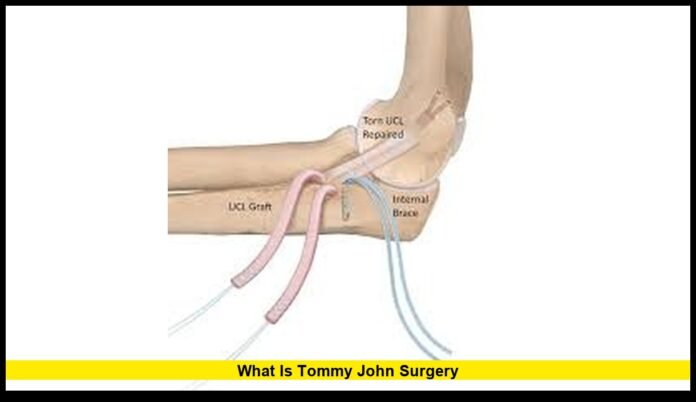
In medical terms, it’s a Ulnar Collateral Ligament (UCL) reconstruction — a procedure that replaces a torn or severely damaged ligament inside the elbow with a healthy tendon from another area of the body.
How It Works, Step by Step
- Diagnosis and Imaging – The process begins with advanced imaging such as MRI scans to confirm a UCL tear. Players often experience pain, instability, or a sudden “pop” sensation while throwing.
- Preparation – Once surgery is deemed necessary, doctors select a replacement tendon. Common graft sources include the patient’s forearm, hamstring, or wrist tendons.
- Incision and Reconstruction – Surgeons make a small incision on the inside of the elbow. They remove the damaged ligament and drill tiny holes in the upper arm bone (humerus) and forearm bone (ulna).
- Ligament Replacement – The harvested tendon is threaded through the holes in a figure-eight pattern, imitating the original ligament’s structure.
- Securing the Graft – The new tendon is secured in place using surgical anchors or sutures.
- Closure and Recovery – The incision is closed, and the elbow is immobilized for several weeks before beginning a structured rehabilitation program.
This meticulous process typically takes between 60 to 90 minutes to complete under general anesthesia.
Who Needs Tommy John Surgery?
Tommy John surgery is most often performed on baseball pitchers, though athletes in other sports like football, tennis, and javelin throwing have also undergone the procedure.
The main cause is repetitive stress on the elbow, particularly from high-velocity throwing motions. Over time, the UCL can weaken or tear, especially in players who throw hundreds of pitches per week.
Common Symptoms Leading to Surgery
- Sharp pain or “popping” sound in the elbow during throwing
- Loss of control or velocity
- Elbow stiffness or inflammation
- Persistent discomfort even after rest
When non-surgical treatments — such as rest, physical therapy, or PRP (platelet-rich plasma) injections — fail to heal the ligament, surgery becomes the next step.
Recovery and Rehabilitation Timeline
Recovering from Tommy John surgery is a long and challenging process, especially for professional pitchers who rely heavily on arm strength and mechanics.
Rehabilitation Phases
| Stage | Timeline | Focus |
|---|---|---|
| Immobilization | 2–4 weeks | Rest and protection of the repaired elbow |
| Early Physical Therapy | 1–3 months | Regain flexibility and range of motion |
| Strength Training | 3–6 months | Strengthen forearm, shoulder, and core muscles |
| Light Throwing Program | 6–9 months | Begin controlled throwing sessions |
| Full Return to Competition | 12–18 months | Resume pitching at a professional level |
Even after a full recovery, teams closely monitor a player’s workload to prevent re-injury. The most disciplined athletes follow strict throwing limits and recovery routines for years afterward.
The Success Rate of Tommy John Surgery
The numbers are impressive: more than 90% of athletes return to play after Tommy John surgery, and many come back as strong — or stronger — than before.
However, success isn’t guaranteed. Some players experience setbacks, mechanical issues, or secondary injuries. A smaller percentage (around 10–15%) require a revision surgery, which is often less successful due to scar tissue or reduced tendon strength.
Despite these challenges, the operation remains one of the most successful orthopedic procedures in sports medicine.
Tommy John Surgery in 2025: MLB Trends and Recent Cases
The 2025 MLB season has once again seen a surge in Tommy John surgeries, emphasizing its ongoing relevance.
- Luis Garcia (Houston Astros) – Underwent his second Tommy John surgery in October 2025, sidelining him for the entire 2026 season.
- Tanner Houck (Boston Red Sox) – Had the operation midseason in 2025 after recurring elbow pain.
- Jacob deGrom (Texas Rangers) – Continued rehab from his 2023 surgery, with an anticipated full return in 2025.
- Shohei Ohtani (Los Angeles Dodgers) – Successfully returned as a hitter in 2024 after his second Tommy John surgery and is expected to pitch again in 2026.
These cases show that while the surgery can be career-saving, it’s also becoming more frequent — especially as pitchers throw harder and more often than ever before.
Advancements in the Procedure
Medical innovation has improved Tommy John surgery dramatically since the 1970s. Today’s version is safer, more precise, and more efficient than ever before.
Key Modern Developments
- Internal Bracing Technique: Surgeons now reinforce the new ligament with high-strength fiber tape to provide extra stability.
- Minimally Invasive Surgery: Smaller incisions reduce recovery time and post-surgical scarring.
- Data-Driven Rehab: Wearable technology tracks elbow torque, velocity, and arm angles during recovery.
- Biologic Enhancements: PRP and stem-cell injections are increasingly used to speed healing.
These innovations have shortened recovery times and reduced complications, giving players a better chance of returning to their pre-injury performance levels.
Why Pitchers Keep Needing Tommy John Surgery
Despite its success, Tommy John surgery is not a cure-all. In fact, its frequency highlights a growing concern in baseball — overuse and velocity obsession.
Modern pitchers routinely throw 95–100 mph fastballs, placing extreme strain on their elbows. Additionally, year-round youth baseball programs mean many pitchers are overusing their arms from an early age.
Experts believe that better prevention — not more surgery — is the ultimate solution.
Common Causes of UCL Injuries
- Throwing too many pitches without rest
- Poor mechanics or over-rotation
- Lack of strength in supporting muscles
- Year-round play without recovery periods
The takeaway? Prevention starts long before the injury occurs.
Impact on MLB Strategy and Player Development
Tommy John surgery has reshaped the way teams manage pitchers. Organizations now invest heavily in biomechanics, workload tracking, and medical staff to prevent UCL injuries.
Team Adjustments Include:
- Limiting pitch counts for starters and relievers
- Enforcing rest periods between outings
- Rotating young pitchers through offseasons to protect arm health
- Using advanced analytics to detect early warning signs of elbow stress
At the same time, players are more transparent about arm pain and more willing to seek medical evaluation early — a major cultural shift from the “pitch through pain” mentality of decades past.
The Psychological Challenge of Recovery
While the physical demands of Tommy John surgery are immense, the mental battle is just as difficult. Athletes often experience frustration, anxiety, and fear of never returning to their previous form.
Successful comebacks require patience, discipline, and mental resilience. Many teams now employ sports psychologists as part of the rehabilitation process, helping players rebuild confidence as they work toward their return to the mound.
The Future of Tommy John Surgery
Looking ahead, surgeons and researchers are developing ways to make the procedure even less invasive and more effective. Experimental UCL repair methods — which use synthetic materials instead of tendon grafts — show promise for certain cases and could reduce recovery times to as little as six months.
As technology advances, MLB may soon see more pitchers returning faster, stronger, and more protected from future injuries. However, prevention through proper training and workload management will always be the best long-term strategy.
Final Thoughts
So, what is Tommy John surgery? It’s more than just a medical procedure — it’s a lifeline for pitchers, a cornerstone of modern sports medicine, and a symbol of resilience in professional baseball.
From Tommy John’s pioneering operation in 1974 to today’s state-of-the-art surgical advancements, the procedure continues to evolve, saving careers and redefining what’s possible after serious injury.
Have you followed a player’s comeback after Tommy John surgery? Share your thoughts or favorite recovery stories in the comments below!