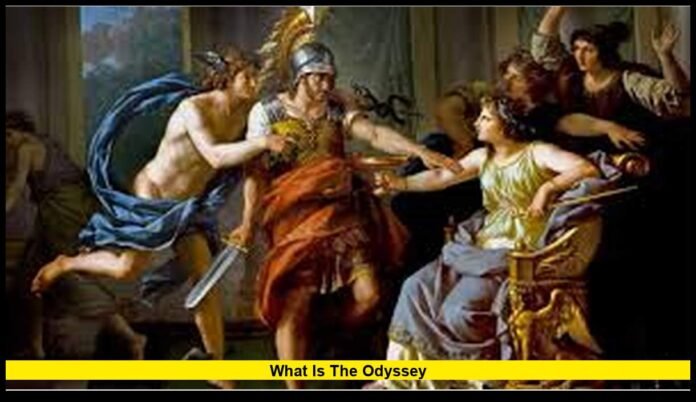

What is the Odyssey about is a question readers continue to ask as this ancient epic remains central to literature, education, and storytelling culture in the United States. The Odyssey is an ancient Greek epic poem attributed to Homer that follows a warrior’s long struggle to return home after war. While it is filled with adventure and danger, the story ultimately focuses on identity, loyalty, patience, and the meaning of home.
Thousands of years after it was first told, the story still connects with modern readers because its emotional core feels familiar and deeply human.
The Central Story of The Odyssey
At its heart, The Odyssey tells the story of Odysseus, king of Ithaca, and his attempt to return home after the Trojan War. Although the war itself lasted ten years, Odysseus’s journey home takes another ten years, turning victory into a test of endurance.
During this time, Odysseus travels across unknown seas, encounters supernatural forces, and faces choices that repeatedly delay his return. Back in Ithaca, his absence creates chaos, leaving his family and kingdom vulnerable.
The epic moves between Odysseus’s dangerous travels and the growing tension at home, showing how distance affects both the traveler and those left behind.
Who Odysseus Is as a Hero
Odysseus stands apart from many traditional heroes because his power does not come from physical strength alone. While he is a capable warrior, his true advantage lies in his mind. Intelligence, creativity, and judgment guide his decisions far more than brute force.
Throughout The Odyssey, Odysseus survives situations that strength alone could never overcome. He relies on careful planning, adjusting quickly to changing circumstances, and thinking several steps ahead. When danger appears, he studies his surroundings and looks for solutions rather than rushing into conflict.
His ability to adapt allows him to endure unfamiliar lands, unpredictable enemies, and constant temptation. Strategic thinking helps him turn weakness into advantage, often escaping situations that seem impossible. Emotional restraint also plays a key role. Odysseus learns when to speak, when to remain silent, and when patience offers more protection than action.
At the same time, Odysseus is not portrayed as perfect. His pride sometimes leads him to take unnecessary risks. Curiosity draws him toward danger even when caution would be wiser. Impatience causes costly delays during his journey home. These flaws repeatedly place him in peril and extend his suffering.
Rather than weakening the story, these imperfections make Odysseus more relatable. Readers recognize his mistakes because they reflect real human behavior. His journey becomes meaningful not because he never fails, but because he learns, adapts, and continues forward despite those failures.
The Long Journey and Its Meaning
Every obstacle Odysseus faces serves a purpose. Each delay tests his values and self-control.
Notable challenges include:
- Escaping the Cyclops through deception
- Resisting the Sirens’ deadly song
- Surviving enchantment and temptation
- Facing death in the Underworld
These trials highlight a core idea of The Odyssey: survival depends on wisdom as much as courage.
The Influence of the Gods
Divine forces shape nearly every part of the story. The gods do not simply observe events; they actively intervene.
Some gods assist Odysseus, while others oppose him. Their involvement reflects ancient Greek beliefs about balance, justice, and consequence.
Key ideas explored through divine influence include:
- Human responsibility despite divine power
- Consequences for arrogance
- The limits of mortal control
The gods amplify the story’s moral stakes rather than replacing human choice.
Penelope and the Power of Patience
While Odysseus travels, Penelope remains in Ithaca. She faces constant pressure from suitors who believe Odysseus will never return.
Penelope’s strength appears through:
- Emotional endurance
- Clever delay tactics
- Loyalty without certainty
She does not rely on force. Instead, she survives through intelligence and restraint, mirroring Odysseus’s approach in a different setting.
Telemachus and the Journey Into Adulthood
Another key storyline follows Telemachus, Odysseus’s son. When the epic begins, he is uncertain and powerless.
Over time, Telemachus:
- Seeks information about his father
- Challenges authority
- Learns leadership
His growth reflects the story’s broader message about maturity and self-discovery.
Hospitality as a Moral Test
Hospitality plays a central role in The Odyssey. Characters are judged by how they treat guests and strangers.
The epic contrasts:
- Generous hosts who receive protection
- Cruel hosts who face punishment
- The suitors who abuse hospitality
This theme reflects social values that remain relevant, emphasizing respect, boundaries, and responsibility.
Read Also:- The Odyssey Movie: Trailer Momentum, Cast Power, and What the Epic Means for 2026 Cinema
The Importance of Identity
Odysseus frequently conceals his identity. This tactic allows him to survive but also delays recognition.
When he finally returns home, recognition becomes a powerful moment. His identity is confirmed not through words, but through knowledge, scars, and actions.
These scenes suggest that true identity is proven through experience and character.
Justice and the Restoration of Order
The final section of The Odyssey focuses on restoring balance in Ithaca. Odysseus confronts those who have exploited his absence.
This resolution highlights:
- Accountability after wrongdoing
- The consequences of greed
- The return of rightful leadership
The ending emphasizes justice earned through patience rather than haste.
The Role of Home in The Odyssey
Home represents more than a physical place. Ithaca symbolizes stability, belonging, and identity.
Throughout the epic:
- Odysseus resists temptation to settle elsewhere
- Penelope protects the household
- Telemachus prepares to inherit responsibility
The journey reinforces the idea that home gives meaning to survival.
Why The Odyssey Still Resonates
Understanding what is the Odyssey about goes far beyond its ancient setting of gods, monsters, and distant seas. At its core, the story reflects emotional and psychological challenges that modern readers continue to recognize in their own lives.
One of the strongest reasons the epic still resonates is its portrayal of returning after hardship. Odysseus’s journey shows that coming home is rarely simple. Time, experience, and loss change both the traveler and the place they left behind. That reality mirrors modern experiences such as long deployments, extended separations, or major life transitions.
The story also highlights the cost of long absence. While Odysseus struggles to survive, his family faces uncertainty, emotional strain, and disruption. The epic makes it clear that distance affects everyone involved, not just the one who leaves. This shared burden feels especially relevant in a world where separation is common.
Another enduring theme is the tension between desire and duty. Odysseus encounters comfort, temptation, and opportunities to abandon his journey. Each time, he must choose between immediate satisfaction and long-term responsibility. That conflict reflects everyday decisions people face when balancing personal wants with commitments to family, work, or values.
Patience plays a central role as well. Progress in The Odyssey is slow and often frustrating. Success comes not through speed, but through restraint, endurance, and careful judgment. In uncertain times, the story reminds readers that waiting and persistence can be acts of strength.
Together, these themes give The Odyssey its lasting power. The epic endures because it speaks to human experience rather than a specific era, making its message as relevant today as it was thousands of years ago.
The Structure of the Epic
The story does not begin at the beginning. Instead, it opens near the end of Odysseus’s journey.
This structure:
- Builds suspense
- Allows reflection on past events
- Emphasizes memory and storytelling
The approach shaped future narrative traditions.
Cultural Impact of The Odyssey
The Odyssey influenced countless stories across centuries. Its patterns appear in novels, films, and modern hero narratives.
The epic helped establish:
- The journey-based story arc
- Character development through trials
- Moral exploration through adventure
Its influence remains visible in modern storytelling.
What Is the Odyssey About in Everyday Language
In simple terms, The Odyssey is about:
- A man trying to get home
- A family holding on to hope
- Growth shaped by struggle
- Wisdom gained through experience
It is a story about endurance rather than speed.
Why The Odyssey Is Still Taught Today
The Odyssey remains a core text in classrooms because it offers far more than an ancient story. It provides students with tools to think deeply, question ideas, and understand human behavior across time. Even centuries after it was first told, the epic continues to meet modern educational goals.
One reason schools continue to teach The Odyssey is its ability to spark ethical discussion. Students are encouraged to examine choices made by characters and consider their consequences. Questions about loyalty, pride, responsibility, and justice naturally arise, making the story a powerful entry point for moral reflection.
The epic also strengthens literary analysis skills. Its structure, symbolism, and character development allow students to practice close reading and interpretation. Teachers use the text to explore narrative techniques, themes, and motifs that appear throughout literature, helping students recognize patterns that extend beyond a single work.
Cultural awareness is another key benefit. The Odyssey offers insight into ancient Greek values, social norms, and belief systems, including ideas about hospitality, leadership, and the role of the gods. By studying the epic, students gain perspective on how cultures shape storytelling and how those values compare to modern society.
Critical thinking plays a central role as well. The story rarely presents simple answers. Instead, it challenges readers to weigh multiple viewpoints, evaluate motivations, and draw conclusions based on evidence within the text. This process encourages thoughtful engagement rather than passive reading.
Despite its complexity, The Odyssey remains accessible. Its adventure-driven plot, vivid characters, and emotional stakes make it engaging for readers at many levels. This balance between depth and readability is why the epic continues to resonate in classrooms and beyond.
The Emotional Core of the Story
Despite its monsters and gods, the emotional center of The Odyssey lies in human connection. The longing between Odysseus and Penelope, the uncertainty faced by Telemachus, and the patience required by all three drive the story forward.
These emotional threads keep the epic grounded and relatable.
The Enduring Meaning of The Odyssey
Understanding what is the Odyssey about reveals why the story has endured for centuries. It reminds readers that progress is rarely direct, growth requires patience, and home gives purpose to survival.
The epic endures because it reflects the human journey itself.
Which part of The Odyssey resonates most with you today? Share your thoughts and keep exploring stories that continue to shape our understanding of the world.