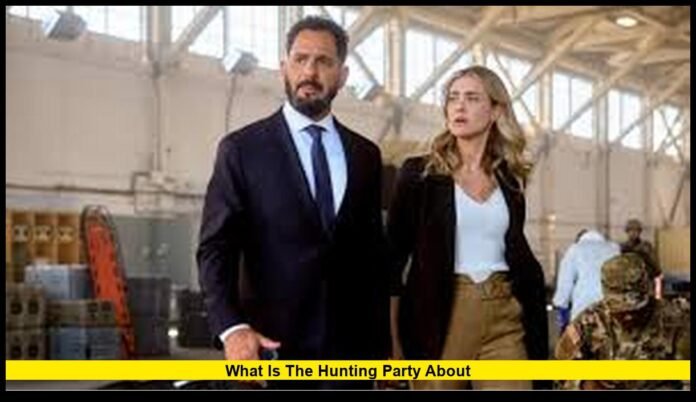

What is The Hunting Party about? The NBC crime drama follows a secret government task force formed after a hidden super-prison explodes, releasing some of the most dangerous serial killers in the United States. As of February 15, 2026, the series is airing its second season, continuing a high-stakes manhunt storyline that has become central to NBC’s primetime lineup.
The show blends psychological profiling, federal conspiracy, and fast-paced tactical action. Its central mystery still drives the narrative in 2026, while new characters and escalating threats keep viewers engaged week after week.
The Core Premise of The Hunting Party
The story begins with a catastrophic event. A covert detention facility known only as “The Pit” is destroyed in a massive explosion. This site was not an ordinary prison. It secretly housed serial killers considered too dangerous for traditional incarceration.
When the facility collapses, several inmates escape.
The government responds quickly. Officials assemble a specialized task force designed to track down and recapture the fugitives before they strike again. That mission becomes the backbone of the series.
Rebecca “Bex” Henderson, a former FBI profiler, leads the team. She has years of experience analyzing criminal behavior. Her ability to anticipate violent patterns makes her essential to the operation.
Each episode centers on locating one of the escaped killers. However, the larger mystery surrounding The Pit remains unresolved. That ongoing tension keeps the narrative layered and suspenseful.
Why The Hunting Party Feels Different From Other Crime Shows
Crime procedurals dominate network television. Many follow a familiar pattern: crime, investigation, arrest, and resolution.
This series takes a different approach.
The Hunting Party revolves around a single triggering event. The prison explosion is not a background detail. It shapes every decision and every investigation. Each fugitive represents unfinished business tied directly to the collapse of The Pit.
That structure allows the show to blend episodic storytelling with serialized drama.
Viewers follow:
- A continuing federal investigation into what caused the explosion
- Political and intelligence ramifications tied to the secret prison
- Personal struggles faced by agents working under extreme pressure
- Dangerous criminals who often anticipate law enforcement tactics
The result is a crime drama that balances immediate action with long-term intrigue.
Season 2 Status in 2026
Season 2 premiered in January 2026 on NBC. The show briefly paused for Winter Olympics coverage but returned later in February with new episodes.
The second season increases both emotional and operational stakes. The team faces fugitives who have had time to rebuild networks and plan carefully calculated attacks.
In addition, deeper questions about The Pit surface.
Season 2 explores:
- Who authorized the prison’s construction
- Whether the explosion was sabotage or accident
- The extent of federal knowledge about the facility
- How intelligence agencies managed classified detainees
These developments shift the story beyond simple capture missions. The narrative now involves institutional accountability and national security implications.
Rebecca “Bex” Henderson: The Center of the Story
Bex Henderson stands at the heart of the series. She is not portrayed as a flawless hero. Instead, she carries emotional weight from years of profiling violent offenders.
Her background as an FBI profiler gives her an edge in anticipating criminal moves. She studies patterns, personal histories, and psychological triggers.
Yet the job affects her personally.
The series often shows the emotional toll of entering the minds of violent offenders. Bex must balance strategic thinking with empathy and resilience. That tension adds depth to her character.
Her leadership style also shapes the team dynamic. She demands precision and accountability, but she understands the psychological strain her colleagues face.
The Task Force: Skills and Internal Conflict
The Hunting Party does not focus on a single protagonist alone. The task force operates as a unit composed of experts from various agencies.
Members bring:
- Tactical field experience
- Intelligence analysis expertise
- Surveillance and cyber capabilities
- Behavioral science backgrounds
This diversity strengthens investigations. It also creates friction.
Different professional cultures clash under pressure. Trust issues emerge as classified information surfaces. Decisions made in seconds can mean life or death.
The show frequently highlights how collaboration becomes essential in tracking highly intelligent fugitives.
Notable Guest Stars in Season 2
Season 2 gained attention for its lineup of guest appearances.
Kelsey Grammer portrays Noah Cyrus, a charismatic cult leader with a manipulative personality. His character introduces ideological control and psychological dominance into the storyline.
Eric McCormack appears as a calculating antagonist known as “The Boogeyman.” His portrayal adds eerie tension to his episodes.
Niecy Nash-Betts takes on the role of Detective Erica Burke. She brings investigative insight and authority that challenge the team’s strategies.
Josh Dallas portrays a fugitive nicknamed “The Connecticut Cobbler,” adding another layer of danger to the manhunt.
These guest roles elevate key episodes. They also reinforce the idea that each escaped inmate represents a unique threat.
The Ongoing Mystery of The Pit
The explosion that launched the series remains central to its identity.
Was the facility compromised from within?
Did external forces target it?
Was there negligence in its construction or oversight?
Season 2 continues to explore these questions. Flashbacks and confidential files gradually reveal hidden operations tied to the prison’s creation.
This ongoing mystery separates the show from purely episodic crime dramas. The answers hold implications beyond individual arrests.
The fallout may reshape federal policy within the show’s universe.
Themes That Drive the Drama
Beyond chases and arrests, The Hunting Party explores moral and institutional themes.
One recurring issue is secrecy. A prison built entirely outside public knowledge raises serious ethical concerns. The show questions whether such secrecy protects citizens or creates greater risks.
Another theme is psychological endurance. Profilers and agents repeatedly confront extreme violence. The emotional cost becomes visible as the season progresses.
Trust is also central. Agents must rely on one another while navigating classified information and potential internal betrayal.
These themes add complexity without slowing the pace.
Pacing and Tone
The tone remains tense and urgent.
Episodes typically move between investigation rooms, field operations, and strategic briefings. Action sequences appear frequently but do not overshadow character development.
Dialogue remains sharp and purposeful. Characters rarely waste time with unnecessary exposition. Instead, the show prioritizes mission-driven storytelling.
Season 2 maintains a steady rhythm. Each episode advances both the weekly capture effort and the broader institutional mystery.
Audience Response and Network Position
While critical reception has varied, the series continues to hold a place in NBC’s primetime schedule.
Its premise appeals to viewers who enjoy high-concept crime thrillers. The blend of serial killer psychology and federal conspiracy resonates with audiences seeking layered storytelling.
Social media discussions often spike during major guest appearances. The show’s return from its Olympic hiatus also generated renewed interest.
The combination of network broadcast and streaming availability has expanded its reach across the United States.
Where Viewers Can Watch
The Hunting Party airs on NBC. Episodes stream on NBC’s digital platforms shortly after broadcast. Season 1 is available on Netflix, allowing viewers to catch up before diving into current episodes.
This accessibility helps maintain audience growth during Season 2.
What Is The Hunting Party About at Its Core?
At its core, the series is about accountability and pursuit.
It follows a team chasing fugitives who represent failures in a secret system. Each capture brings partial closure. Yet larger truths remain buried beneath layers of classified decisions.
The show asks whether a government can truly control danger by hiding it.
As Season 2 unfolds in 2026, those questions grow louder.
The manhunt continues. The conspiracy deepens. And the consequences of The Pit’s destruction ripple outward with every episode.
Are you following Season 2 so far? Share your thoughts on the unfolding investigation and stay connected as the chase intensifies.