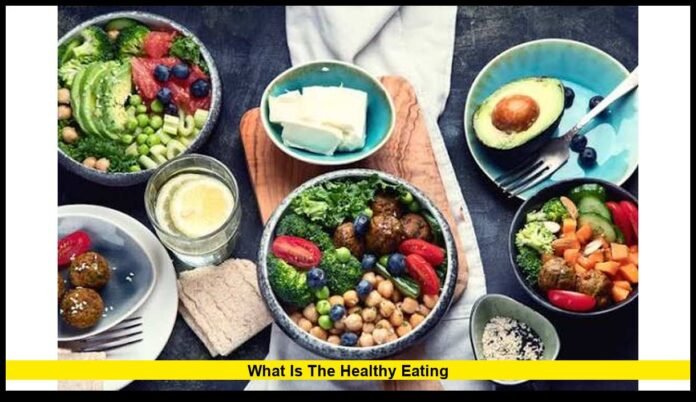

The What is the healthy eating index question is important for anyone interested in nutrition, balanced diets, and long-term health. The Healthy Eating Index (HEI) is a scientific measurement tool used to evaluate how closely a person’s eating habits align with the Dietary Guidelines for Americans. Rather than simply counting calories or measuring body weight, it examines the overall quality of food choices and whether a diet includes the recommended amounts of different food groups and nutrients.
The Healthy Eating Index is particularly useful because it provides a structured way to understand dietary patterns. It considers foods that support good health, such as fruits, vegetables, whole grains, and protein-rich foods, while also evaluating components that should be limited, including added sugars, saturated fats, and sodium.
Developed for nutrition research and public health assessment, the index helps researchers, policymakers, healthcare professionals, and nutrition specialists examine the quality of diets across different populations. It can also help people better understand whether their everyday food choices reflect established nutritional recommendations.
Understanding the Healthy Eating Index involves more than knowing its numerical score. It is also important to understand how the system works, what foods it measures, how its scoring method is organized, and what its results can and cannot tell someone about their health.
What Is the Healthy Eating Index?
The Healthy Eating Index, commonly abbreviated as HEI, is a scoring system designed to measure overall diet quality. It evaluates how closely a person’s food consumption follows the recommendations established in the Dietary Guidelines for Americans.
The index was developed by the United States Department of Agriculture (USDA) to provide researchers with a consistent method for examining dietary quality. It is used to assess individual diets, study population-level eating patterns, and evaluate changes in food consumption over time.
Unlike nutrition measurements that focus on individual nutrients, the Healthy Eating Index examines several parts of a person’s diet together. This approach recognizes that healthy eating depends on the overall combination of foods and beverages consumed rather than one particular ingredient or nutrient.
For example, a person might consume enough protein every day but eat very few vegetables, fruits, or whole grains. Looking only at protein intake would not provide a complete picture of that person’s diet.
The HEI addresses this limitation by considering multiple dietary components within one scoring framework.
The main purpose of the Healthy Eating Index is to determine how well an overall eating pattern reflects established federal dietary recommendations.
It is not a weight-loss calculator, a medical diagnostic test, or a direct measurement of someone’s physical health. Instead, it is a research-based tool for understanding dietary quality.
Why Was the Healthy Eating Index Developed?
The Healthy Eating Index was introduced in 1995 to help measure how well Americans followed federal dietary recommendations. Since its introduction, the index has been updated as dietary guidance and nutrition research have evolved.
Its development addressed an important challenge in nutrition research: how can scientists evaluate the quality of an entire diet using a consistent method?
Looking at individual foods alone does not always provide an accurate picture. A person might eat a healthy breakfast but consume few vegetables during the rest of the day. Another person might eat a wide variety of nutritious foods while consuming excessive amounts of sodium or added sugars.
The HEI provides a way to examine these dietary patterns collectively.
Researchers use the index to:
- Evaluate the overall quality of American diets.
- Compare dietary patterns across age groups and populations.
- Examine relationships between food choices and health outcomes.
- Assess the nutritional quality of meals, menus, and food products.
- Study whether nutrition education programs improve eating habits.
- Evaluate how food affordability and access relate to diet quality.
The index is also valuable for public health planning because it turns complex dietary information into a standardized set of scores. This makes it easier to identify areas where diets may not align with established recommendations.
Importantly, the HEI is designed to assess dietary quality, not the total amount of food someone eats. Its scoring approach generally accounts for food-group intake relative to total calories, allowing researchers to compare eating patterns with different energy levels.
How Does the Healthy Eating Index Work?
The Healthy Eating Index evaluates dietary patterns through individual components, each representing a different aspect of nutrition.
The current official general-population version identified in federal nutrition resources is the Healthy Eating Index–2020 (HEI-2020), which is designed for people ages two and older. A separate version, HEI-Toddlers-2020, was developed for children ages 12 through 23 months.
The HEI-2020 contains 13 components. Each component measures a specific food group, dietary element, or nutrient-related characteristic.
These components are divided into two categories: adequacy and moderation.
Adequacy Components
Adequacy components measure foods and dietary elements that are encouraged as part of a healthy eating pattern.
For these components, a higher score generally means that the diet includes more of the recommended food groups relative to the amount of energy consumed.
Examples include fruits, vegetables, whole grains, protein foods, and certain types of dietary fats.
Moderation Components
Moderation components evaluate dietary elements for which lower consumption is generally encouraged within the HEI framework.
For these components, a higher score indicates better alignment with the relevant dietary standard.
Examples include sodium, added sugars, refined grains, and saturated fats.
This distinction is essential when interpreting an HEI score. A high score for an adequacy component means the diet meets the relevant intake standard, while a high score for a moderation component means consumption is within the preferred range.
The index combines the individual component scores to calculate an overall result.
What Is a Good Healthy Eating Index Score?
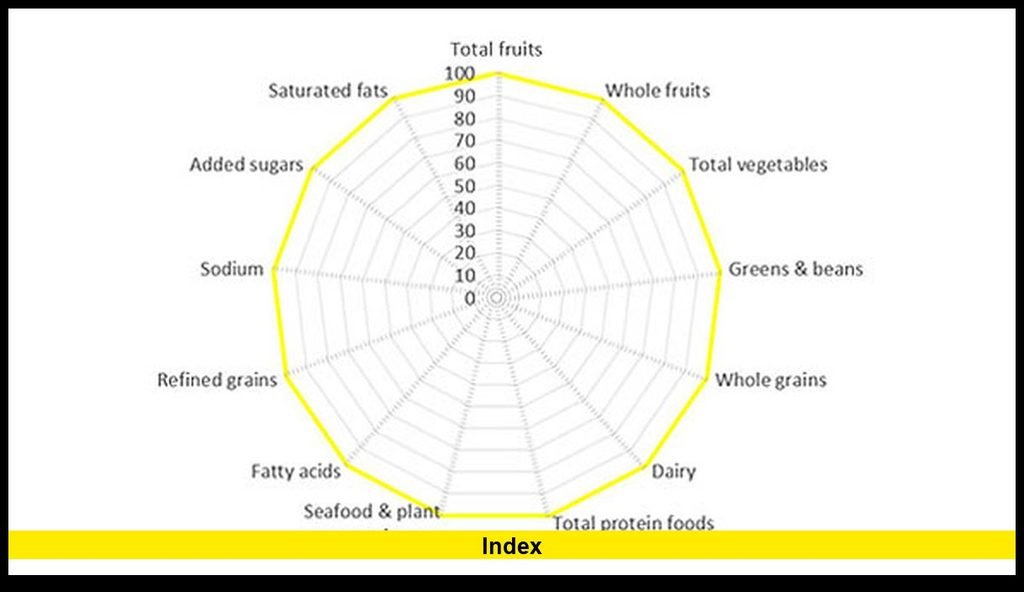
The HEI-2020 uses a scale ranging from 0 to 100 points. A higher score indicates that the foods consumed more closely align with the dietary standards used by the index.
A score of 100 represents the maximum possible alignment with all 13 component standards. A score of zero represents the minimum score across all components.
The scoring system does not automatically classify everyone into a particular health category. It measures diet quality against defined standards rather than predicting an individual’s medical condition.
The following table provides a general illustration of how different scores can be understood.
| HEI score | General interpretation |
|---|---|
| 90–100 | Very high alignment with the dietary standards |
| 80–89 | High alignment |
| 70–79 | Moderate alignment |
| 60–69 | Lower alignment |
| 0–59 | Considerable room for dietary improvement |
These ranges are an informal way to communicate scores, not official clinical classifications. Researchers should generally preserve the numerical score when reporting results rather than relying on letter grades or broad categories alone.
A score of 80, for example, does not guarantee that someone is free from nutritional deficiencies or chronic disease. Similarly, a lower score does not establish that an individual is unhealthy.
The total score is most useful when considered alongside the individual component scores. Two people can receive similar overall results while having different dietary strengths and weaknesses.
One person might consume plenty of vegetables and whole grains but too much sodium. Another might limit sodium and added sugars but eat insufficient fruits and vegetables. Their overall scores could be similar even though their dietary patterns differ.
For this reason, component-level analysis is important when using the HEI to understand diet quality.
The 13 Components of the Healthy Eating Index
The HEI-2020 includes nine adequacy components and four moderation components. Together, they provide a broad assessment of the dietary pattern.
The maximum point values below show how the 100-point scoring system is distributed.
| Dietary component | Maximum points | What it measures |
|---|---|---|
| Total Fruits | 5 | Fruit intake, including whole fruit and 100% fruit juice |
| Whole Fruits | 5 | Fruit intake excluding juice |
| Total Vegetables | 5 | Overall vegetable intake |
| Greens and Beans | 5 | Dark green vegetables and legumes |
| Whole Grains | 10 | Intake of whole-grain foods |
| Dairy | 10 | Intake of dairy foods and qualifying fortified soy beverages |
| Total Protein Foods | 5 | Intake of foods counted in the protein food group |
| Seafood and Plant Proteins | 5 | Seafood, nuts, seeds, soy foods, and legumes |
| Fatty Acids | 10 | Ratio of unsaturated to saturated fatty acids |
| Refined Grains | 10 | Consumption of refined grains |
| Sodium | 10 | Sodium intake relative to energy intake |
| Added Sugars | 10 | Added sugars as a proportion of energy intake |
| Saturated Fats | 10 | Saturated fat as a proportion of energy intake |
Each component has its own scoring standards. Some receive full points when intake reaches a specified level, while moderation components receive higher scores when intake remains below defined limits.
The HEI-2020 generally uses a density-based method, evaluating food-group quantities per 1,000 calories. The fatty acids component is calculated using a ratio of unsaturated to saturated fatty acids.
These methods allow the index to evaluate the composition of a diet rather than simply rewarding people for eating larger quantities of food.
1. Total Fruits and Whole Fruits
The fruit components examine both overall fruit consumption and intake of whole fruits.
Whole fruits, including apples, oranges, berries, pears, and bananas, contribute to the whole-fruit component. The total-fruit component also includes 100% fruit juice.
Separating these measures helps distinguish between different forms of fruit consumption. Eating whole fruit provides fiber in its natural structure, whereas juice generally contains less fiber per serving.
A diet that includes a variety of whole fruits can contribute to a stronger fruit-related score.
2. Total Vegetables
The total-vegetables component evaluates vegetable consumption across the overall dietary pattern.
Vegetables provide vitamins, minerals, fiber, and other nutrients. Examples include carrots, broccoli, tomatoes, spinach, peppers, cauliflower, and green beans.
Eating a variety of vegetables can help improve the quality of a diet. Both fresh and appropriately prepared frozen vegetables can contribute to a balanced eating pattern.
The HEI evaluates the amount consumed relative to calories rather than simply counting the number of different vegetables someone eats.
3. Greens and Beans
This component focuses on dark green vegetables and legumes, including beans and peas.
Examples include spinach, kale, broccoli, lentils, black beans, and chickpeas.
These foods can supply fiber, minerals, and other important nutrients. Legumes also contribute plant-based protein, making them useful in diets that include animal protein, as well as vegetarian and vegan eating patterns.
The separate component gives additional attention to these food groups within the overall index.
4. Whole Grains
Whole grains retain the bran, germ, and endosperm of the grain kernel in their original proportions.
Examples include oatmeal, brown rice, whole-wheat bread, barley, and quinoa.
Whole grains generally provide more fiber than comparable refined-grain products. Replacing some refined grains with whole-grain alternatives can improve the quality of everyday meals.
The HEI-2020 assigns up to 10 points to this component, making whole-grain intake one of the more heavily weighted individual measures.
5. Dairy
The dairy component evaluates consumption of foods such as milk, yogurt, and cheese, along with qualifying fortified soy beverages.
These foods can provide protein, calcium, and other nutrients. The precise nutritional contribution depends on the product selected.
The HEI component uses defined food-group standards rather than judging dairy products solely by whether they are labeled low-fat or full-fat.
People who avoid dairy may need to consider suitable alternatives based on their nutritional needs. Not every plant-based beverage qualifies as a dairy equivalent under the HEI scoring rules.
6. Total Protein Foods
This component evaluates foods classified within the protein food group.
Examples include eggs, poultry, seafood, meat, nuts, seeds, soy foods, and legumes.
Protein supports muscle maintenance, tissue repair, and other essential bodily functions. A varied diet can obtain protein from both animal and plant sources.
The HEI does not simply measure the total grams of protein consumed from every possible source. It uses defined food-group equivalents for the foods included in this component.
7. Seafood and Plant Proteins
The seafood and plant-proteins component places particular emphasis on seafood and plant-derived protein foods.
Examples include fish, shellfish, beans, lentils, nuts, seeds, and soy foods.
These foods can provide protein and a range of other nutrients. Seafood can also provide omega-3 fatty acids, depending on the species.
This component complements the total-protein measure by evaluating the presence of particular protein sources in the diet.
8. Fatty Acids
The fatty acids component measures the ratio of polyunsaturated and monounsaturated fatty acids to saturated fatty acids.
Unsaturated fats occur in foods such as nuts, seeds, avocados, and many plant oils. Saturated fats are found in varying amounts in foods such as butter, certain meats, and some dairy products.
Rather than measuring only the total quantity of fat, this component considers the balance between these types of fatty acids.
Its maximum score is 10 points.
9. Refined Grains
Refined grains are grains that have undergone processing that removes the bran and germ, leaving primarily the starchy endosperm.
White bread, many conventional pasta products, and white rice are examples of refined-grain foods, although enrichment and fortification can restore certain nutrients.
The HEI moderation component awards higher scores when refined-grain intake is lower relative to total energy intake.
This does not mean that eating a refined-grain food automatically makes a diet unhealthy. The index assesses the overall pattern and the amount consumed.
10. Sodium
Sodium is an essential mineral, but excessive intake can be a concern for cardiovascular health, particularly blood pressure.
Common sources include packaged meals, processed meats, salty snacks, sauces, and restaurant foods.
The HEI evaluates sodium relative to calories rather than simply counting milligrams consumed in isolation.
Reading nutrition labels, preparing more meals at home, and comparing products can help people make informed choices about sodium intake.
11. Added Sugars
Added sugars are sugars and caloric sweeteners incorporated into foods or beverages during preparation, processing, or at the table.
Examples include sugar added to sweetened drinks, desserts, flavored products, and some packaged foods.
The added-sugars component evaluates the proportion of dietary energy coming from these sources. It does not treat naturally occurring sugars in intact fruit in the same way as added sugars.
Choosing water or unsweetened beverages more often and checking ingredient lists can help people understand how much added sugar their diets contain.
12. Saturated Fats
Saturated fats contribute energy and are present in many foods, including butter, certain meats, full-fat dairy products, and some tropical oils.
The HEI-2020 awards more points when saturated fat accounts for a smaller proportion of total energy intake.
This component evaluates the dietary pattern as a whole. It is not a standalone assessment of cardiovascular risk and does not replace individualized medical advice.
13. Putting the Components Together
The final HEI score combines all 13 components. Each one contributes to the total, allowing researchers to examine overall diet quality alongside specific areas that may require attention.
A useful feature of this structure is that it avoids reducing nutrition to a single food group. A balanced diet involves the combination of food choices, their relative quantities, and the balance between recommended and limited dietary elements.
How Is the Healthy Eating Index Score Calculated?
Calculating a Healthy Eating Index score requires detailed information about the foods and beverages consumed. The process is more complex than completing a short questionnaire or counting servings of vegetables.
Researchers generally follow three main steps.
Step 1: Identify the foods being evaluated.
The assessment begins with a defined collection of foods. This could represent an individual’s reported diet, a school lunch menu, a food assistance package, or the average dietary intake of a population.
Step 2: Determine food-group quantities and nutrient values.
Researchers estimate the amounts of relevant food groups and nutrients. These may include fruit, vegetables, whole grains, protein foods, sodium, added sugars, and fatty acids.
Food composition databases help translate reported foods into standardized dietary measurements. In U.S. research, the Food Patterns Equivalents Database and the Food and Nutrient Database for Dietary Studies are among the resources used for this purpose.
Step 3: Apply the scoring standards.
Each of the 13 components is scored according to its established standards. Intakes between the minimum and maximum scoring thresholds generally receive proportional scores.
The component scores are then added together to produce the overall HEI score, which ranges from zero to 100.
The accuracy of the result depends on the quality of the underlying dietary information. A detailed record of several days of eating may provide a more representative picture of usual intake than a single day’s food record, although the appropriate assessment method depends on the research question.
Researchers also need to select the appropriate version of the index and scoring method for the population or foods being studied.
What Is the Latest Healthy Eating Index Version?
The latest official general-population version identified in federal nutrition resources is the Healthy Eating Index–2020, also called HEI-2020. It measures alignment with the Dietary Guidelines for Americans, 2020–2025.
The federal government released a newer edition of the Dietary Guidelines for Americans covering 2025–2030 in January 2026. These guidelines emphasize eating whole, nutrient-dense foods, including vegetables, fruits, protein foods, dairy, healthy fats, and whole grains, while reducing highly processed foods and limiting added sugars.
However, a distinction is important: the latest dietary guidelines and the latest Healthy Eating Index are not necessarily the same edition.
The HEI-2020 retains the same component structure and scoring standards as the HEI-2015. Although the newer federal dietary guidance is now in effect, the official HEI resources identified for this article continue to describe HEI-2020 as the current version.
There is no verified official confirmation in the reviewed resources that a new HEI version has replaced HEI-2020 to align with the 2025–2030 Dietary Guidelines.
Consequently, researchers should not assume that the HEI-2020 scoring standards automatically reflect every recommendation in the newer dietary guidelines. Anyone conducting formal nutrition research should verify the appropriate index version and methodology before interpreting results.
This distinction also matters to readers who encounter different nutrition scores in older studies. A study using HEI-2015 or HEI-2020 may employ a similar scoring framework, but the index version should still be reported accurately.
What Do Healthy Eating Index Scores Tell Us About American Diets?
The Healthy Eating Index is used to evaluate dietary quality across the United States. Researchers can calculate average scores from nationally representative dietary surveys to examine how closely the population’s food consumption aligns with dietary recommendations.
One published analysis using U.S. dietary data from 2017–2018 reported an average HEI-2020 score of approximately 58 out of 100 for people ages two and older.
That result illustrates the value of the index: it provides a numerical way to assess the overall quality of dietary patterns across a large population.
However, the figure represents a specific survey period, not a verified measurement of what Americans are eating today. It should not be presented as the current national average without newer, comparable data.
Population-level results also do not describe every individual. Some people may have diets that align closely with the HEI standards, while others may have substantially different eating patterns.
The component scores help explain where improvement may be needed. For example, researchers can examine fruit intake, vegetable consumption, whole-grain intake, or added-sugar consumption separately instead of relying only on the overall score.
These findings can inform nutrition education, food assistance programs, school meal planning, and public health initiatives.
The HEI can also help researchers study differences in dietary quality across age groups and other population characteristics. Such comparisons can identify areas for further investigation, although a score alone does not explain why a dietary difference exists.
How Can You Use the Healthy Eating Index to Improve Your Diet?
The Healthy Eating Index was primarily developed as a research and assessment tool. It is not necessary to calculate an official score to make useful changes to everyday eating habits.
Nevertheless, the index’s underlying principles can help people evaluate whether their diets include a reasonable variety of nutritious foods.
Eat More Fruits and Vegetables
Include fruits and vegetables in meals and snacks throughout the day. Choose a variety of colors and types rather than relying on just one or two options.
Fresh, frozen, and appropriately prepared canned produce can all be useful choices. When buying canned vegetables, comparing sodium levels may help people select products that better suit their needs.
Whole fruit is a particularly useful option because it provides fiber as well as vitamins and minerals.
Choose Whole Grains More Often
Look for whole-grain options such as oatmeal, brown rice, whole-wheat bread, and whole-grain pasta.
Read product labels carefully because terms such as multigrain or wheat do not always mean that a product is made primarily from whole grains.
Replacing some refined-grain foods with whole-grain alternatives can help increase dietary fiber and improve the quality of meals.
Include Different Protein Sources
A varied diet can include fish, eggs, poultry, lean meats, beans, lentils, nuts, seeds, and soy foods.
The best choices depend on individual nutritional requirements, food preferences, budget, and any medical considerations.
Including plant-based protein sources can add variety and provide nutrients such as fiber that are not found in animal foods.
Pay Attention to Added Sugars and Sodium
Packaged foods and beverages can contribute significant amounts of added sugars or sodium to a person’s diet.
Check nutrition labels and compare similar products when shopping. Unsweetened drinks, lower-sodium options, and meals prepared with herbs and spices can help support more balanced food choices.
These changes do not require eliminating every sweet food or avoiding all packaged products. The overall pattern matters more than one isolated choice.
Consider the Balance of Dietary Fats
The HEI evaluates the relationship between unsaturated and saturated fatty acids.
Foods such as nuts, seeds, avocados, and plant oils can contribute unsaturated fats to a diet. The amount and type of fat that best fit an individual’s needs may depend on their overall dietary pattern and medical circumstances.
The objective is to evaluate food choices in context rather than assume that one ingredient determines the quality of an entire diet.
Healthy Eating Index vs. Other Nutrition Measures
The Healthy Eating Index is sometimes confused with other nutrition tools, but these methods answer different questions.
| Nutrition measure | Main purpose |
|---|---|
| Healthy Eating Index | Evaluates alignment with defined dietary recommendations |
| Body mass index (BMI) | Estimates weight relative to height |
| Calorie tracking | Estimates energy consumed from food and beverages |
| Nutrition Facts label | Shows selected nutrient and calorie information for a product |
| Dietary surveys | Collect information about food consumption and eating patterns |
For example, BMI does not directly measure dietary quality. Two people with similar BMI values may have very different eating habits.
Calorie tracking also differs from the HEI. A diet can provide an appropriate amount of energy but still lack variety or contain relatively high amounts of sodium and added sugars.
Similarly, a Nutrition Facts label helps consumers assess an individual product, while the HEI evaluates the combined dietary pattern.
These measures can complement one another, but they should not be treated as interchangeable.
Who Uses the Healthy Eating Index?
Several groups use the HEI for different purposes.
Nutrition researchers use it to assess dietary patterns and examine associations between diet quality and health outcomes.
Public health professionals use population-level scores to identify dietary gaps and support nutrition education strategies.
Healthcare and nutrition specialists may use HEI-based methods to evaluate dietary records or assess the quality of meals and eating patterns.
Food policy researchers use the index to examine the nutritional quality of food supplies, food assistance packages, and meal programs.
Program evaluators may use it to determine whether a nutrition intervention is associated with changes in the quality of foods consumed.
The HEI is flexible enough to evaluate more than an individual’s daily diet. It can also be applied to menus, collections of foods, and other defined food sets, provided the required dietary information is available.
However, not every user needs to calculate a formal HEI score. For most people, practical nutrition guidance and individualized advice from a qualified healthcare professional may be more useful than attempting a technical calculation without appropriate data.
Limitations of the Healthy Eating Index
Although the HEI is a valuable measurement tool, it has several limitations.
First, its results depend on the accuracy of dietary information. People may forget foods they consumed, underestimate portion sizes, or have difficulty recalling ingredients in restaurant meals and packaged products.
Second, the score reflects the standards of the particular HEI version being used. It should not be interpreted as a universal definition of every possible healthy diet.
Third, the overall score can conceal differences between dietary components. Two people may have identical total scores despite having different strengths and weaknesses in their eating patterns.
Fourth, the HEI does not directly diagnose nutritional deficiencies, measure disease, or predict an individual’s health outcome with certainty. A higher score indicates stronger alignment with the index’s dietary standards, not a guarantee of better health in every circumstance.
Finally, the index does not independently capture every factor that influences nutrition. Food affordability, cultural preferences, food availability, allergies, medical conditions, and individual nutritional requirements can all affect food choices.
These limitations do not make the HEI ineffective. They show why the score should be interpreted in the context of the question being studied and the information available.
Frequently Asked Questions
Q1. What is the Healthy Eating Index in simple terms?
A: The Healthy Eating Index is a scoring system that measures how closely a diet follows established U.S. dietary recommendations. It evaluates multiple food groups and dietary components to produce an overall score from zero to 100.
Q2. What is the highest possible Healthy Eating Index score?
A: The highest possible score is 100. It represents the maximum score across all 13 components of the HEI-2020.
Q3. Is a higher Healthy Eating Index score better?
A: Yes. A higher score indicates that the foods consumed more closely align with the dietary standards used by the index. However, it does not guarantee that an individual is healthy or free from disease.
Q4. What foods are included in the Healthy Eating Index?
A: The index evaluates food groups and dietary components that include fruits, vegetables, whole grains, dairy, protein foods, seafood, plant proteins, fatty acids, refined grains, sodium, added sugars, and saturated fats.
Q5. Can I calculate my own Healthy Eating Index score?
A: It is possible to calculate an HEI score for an individual’s diet, but doing so accurately requires detailed food consumption information and the appropriate food-group and nutrient calculations. A casual estimate based on a few meals is not equivalent to a formally calculated score.
Final Thoughts on What Is the Healthy Eating Index
Understanding what the Healthy Eating Index is can help readers recognize how nutrition researchers evaluate the quality of dietary patterns. Rather than focusing on one food, one nutrient, or the number of calories consumed, the index examines multiple aspects of eating habits together.
Its 100-point scale and 13 components provide a structured method for assessing fruit and vegetable consumption, whole grains, protein foods, dietary fats, sodium, added sugars, and other important elements.
The HEI is especially valuable for researchers and public health professionals, but its underlying principles can also help individuals reflect on their food choices. Eating a varied diet, including nutrient-rich foods, and paying attention to added sugars, sodium, and refined grains are practical starting points.
The most important consideration is that a numerical score is a measurement tool, not a complete assessment of personal health. Individual needs vary, and dietary decisions should take medical circumstances and nutritional requirements into account.
Share your thoughts in the comments, and stay updated for more informative articles about nutrition, healthy eating, and the latest dietary guidance.