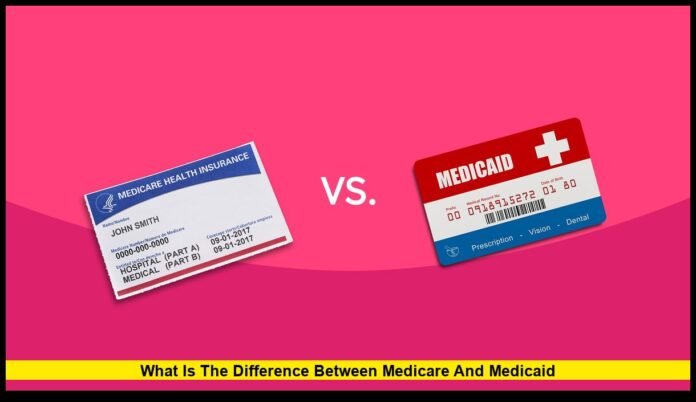

In 2025, as healthcare costs continue to rise and millions of Americans depend on government-funded health programs, understanding what is the difference between Medicare and Medicaid has become more crucial than ever. While the two programs sound similar and often overlap in discussion, they serve distinct purposes, target different populations, and are funded in different ways.
Both programs were created in 1965 under the Social Security Act to ensure healthcare access for those who might otherwise struggle to afford it. However, Medicare primarily serves older adults and certain people with disabilities, while Medicaid provides coverage for individuals and families with low income.
In this comprehensive guide, we’ll explore the differences, similarities, recent updates, and how both programs can work together to support millions of Americans.
Medicare: Federal Health Insurance for Seniors and the Disabled
Medicare is a federal health insurance program primarily designed for:
- Individuals aged 65 and older
- People under 65 with certain disabilities
- Individuals diagnosed with End-Stage Renal Disease (ESRD) or ALS (Lou Gehrig’s disease)
Managed by the Centers for Medicare & Medicaid Services (CMS), Medicare operates nationally, meaning its benefits and costs are consistent across all 50 states. Funding comes from payroll taxes, premiums paid by beneficiaries, and contributions from the federal budget.
The Four Parts of Medicare Explained
| Part | What It Covers | Key Details |
|---|---|---|
| Part A (Hospital Insurance) | Inpatient hospital care, skilled nursing facility care, hospice, and some home healthcare | Most Americans don’t pay a premium if they paid Medicare taxes for 10 years |
| Part B (Medical Insurance) | Doctor visits, preventive services, lab tests, durable medical equipment | Requires a monthly premium; expected to rise from $185 in 2025 to about $206.50 in 2026 |
| Part C (Medicare Advantage) | Combines Parts A & B and often includes drug, dental, and vision coverage | Offered by private insurers approved by Medicare |
| Part D (Prescription Drug Coverage) | Covers prescription medications | Costs vary by plan and income |
Medicare allows flexibility through Original Medicare (Parts A and B) or Medicare Advantage (Part C), letting individuals choose the structure that best suits their healthcare needs and financial situation.
Medicaid: Joint Federal and State Health Assistance for Low-Income Americans
Medicaid, unlike Medicare, is a joint federal and state program that provides health coverage for individuals and families with limited income and resources. It’s designed to assist low-income adults, children, pregnant women, seniors, and people with disabilities.
While the federal government sets minimum guidelines for coverage, each state has the flexibility to manage its own Medicaid program. This means eligibility rules and benefits can vary depending on where you live.
In 2025, more than 86 million Americans are enrolled in Medicaid, making it the largest public health insurance program in the U.S.
Key Features of Medicaid
- Eligibility: Based on income, household size, and sometimes disability or medical need.
- Coverage: Includes hospital care, doctor visits, preventive services, prescription drugs, and long-term care.
- Cost: Usually free or at very low cost to enrollees. Some states charge small copayments, but Medicaid ensures essential services remain accessible.
Medicaid Expansion Under the Affordable Care Act (ACA)
Since the Affordable Care Act took effect, most states have expanded Medicaid coverage to individuals earning up to 138% of the federal poverty level (FPL).
As of 2025, 41 states and Washington D.C. have adopted this expansion, allowing millions of additional adults to qualify for coverage, particularly those without dependent children who previously fell into coverage gaps.
Core Differences Between Medicare and Medicaid
Despite their shared goal of improving healthcare access, Medicare and Medicaid differ in several key ways.
| Category | Medicare | Medicaid |
|---|---|---|
| Type of Program | Federal health insurance | Federal and state assistance program |
| Administration | Managed by CMS nationwide | Jointly run by states and the federal government |
| Eligibility | Based on age (65+) or disability | Based on income and financial need |
| Funding Source | Federal payroll taxes and premiums | Federal and state taxes |
| Coverage Scope | Hospital, doctor, and prescription services | Comprehensive medical, dental, and long-term care (varies by state) |
| Uniformity | Same benefits across all states | Varies by state |
| Costs to Enrollees | Premiums, deductibles, and coinsurance | Usually minimal or no cost |
| Primary Beneficiaries | Seniors and individuals with disabilities | Low-income families and individuals |
Both programs can overlap for some individuals — those who are eligible for both Medicare and Medicaid are known as dual eligibles, and they receive coordinated coverage from both systems.
Dual Eligibility: Receiving Both Medicare and Medicaid
In 2025, approximately 12 million Americans qualify for both programs. Dual-eligible individuals often have limited income and health conditions that require ongoing care.
For these enrollees:
- Medicare pays for major medical expenses such as hospital and doctor visits.
- Medicaid helps cover out-of-pocket costs like premiums, deductibles, and copayments.
- In many cases, Medicaid also covers long-term care, which Medicare generally does not.
Many dual-eligible beneficiaries are automatically enrolled in Dual Eligible Special Needs Plans (D-SNPs) — specialized Medicare Advantage plans designed to coordinate both Medicare and Medicaid benefits seamlessly.
How Medicare and Medicaid Work Together
Here’s an example of how the two programs complement each other:
- A low-income senior with diabetes uses Medicare for doctor visits, lab tests, and medications under Part B and Part D.
- Medicaid then pays for the cost of insulin copayments, transportation to appointments, and long-term home care services if needed.
This dual coverage helps reduce financial stress for people living on fixed incomes and ensures they don’t have to choose between healthcare and daily essentials.
Recent Changes and Updates in 2025
Medicare Updates
- Premium Adjustments: The standard Part B premium has increased to $185 per month in 2025, with a projected rise to $206.50 in 2026.
- Prescription Drug Price Reform: Under the Inflation Reduction Act, Medicare can now negotiate the prices of certain prescription drugs, expected to lower costs for millions of seniors.
- Expanded Telehealth Access: Telehealth coverage has been permanently expanded, allowing seniors to connect with doctors remotely without extra costs.
- Part D Out-of-Pocket Cap: Starting in 2025, a new $2,000 annual cap limits how much beneficiaries spend on prescription drugs.
Medicaid Updates
- Eligibility Redeterminations: Following pandemic-era protections, states have resumed verifying eligibility, meaning some people may lose coverage if they no longer meet income requirements.
- Maternal Health Extensions: Many states now offer 12 months of postpartum coverage for new mothers, addressing maternal health disparities.
- Mental Health Expansion: States are boosting Medicaid funding for behavioral health and addiction services as part of broader efforts to combat the mental health crisis.
These updates reflect a growing federal and state commitment to affordability, accessibility, and preventive care across both programs.
Who Should Apply for Which Program?
Choosing between Medicare and Medicaid — or understanding your eligibility for both — depends on personal circumstances.
- Choose Medicare if:
- You are 65 or older.
- You have a qualifying disability or specific health condition.
- You have paid into Social Security through employment.
- Choose Medicaid if:
- You have limited income and assets.
- You meet your state’s income and household criteria.
- You require long-term care or additional assistance not covered by Medicare.
For individuals who qualify for both, dual enrollment ensures more comprehensive coverage and minimizes out-of-pocket costs.
How to Apply for Medicare and Medicaid
Applying for Medicare
- Visit ssa.gov/medicare or your local Social Security office.
- Enrollment is automatic at age 65 if you already receive Social Security benefits.
- If not, you can manually enroll during the Initial Enrollment Period, which starts three months before your 65th birthday.
Applying for Medicaid
- Apply online through HealthCare.gov or your state’s Medicaid office.
- You’ll need proof of income, ID, and citizenship or legal residency documents.
- Medicaid applications are open year-round — there’s no specific enrollment window.
Both programs also offer appeal processes if your application is denied.
Final Thoughts: Why Knowing the Difference Matters
Understanding what is the difference between Medicare and Medicaid is essential for navigating healthcare decisions, especially as the population ages and costs rise.
- Medicare ensures that seniors and disabled individuals have stable, nationwide health coverage.
- Medicaid protects low-income Americans of all ages, providing vital care that prevents medical debt and supports long-term health.
Together, these programs form the backbone of America’s healthcare safety net, helping millions access doctors, medication, and life-saving treatment.
If you or someone you know may qualify, take time to review your options carefully and apply early — doing so can make the difference between worry and peace of mind when it comes to healthcare coverage.