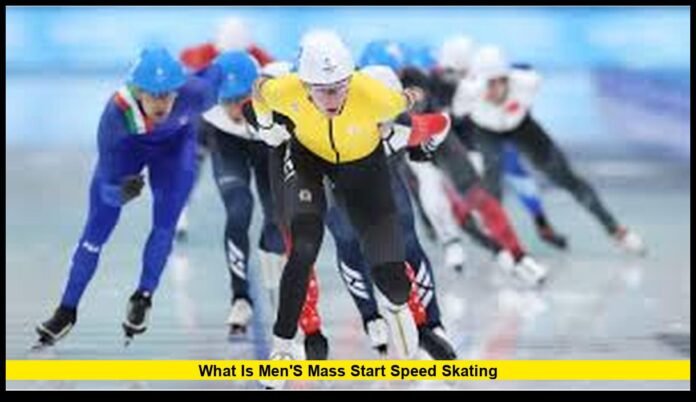

What is men’s mass start speed skating is one of the most common questions among U.S. viewers watching major international speed skating competitions. This discipline stands out because skaters start together in a pack, race tactically across 16 laps, and earn points during sprint laps that ultimately decide the winner. As of 2026, men’s mass start remains a major event in global long-track speed skating, featured in the Winter Olympics, ISU World Cup races, and World Championships.
Unlike traditional time-trial races where athletes skate in pairs against the clock, mass start creates direct competition on the ice. Positioning, drafting, and sprint timing define success, which makes the event one of the most tactical races in winter sports.
Men’s Mass Start Speed Skating Explained
Men’s mass start is a long-track race where all skaters begin simultaneously. Up to two dozen athletes line up at the start and race together on a 400-meter oval.
The event blends endurance racing with strategic sprinting. Skaters conserve energy for most of the race, then accelerate during key scoring laps.
Pack movement changes constantly. Leaders shift, breakaways form, and sprint battles occur several times before the finish.
This dynamic format separates mass start from traditional long-track events.
Race Distance and Structure
The standard men’s mass start race includes:
- 16 laps
- 6,400 meters total
- Intermediate sprint laps
- A final sprint with the highest points
- Pack racing throughout most of the event
Skaters must balance endurance with timing. Leading too early often wastes energy, while staying too far back can limit sprint chances.
The race usually remains compact until the final laps, which creates dramatic finishes.
Sprint Points System
Points define the outcome of the race. Skaters earn points during designated sprint laps and especially during the final lap.
Typical scoring moments:
| Sprint Stage | Lap | Importance |
|---|---|---|
| Sprint 1 | Lap 4 | Early points opportunity |
| Sprint 2 | Lap 8 | Mid-race positioning |
| Sprint 3 | Lap 12 | Tactical setup |
| Final Sprint | Lap 16 | Determines medals |
The final sprint carries the most value, which means late acceleration often decides podium positions.
Some skaters target intermediate points, while others focus entirely on the final sprint.
How Winners Are Determined
The skater with the highest total points wins the race.
Important factors include:
- Final sprint points carry the most weight
- Intermediate sprint points can influence rankings
- Skaters without points are ranked by finishing order
- Tactical positioning before the last two laps is critical
This system encourages strategic racing rather than constant front-running.
Olympic Status and Global Importance
Men’s mass start became an Olympic event in 2018 and quickly gained popularity. It now holds equal status with traditional long-track distances.
The event appears regularly in:
- Winter Olympics
- World Single Distances Championships
- ISU World Cup circuit
Olympic competition typically includes semifinal rounds followed by a final.
Athletes must manage energy across multiple races, which adds another layer of strategy.
Recent Competitive Trends (2024–2026)
Recent seasons show clear shifts in how athletes approach mass start.
Key developments:
- Faster closing laps across international races
- Increased emphasis on sprint specialization
- Strong tactical teamwork among top skating nations
- More controlled early pacing
- Aggressive positioning entering the final three laps
Races often remain tightly grouped until the last sprint, keeping results uncertain until the finish.
Core Strategies Used by Skaters
Mass start rewards smart decision-making.
Common strategies include:
Energy Conservation
Skaters stay mid-pack to draft behind others and reduce wind resistance.
Breakaway Attempts
Some athletes attempt early breakaways to collect sprint points.
Late Positioning
Moving forward before the final two laps is one of the most important tactical moves.
Sprint Timing
Successful skaters launch their sprint at the precise moment rather than leading too early.
Race awareness often separates winners from the rest of the field.
Equipment Specific to Mass Start
Skaters use long-track equipment but with additional safety considerations.
Essential gear:
- Clap skates for efficient stride extension
- Aerodynamic racing suits
- Protective gloves
- Mandatory helmets
- Cut-resistant materials under suits
Helmets distinguish mass start from most individual long-track events because pack racing increases collision risk.
Rules That Shape Competition
Officials enforce rules designed to protect athletes and maintain fairness.
Key rules include:
- Dangerous blocking is prohibited
- Overtaking must occur safely
- Lapped skaters may be removed from the race
- Interference can lead to penalties or disqualification
- Sprint points count only for top finishers at marked laps
These rules keep pack racing controlled while allowing tactical movement.
Mass Start vs Traditional Long-Track Racing
Mass start changes how speed skating works.
| Feature | Mass Start | Traditional Long-Track |
|---|---|---|
| Start format | Group start | Pair racing |
| Drafting | Allowed | Not relevant |
| Tactical racing | High | Moderate |
| Points scoring | Yes | No |
| Helmet use | Required | Usually not required |
Because of these differences, some athletes specialize specifically in mass start.
Skills Required for Success
Top mass start skaters combine multiple abilities.
Endurance
Sixteen laps require strong aerobic capacity.
Explosive Sprint Speed
Final sprint power often determines medals.
Tactical Awareness
Athletes must read pack movement and anticipate attacks.
Balance in Traffic
Skaters maintain stability while navigating crowded racing lines.
Race Timing
Knowing when to accelerate matters more than raw speed alone.
This blend of skills makes mass start one of the most complex speed skating events.
Semifinal and Final Format
Major championships divide the event into rounds.
Typical structure:
- Two semifinals
- Top finishers advance
- Points and finishing position determine qualification
- Final race awards medals
Athletes must race strategically in both rounds, not just the final.
Why Fans Are Drawn to the Event
Men’s mass start attracts viewers who may not follow traditional speed skating.
Reasons for its popularity:
- Visible tactics throughout the race
- Frequent position changes
- Sprint finishes similar to cycling
- Pack dynamics easy to understand
- Higher unpredictability than time-trial races
Broadcasters often highlight mass start as one of the most exciting long-track events.
Role of Team Tactics
Although medals are individual, teammates influence outcomes.
Examples of team strategy:
- Controlling race pace
- Helping teammates collect sprint points
- Setting up final sprint positioning
- Responding to rival breakaways
- Protecting key contenders
Team coordination has become more noticeable in recent seasons.
Safety and Risk Management
Pack racing introduces risks that do not exist in pair racing.
Safety measures include:
- Helmet requirements
- Monitoring interference
- Removal of lapped skaters
- Strict penalties for dangerous movement
Officials prioritize athlete safety while preserving competitive racing.
Training Approach for Mass Start Specialists
Training programs focus on endurance, sprint power, and tactical execution.
Common training elements:
- Interval skating sessions
- Sprint simulation drills
- Race scenario practice
- Strength training for explosive acceleration
- Video analysis of positioning
Athletes also train decision-making under fatigue, which mirrors late-race conditions.
Technical Developments in Recent Seasons
Modern racing continues to evolve due to equipment and analytics.
Important developments:
- Improved skate blade precision
- Faster ice maintenance techniques
- Aerodynamic suit refinements
- Data tracking for sprint timing
- Tactical modeling using race metrics
Teams increasingly rely on data to plan sprint moves.
Differences Between Mass Start and Short Track Racing
Mass start shares pack racing elements with short track but differs significantly.
| Element | Mass Start (Long Track) | Short Track |
|---|---|---|
| Track size | 400 meters | Smaller rink |
| Race length | Longer | Shorter |
| Contact level | Lower | Higher |
| Sprint pattern | Structured sprint laps | Continuous racing |
| Tactical flow | Gradual buildup | Constant intensity |
Some athletes move between disciplines, but specialization remains common.
Race Flow: What Happens Lap by Lap
Understanding the typical race pattern helps viewers follow tactics.
Early Laps (1–4)
The pack stays tight. Skaters conserve energy while positioning for the first sprint.
Middle Laps (5–12)
Breakaways may occur. Teams test pace and attempt to collect intermediate points.
Pre-Final Phase (13–15)
Positioning becomes aggressive. Skaters move forward and prepare for the decisive sprint.
Final Lap (16)
The race accelerates dramatically. Sprint timing determines the winner.
Why Sprint Timing Matters More Than Leading
Leading early increases energy expenditure due to wind resistance. Drafting behind others allows skaters to save energy.
This is why many winners stay hidden in the pack until late in the race.
Final lap speed is often the fastest lap of the entire event.
Common Tactical Mistakes
Even elite skaters make strategic errors.
Frequent mistakes include:
- Sprinting too early
- Getting boxed in before the final lap
- Missing intermediate sprint opportunities
- Spending too much time leading
- Poor positioning entering the final corner
Small decisions often change race outcomes.
Growth of the Event in the United States
U.S. interest in men’s mass start has increased as international broadcasts highlight tactical racing.
Key reasons for growth:
- Olympic visibility
- Easier viewing experience compared with time-trial formats
- Similarity to cycling and motorsport pack racing
- Increased storytelling around race strategy
The event now plays a major role in attracting new winter sports fans.
Future Direction of Men’s Mass Start
The discipline continues to evolve.
Current direction includes:
- Greater tactical specialization
- Faster final lap speeds
- More data-driven race planning
- Continued Olympic prominence
- Increased focus on spectator engagement
Mass start has become a central event within modern speed skating.
Key Takeaways
- Men’s mass start is a 16-lap pack race.
- Points from sprint laps decide winners.
- Final sprint carries the most importance.
- Strategy and positioning define success.
- Helmets are required because of pack racing.
- The event debuted at the Olympics in 2018 and remains a core discipline.
Understanding sprint laps makes the race easier to follow.
Men’s mass start speed skating combines endurance, tactical awareness, and explosive sprinting into one of the most compelling races on the ice. Pack dynamics create constant movement, while sprint scoring ensures the winner is not decided until the final lap.
Fans continue to follow the event because every race unfolds differently, shaped by positioning, timing, and strategy rather than raw speed alone.
What is men’s mass start speed skating becomes clear once you watch how skaters manage energy, navigate the pack, and launch decisive final sprints that determine podium results.
Which part of men’s mass start racing keeps you watching — the strategy, sprint finishes, or pack movement? Share your thoughts and stay updated.