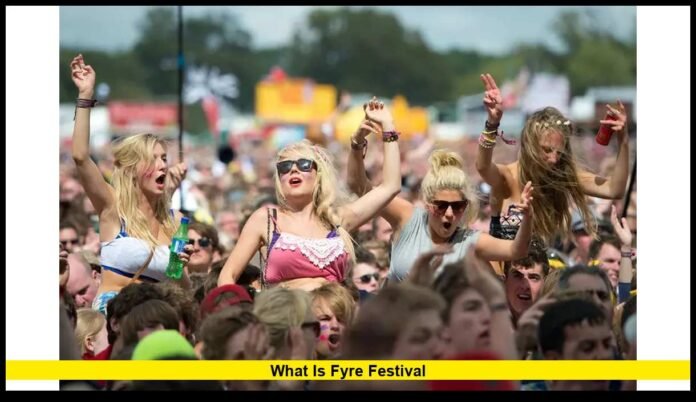

What is Fyre Festival remains a question that fascinates millions of people years after it made headlines for all the wrong reasons. Once promoted as an exclusive, high-end music and lifestyle experience in the Bahamas, the 2017 event became a symbol of marketing deception, influencer culture, and broken promises. Today, Fyre Festival stands as one of the most infamous failures in modern entertainment history, with its story continuing to echo across business schools, social media, and pop culture.
The Vision That Started It All
The concept for Fyre Festival began with entrepreneur Billy McFarland and rapper Ja Rule, who set out to create a luxury music festival designed to revolutionize live entertainment. The event was intended to promote their new venture, Fyre Media, a tech company that aimed to connect fans with artists through a booking app.
The festival was billed as a once-in-a-lifetime experience — an exclusive escape featuring private jets, luxury villas, celebrity chefs, and top-tier musical performances. Guests were promised a glamorous getaway on a private Bahamian island once associated with Pablo Escobar.
Tickets ranged from around $500 to more than $100,000, attracting wealthy travelers, social media influencers, and young professionals looking for status and exclusivity. From the start, it was marketed as a combination of paradise, music, and luxury — the ultimate symbol of high-end living.
The Marketing That Captured the World
The marketing campaign for Fyre Festival was unlike anything the entertainment world had seen. Using social media influencers and supermodels, the organizers built a dreamlike image of tropical perfection.
Models such as Bella Hadid, Kendall Jenner, and Hailey Bieber appeared in promotional videos filmed on pristine beaches, surrounded by luxury yachts and turquoise water. Each visual promised an unforgettable experience.
One of the most impactful marketing moments came when dozens of influencers simultaneously posted an orange square on Instagram with the simple caption “#FyreFestival.” That post created an immediate viral storm. Within 48 hours, tickets began selling out.
Behind the scenes, however, the infrastructure needed to support the festival did not exist.
The Reality That Awaited
When festivalgoers arrived in April 2017, the reality was unrecognizable from what had been advertised. Instead of a high-end resort, they found an unfinished campsite filled with emergency tents, minimal lighting, and chaotic organization.
What attendees experienced included:
- Disaster-relief tents instead of luxury villas.
- Cold sandwiches served in styrofoam boxes instead of gourmet meals.
- No running water or adequate sanitation.
- Missing luggage that had been tossed onto a dark field.
- Cancelled performances by scheduled acts like Blink-182 and Major Lazer.
The promised “private island” turned out to be a section of Great Exuma, an area never prepared for such a large-scale event. Guests were stranded, with flights delayed and transport unavailable. Many were left waiting for hours with little information.
Within a single day, the event was officially canceled. The images and videos that flooded social media transformed the festival into an instant disaster — a moment that went viral across the globe.
The Collapse and Its Fallout
The aftermath of Fyre Festival was swift and severe. Attendees, investors, and contractors immediately demanded answers. Lawsuits were filed, and an international investigation began into how the event was organized.
The spotlight quickly turned to Billy McFarland, who faced mounting accusations of fraud.
In 2018, McFarland was convicted of wire fraud and defrauding investors of over $26 million. He received a six-year federal prison sentence and was ordered to pay restitution to victims and investors.
Ja Rule maintained that he was unaware of the fraudulent actions and escaped criminal charges, though he continued to face civil lawsuits in connection with the event’s marketing.
The downfall of Fyre Festival destroyed Fyre Media and left dozens of Bahamian workers unpaid for their labor in setting up the site. Years later, McFarland publicly apologized and has since attempted to relaunch his career after his release from prison in 2022.
How the World Learned the Full Story
Fyre Festival’s collapse became one of the defining scandals of the decade. The world’s fascination with how such an ambitious idea fell apart led to multiple documentaries that revealed the inner workings of the event.
Through interviews, footage, and firsthand accounts, the films exposed how planning shortcuts, inexperience, and greed combined to create a perfect storm of disaster. They also revealed the power — and danger — of influencer-driven marketing in the digital era.
The documentaries helped solidify Fyre Festival’s reputation as the ultimate cautionary tale, transforming what could have been a brief embarrassment into a long-lasting cultural event.
Why Fyre Festival Became a Symbol
Beyond its financial and logistical collapse, Fyre Festival became a reflection of a much larger cultural problem. It revealed how online appearances can hide harsh realities and how easily perception can be manipulated through social media.
The event’s marketing was built on aspiration — the promise of being part of an elite experience. But when that illusion crumbled, it exposed the fragility of influencer culture and the consequences of putting image ahead of execution.
For many, the festival represented a turning point. Brands, advertisers, and consumers alike began re-evaluating how they approach digital marketing and celebrity endorsements.
Lessons Learned from the Disaster
Fyre Festival forced the entertainment and marketing industries to confront difficult truths about accountability, transparency, and planning.
Key lessons that emerged include:
- Marketing cannot replace logistics. Real-world preparation must match the promises made online.
- Influencers carry responsibility. Promoting events or products requires due diligence.
- Authenticity is essential. Audiences now value honesty over glamour.
- Accountability matters. The digital era can amplify both success and failure instantly.
Universities and business schools across the U.S. now use Fyre Festival as a case study in event management and ethics. It stands as one of the clearest examples of how overconfidence, poor planning, and social pressure can destroy a promising idea.
The Attempted Comeback
Since his release from prison, Billy McFarland has made several public statements about his intention to organize Fyre Festival II. He claims the second event will be a legitimate and transparent production designed to restore the brand’s reputation.
However, as of December 2025, no official venue, permits, or confirmed performers have been announced. Despite McFarland’s claims that investors are interested, there has been no verifiable progress toward a relaunch.
Many in the industry view the idea of a sequel as unrealistic. For most observers, the Fyre Festival brand remains permanently associated with failure, deception, and chaos.
The Human Cost
While the financial damage was enormous, the human cost of Fyre Festival’s collapse was just as significant. Hundreds of Bahamian locals who worked to prepare the site were left unpaid after the event’s cancellation. Many of them spoke publicly about the toll it took on their livelihoods.
Several class-action lawsuits sought justice for attendees and workers. Although some victims received partial refunds through legal settlements, many losses remain unrecovered. The incident serves as a stark reminder that grand visions without structure can have lasting consequences for everyone involved.
The Legacy in 2025
Nearly nine years later, Fyre Festival continues to influence how companies approach brand identity and online marketing. It has reshaped the conversation about digital trust and how consumers interact with influencers.
In 2025, Fyre Festival remains shorthand for false promises and overhyped ventures. It is often referenced alongside other large-scale corporate missteps as an example of how easily ambition can outpace reality.
For younger audiences who grew up hearing the story, it’s become both a meme and a metaphor — a reminder that not everything glamorous on social media reflects the truth behind the scenes.
Why People Still Ask What Happened
Even now, people continue to search online for details about the event, asking what is Fyre Festival and how it became such a defining failure. The fascination lies not just in the chaos, but in how the story mirrors broader cultural issues: wealth, privilege, image, and authenticity.
The combination of celebrity involvement, social media manipulation, and the rapid public collapse created the perfect narrative — one that continues to resonate as society navigates the influence of digital culture.
Fyre Festival may have promised a dream vacation, but it delivered a global lesson. Its story continues to remind the world that image without integrity will always collapse — no matter how bright it shines online.