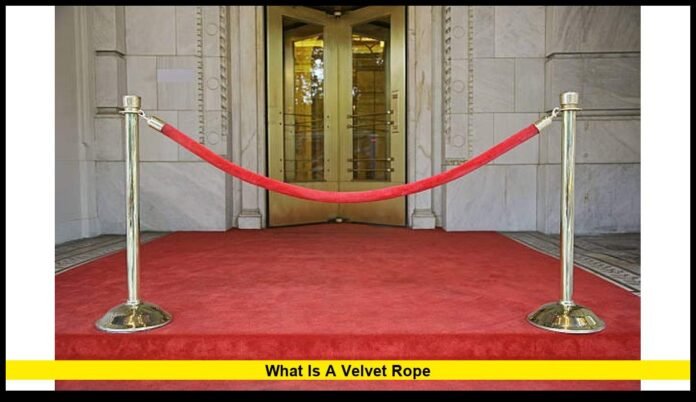

What is a velvet rope is a question many people are asking in 2026 as the term continues to evolve beyond its original meaning. Today, it refers not only to a physical barrier used in public spaces but also to a broader idea tied to exclusivity, status, and controlled access across industries in the United States.
The Basic Definition
A velvet rope is a soft, fabric-covered cord—usually red, black, or gold—hung between metal posts called stanchions. It is commonly placed at entrances or along pathways to guide crowds or restrict entry.
You will often see velvet ropes in locations such as:
- Nightclubs and lounges
- Red carpet events
- Hotels and casinos
- Museums and galleries
- Airport VIP sections
While it may look decorative, the velvet rope serves a clear purpose. It organizes movement while signaling that access may be limited.
How It Became a Symbol of Exclusivity
The velvet rope became widely recognized in American culture through nightlife and entertainment. High-end venues began using it to separate guests, creating a visible distinction between those allowed inside and those waiting outside.
That simple setup created a powerful message. Being inside the rope meant status, while being outside meant waiting or missing out. Over time, this visual divide turned the velvet rope into a cultural symbol of privilege and select access.
Where Velvet Ropes Are Used Today
Even in 2026, velvet ropes remain common across many industries. Their role has expanded beyond crowd control into experience design.
Events and Hospitality
Hotels, casinos, and event organizers use velvet ropes to manage crowds and improve guest flow.
They help:
- Maintain order during busy events
- Separate VIP and general admission areas
- Create a more organized environment
Retail and Luxury Brands
Many brands use velvet ropes to increase perceived value. Limiting entry can make a product or experience feel more desirable.
Examples include:
- Controlled entry during product launches
- Private shopping events
- Invite-only brand experiences
Travel and Airports
Airports use velvet rope systems in premium lounges and priority boarding zones.
These setups clearly signal different service levels and help streamline passenger movement.
Digital Platforms and Online Access
In recent years, the idea of a velvet rope has expanded into digital spaces.
Companies now create exclusive environments through:
- Subscription-only content
- Members-only communities
- Early-access product releases
- Private online events
This modern version is often called a “digital velvet rope.”
The Psychology Behind the Velvet Rope
The effectiveness of a velvet rope goes beyond its physical function. It taps into basic human behavior.
People tend to value things more when access is limited. This creates a sense of urgency and importance.
Key psychological factors include:
- Scarcity: Limited access increases demand
- Curiosity: Barriers make people want to know what’s inside
- Status: Entry becomes a sign of importance
- Social influence: Others’ interest raises perceived value
Because of these factors, businesses continue to use velvet ropes as a strategic tool.
Velvet Rope vs. Standard Barriers
Not all crowd-control systems are the same. Velvet ropes differ from standard retractable barriers in both purpose and perception.
| Feature | Velvet Rope | Standard Barrier |
|---|---|---|
| Appearance | Elegant and decorative | Simple and functional |
| Purpose | Exclusivity and experience | Line management |
| Common Locations | Events, VIP areas | Banks, airports, stores |
| Impact | Creates prestige | Focuses on efficiency |
Velvet ropes are designed to influence perception, not just manage movement.
The Velvet Rope Strategy in Business
Today, the term “velvet rope” is also used in marketing and business strategy.
Companies apply this concept to control access and increase interest in their products or services.
Common strategies include:
- Offering limited-time access
- Creating invite-only platforms
- Rewarding loyal customers with exclusive perks
- Releasing products in small quantities
This approach helps brands build anticipation and maintain a premium image.
Common Misunderstandings
There are several misconceptions about velvet ropes that often confuse people.
- They are not only used in luxury settings
- They do not always mean true exclusivity
- They are still widely used and not outdated
Understanding these points helps explain why the term remains relevant.
Why the Term Is Trending in 2026
Interest in “what is a velvet rope” has grown due to changing consumer trends.
Several factors are driving this:
- Increased focus on VIP experiences
- Growth of subscription-based platforms
- Popularity of private online communities
- Rising interest in luxury branding
As exclusivity becomes more common in everyday life, the term continues to gain attention.
Real-Life Examples Across the U.S.
Velvet ropes are still easy to spot in major cities across the country.
You will commonly see them at:
- Entertainment events and premieres
- Las Vegas nightlife venues
- High-end retail stores
- Exclusive corporate events
At the same time, their digital equivalent is becoming just as important, especially in online business models.
What the Future Looks Like
The velvet rope is not disappearing. Instead, it is adapting to modern needs.
Future trends may include:
- More personalized access systems
- Stronger integration with digital platforms
- Expanded use in membership-based services
- Blending physical and virtual exclusivity
This evolution shows how a simple concept continues to stay relevant.
Final Thoughts
The meaning of a velvet rope has expanded significantly over time. What started as a simple crowd-control tool now represents exclusivity, strategy, and experience design across both physical and digital spaces.
Do you think velvet rope culture adds value to experiences, or does it create unnecessary barriers? Share your thoughts below.