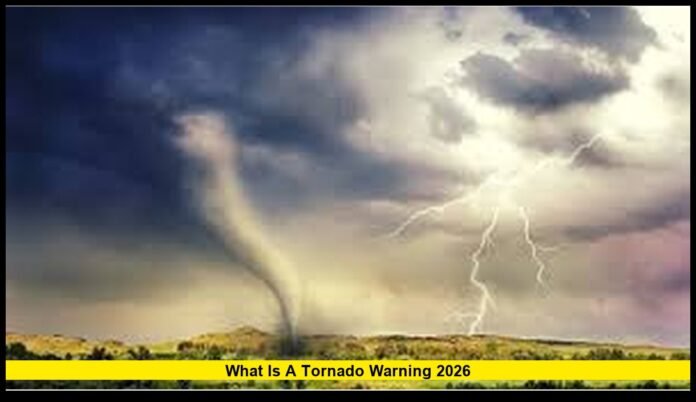

What is a tornado warning is one of the most searched questions during severe weather outbreaks in the United States. A tornado warning is an official alert issued by the National Weather Service when a tornado has been sighted or detected by weather radar, indicating that people in the warned area must immediately seek shelter.
This type of alert signals a dangerous and urgent weather situation. It means that a tornado is either already occurring or likely to strike very soon. Tornado warnings differ from general weather alerts because they indicate an immediate threat to life and property.
Meteorologists rely on advanced radar systems, storm reports, and atmospheric monitoring to determine when a warning is necessary. These alerts are designed to give residents enough time to reach a safe location before a tornado approaches.
Understanding how tornado warnings work can help individuals and communities respond quickly when severe weather threatens their area.
How a Tornado Warning Differs From a Tornado Watch
Many people mistakenly believe that tornado watches and tornado warnings mean the same thing. However, these alerts represent very different levels of risk.
A tornado watch signals that conditions in the atmosphere could support tornado development. This alert encourages people to stay alert and monitor weather updates.
A tornado warning, however, confirms that a tornado has already been detected or is highly likely to occur.
The difference can be summarized as follows:
| Weather Alert | Meaning | Recommended Action |
|---|---|---|
| Tornado Watch | Weather conditions could produce tornadoes | Stay alert and monitor updates |
| Tornado Warning | Tornado detected or visually confirmed | Take shelter immediately |
Tornado watches often cover large areas that may include several counties or even multiple states.
Warnings focus on smaller locations where storms are actively producing dangerous rotation or confirmed tornado activity.
How Meteorologists Detect Tornado Threats
Meteorologists use several tools and observations to identify tornado-producing storms.
Modern forecasting centers monitor weather conditions constantly, especially during severe weather seasons.
Key detection tools include:
- Doppler weather radar
- Satellite imagery
- Storm spotter reports
- Surface weather observations
Doppler radar plays a critical role in tornado detection. This radar technology measures precipitation intensity and wind movement inside storms.
Meteorologists analyze radar data to identify rotating storms known as supercells.
When radar reveals strong rotation within a thunderstorm, meteorologists consider the possibility of tornado development.
Visual reports from trained storm spotters or law enforcement can confirm tornado sightings.
Once credible evidence appears, forecasters issue a warning for the affected area.
Typical Duration of Tornado Warnings
Tornado warnings usually remain in effect for 30 to 60 minutes.
Meteorologists track storms closely and adjust warning areas as storms move.
If a tornado continues along a path, the warning may shift to new communities.
Warnings expire when the threat passes or the storm weakens.
Weather offices provide updates throughout the event to keep residents informed about storm movement.
Ways the Public Receives Tornado Warnings
Several systems deliver tornado warnings quickly to people in affected areas.
These alert systems help ensure that residents receive timely information.
Common warning delivery methods include:
- Wireless Emergency Alerts sent to smartphones
- NOAA Weather Radio broadcasts
- Local television weather coverage
- Outdoor emergency sirens in some communities
- Weather apps and online alerts
Wireless Emergency Alerts appear automatically on mobile phones located within the warning area.
These alerts include a loud alarm and vibration to ensure the warning is noticed immediately.
Emergency sirens are also used in many communities, although they are primarily designed to alert people who are outdoors.
What To Do During a Tornado Warning
When a tornado warning is issued, immediate action can save lives.
Tornadoes produce extremely strong winds that can destroy buildings and send debris through the air.
Wind speeds in powerful tornadoes can exceed 200 miles per hour.
Safety experts recommend the following actions:
- Move to a basement if available
- Use a small interior room on the lowest floor of a building
- Stay away from windows and exterior walls
- Cover your head and neck with blankets or cushions
People in mobile homes should leave immediately and seek shelter in a sturdy structure.
Vehicles also provide little protection from tornado winds.
Where Tornadoes Occur Most Frequently in the United States
The United States experiences more tornadoes each year than any other country.
Several regions see especially high tornado activity due to favorable weather patterns.
One well-known area is called Tornado Alley.
This region includes parts of the central United States where warm, moist air frequently collides with cooler air masses.
States commonly affected include:
- Texas
- Oklahoma
- Kansas
- Nebraska
- South Dakota
Another region called Dixie Alley includes parts of the southeastern United States.
States in this region include:
- Alabama
- Mississippi
- Tennessee
- Louisiana
Tornadoes in the southeastern states can be particularly dangerous because they sometimes occur at night or during heavy rain.
How Tornadoes Develop Inside Severe Storms
Tornadoes usually form within large thunderstorms known as supercells.
Supercells contain powerful rotating updrafts called mesocyclones.
The formation process typically requires several atmospheric ingredients.
These include:
- Warm, moist air near the surface
- Cooler air at higher altitudes
- Strong wind shear that causes air to rotate
Wind shear occurs when wind direction or speed changes with altitude.
This difference in wind movement helps create the rotation necessary for tornado formation.
If a rotating column of air extends downward from a storm cloud and reaches the ground, a tornado forms.
The Enhanced Fujita Scale for Measuring Tornado Strength
Meteorologists classify tornado intensity using the Enhanced Fujita Scale, often called the EF scale.
This system estimates wind speed based on the damage left behind by a tornado.
The scale includes six categories.
| EF Rating | Estimated Wind Speed | Typical Damage |
|---|---|---|
| EF0 | 65–85 mph | Minor damage |
| EF1 | 86–110 mph | Moderate damage |
| EF2 | 111–135 mph | Considerable damage |
| EF3 | 136–165 mph | Severe structural damage |
| EF4 | 166–200 mph | Devastating destruction |
| EF5 | Over 200 mph | Complete destruction |
Most tornadoes fall within the EF0 or EF1 range.
Stronger tornadoes, though less common, can cause widespread devastation.
Historical Tornado Outbreaks in the United States
Several major tornado outbreaks have shaped how the United States prepares for severe weather.
One of the most destructive outbreaks occurred in April 2011 across the southeastern states.
Hundreds of tornadoes formed over several days during this event.
Communities across Alabama, Mississippi, and surrounding states experienced severe damage.
Another significant tornado struck Moore, Oklahoma, in May 2013.
This powerful EF5 tornado caused widespread destruction and highlighted the importance of early warning systems.
These events prompted continued improvements in weather radar, emergency alerts, and public preparedness programs.
The Role of Storm Spotters
Storm spotters help meteorologists confirm tornado activity during severe weather.
These trained volunteers observe storms and report dangerous conditions to weather authorities.
Storm spotters monitor events such as:
- Funnel clouds forming beneath thunderstorms
- Tornadoes touching the ground
- Large hail and damaging winds
Many storm spotters participate in programs organized by the National Weather Service.
Their observations provide valuable real-time information during severe storms.
Technology Used in Modern Tornado Forecasting
Advances in technology have significantly improved tornado detection.
Meteorologists now rely on several modern tools to monitor severe storms.
These include:
- Dual-polarization Doppler radar
- High-resolution satellite imagery
- Computer weather models
- Real-time storm tracking systems
Dual-polarization radar can detect debris lifted into the air by tornadoes.
This phenomenon is known as a debris signature and confirms that a tornado is causing damage on the ground.
These technologies help forecasters issue warnings faster than in the past.
Preparing for Tornado Season
Preparation plays a major role in protecting families during severe weather.
Communities across the United States often experience peak tornado activity during spring and early summer.
Households can prepare by creating emergency plans.
Important preparedness steps include:
- Identifying the safest shelter location in the home
- Monitoring weather forecasts during severe weather season
- Keeping emergency supplies available
- Installing weather alert apps on smartphones
Emergency kits often include items such as:
- Flashlights
- Extra batteries
- First aid supplies
- Bottled water and nonperishable food
Preparation allows families to react quickly when warnings appear.
Why Tornado Warning Systems Save Lives
Early warning systems provide crucial time for people to seek shelter.
Even a few minutes of advance notice can significantly reduce injuries and fatalities.
Meteorologists now track storms with greater accuracy than ever before.
Weather alerts reach millions of people through smartphones, radios, and television broadcasts.
Public awareness campaigns also help communities understand how to respond during severe weather.
Learning what is a tornado warning helps people recognize the seriousness of the alert and act immediately when it appears.
Have you ever experienced a tornado warning where you live? Share your story and help others learn how to stay safe during severe weather.