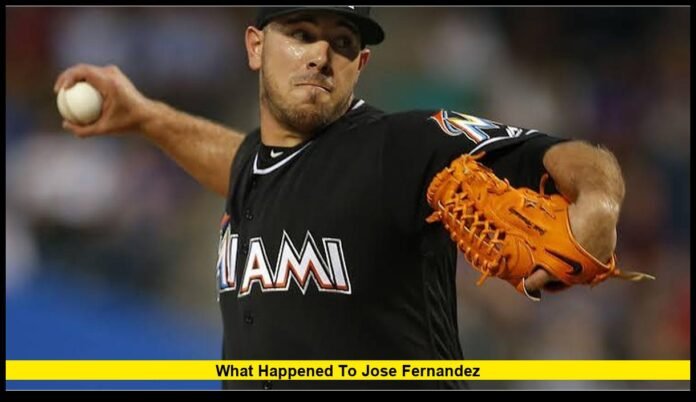

José Fernández remains one of the most memorable young stars in Miami Marlins history. Ten years after his death, his short MLB career continues to receive attention because of his remarkable talent, his journey to the United States and the tragic boating accident that ended his life.
Fernández died on September 25, 2016, at the age of 24. He was one of the most promising pitchers in professional baseball at the time. His death shocked the Marlins, his teammates and baseball fans throughout the United States.
A decade later, his name is still closely connected with Miami baseball. His No. 16 remains associated with his legacy, while his career statistics continue to show how much he accomplished in a short period.
Who Was Jose Fernandez?
José Delfín Fernández was born on July 31, 1992, in Santa Clara, Cuba.
Baseball became an important part of his life from an early age. His path to the United States was difficult, but he eventually settled in Florida and developed into one of the country’s most talented young pitchers.
Fernández attended Braulio Alonso High School in Tampa. His pitching ability quickly attracted attention from professional scouts.
The Florida Marlins selected him with the 14th overall pick in the 2011 MLB Draft.
The organization viewed Fernández as a major part of its future. He progressed quickly through the minor leagues and reached the major leagues during the 2013 season.
He was only 20 years old when he made his MLB debut.
A Remarkable Rookie Season
Fernández did not need several seasons to establish himself.
He immediately became one of the most exciting young pitchers in baseball.
During his 2013 rookie campaign, he posted a 12-6 record and a 2.19 ERA. He struck out 187 batters in 28 starts.
Those numbers were extraordinary for a 20-year-old starting pitcher.
His performance earned him the National League Rookie of the Year award.
He also finished third in National League Cy Young Award voting.
The season changed expectations surrounding Fernández. He was no longer simply a highly regarded prospect. He had become an established MLB star.
His powerful fastball, breaking pitches and aggressive approach made him difficult for opposing hitters to handle.
Marlins fans quickly connected with him.
The Young Pitcher Becomes a Miami Favorite
Fernández’s appeal went beyond his statistics.
He played with visible energy and emotion. His celebrations after important plays became part of his public image.
Fans at Marlins Park looked forward to his starts.
His pitching performances created a special atmosphere around the team. Miami had a young ace who appeared capable of becoming one of baseball’s leading pitchers for many years.
That future, however, would never arrive.
The Injury That Interrupted His Career
Fernández faced an early setback during the 2014 season.
He suffered an elbow injury that required Tommy John surgery.
The procedure ended his 2014 season after only eight starts.
For a young pitcher with enormous expectations, the injury represented a major challenge.
Fernández worked his way back and returned to MLB action in 2015.
His comeback demonstrated that the surgery had not taken away his effectiveness.
He again became an important part of the Marlins rotation.
His Final Season Was Extraordinary
The 2016 season became the final full season of Fernández’s career.
He returned to the level that had made him one of baseball’s biggest young stars.
Fernández finished the season with a 16-8 record.
He recorded a 2.86 ERA and struck out 253 batters.
His strikeout total was among the highest in the National League.
He also made his second All-Star team.
At only 24 years old, Fernández appeared to be entering the best stage of his career.
The Marlins had every reason to believe that their young ace would remain a central figure for years.
His final weeks in baseball would make that season even more memorable.
The Final Game of His Career
Fernández made his final MLB appearance on September 20, 2016.
The Marlins faced the Washington Nationals.
Fernández delivered one of the strongest performances of his career.
He pitched eight scoreless innings.
He allowed only three hits and recorded 12 strikeouts.
He did not allow a walk.
Miami won the game 1-0.
The performance became his final appearance on a major-league baseball field.
Only five days later, his life came to an unexpected end.
The Fatal Boating Accident
In the early hours of September 25, 2016, Fernández was aboard a 32-foot boat near Miami Beach.
Two friends, Emilio Jesus Macias and Eduardo Rivero, were also on the boat.
The vessel crashed into a jetty near Government Cut.
All three men died.
Fernández was 24 years old.
The news reached the Marlins organization early that morning.
Players, coaches and baseball officials were devastated.
The team had lost its young ace just days after he had delivered a dominant performance on the mound.
What Investigators Found
The circumstances surrounding the crash were examined by Florida authorities.
Investigators determined that the boat was traveling at a very high speed when it struck the jetty.
The estimated speed was approximately 65.7 mph.
The crash occurred around 3 a.m. in darkness.
The investigation also found alcohol and cocaine in Fernández’s system.
His blood-alcohol concentration was reported at 0.147, which was above Florida’s legal driving limit.
Investigators concluded that Fernández was operating the boat at the time of the crash.
They also concluded that impairment and excessive speed contributed to the accident.
Fernández’s family and their legal representatives disputed parts of the investigation, including the conclusion about who was operating the boat.
Because everyone aboard died, there was no surviving eyewitness who could provide direct testimony about the final moments before the collision.
The official investigation nevertheless maintained its conclusion.
The Immediate Reaction From Baseball
News of Fernández’s death spread throughout MLB on September 25, 2016.
The response from players and teams showed the scale of the loss.
Fernández was not simply a young pitcher with strong statistics. He had become one of the recognizable faces of the sport.
The Marlins had lost a player expected to anchor their rotation.
His teammates had lost a close friend.
Fans had lost a player they had watched grow from a promising prospect into an All-Star.
Miami’s next game became an emotional tribute.
The Emotional Game Against the Mets
The Marlins played the New York Mets on September 26, one day after Fernández’s death.
The game became one of the most emotional moments in franchise history.
Miami players wore No. 16 jerseys in his honor.
The number had become strongly associated with Fernández during his career.
One moment stood out above the rest.
Dee Gordon, normally a left-handed hitter, entered the batter’s box from the right side.
He then switched to his normal left-handed stance.
Gordon hit a home run.
It was his first home run of the 2016 season.
As he rounded the bases, Gordon became visibly emotional.
The Marlins won the game 7-3.
After the game, players gathered near the pitcher’s mound to remember Fernández.
The scene became an enduring image of the tragedy.
His Number 16 Became Part of Marlins History
Fernández wore No. 16 during his entire MLB career.
After his death, the Marlins kept the number out of circulation.
The franchise has not formally retired the number, but it has remained unworn.
That distinction matters because an inactive number and an officially retired number are different things.
Still, No. 16 remains closely identified with Fernández.
For Marlins fans, the number immediately brings his short career and lasting legacy to mind.
The Career He Left Behind
Fernández’s statistics show how productive he was despite playing only four MLB seasons.
His career included:
- 76 starts
- 38 wins
- 17 losses
- 2.58 career ERA
- 589 strikeouts
- Two All-Star selections
- 2013 National League Rookie of the Year award
His career ERA is particularly notable.
A 2.58 ERA over his MLB career demonstrates the level at which Fernández performed before his death.
He also produced 589 strikeouts in only 471.1 innings.
Those numbers provide a clear picture of why the Marlins considered him such an important part of their future.
His Connection With South Florida
Fernández’s relationship with South Florida was particularly meaningful.
He had arrived in the United States from Cuba and established himself in Florida.
His Cuban background made his success especially meaningful to many people in South Florida’s Cuban-American community.
He represented a story of determination and opportunity.
His success with the Marlins made that connection even stronger.
Miami became the place where Fernández reached the highest level of his baseball career.
It was also where he built his professional identity.
That connection has remained part of his legacy.
The Family He Left Behind
Fernández’s personal life also became part of the story after his death.
His daughter, Penélope, was born in February 2017.
She was born several months after her father’s death.
Fernández therefore never had the opportunity to meet his daughter.
His family has continued to remember him in the years since the accident.
The story of his daughter added another emotional dimension to a tragedy that had already affected thousands of people.
Why His Career Still Stands Out
Baseball careers usually develop over many years.
Players accumulate statistics gradually.
Fernández’s career was different.
He reached the major leagues at 20.
He won Rookie of the Year.
He became a two-time All-Star.
He recovered from major elbow surgery.
He returned to become one of the National League’s most effective starting pitchers.
Then his career ended at 24.
That combination of early success and sudden loss makes his career unusual in MLB history.
There was no long decline.
There was no final retirement season.
There was no opportunity for Fernández to play into his 30s.
His career simply stopped.
The Final Numbers Tell the Story
Fernández finished his 2016 season with 16 wins, an impressive 2.86 ERA and 253 strikeouts.
Those numbers came after he had already recovered from a serious elbow injury.
His final game added another remarkable detail.
He pitched eight scoreless innings and struck out 12 batters.
It was an excellent final performance from a pitcher who was still only 24.
His final appearance therefore became part of his legacy.
Fans remember not only how his life ended, but also the level at which he was performing immediately before the tragedy.
Ten Years Since His Death
September 25, 2026 marked ten years since Fernández died.
The anniversary has renewed interest in his life, career and impact on Miami baseball.
A decade has passed, but the key details remain part of the Marlins’ history.
His name remains associated with No. 16.
His career statistics remain in MLB records.
His final game remains one of the most memorable endings to an MLB career.
His story also continues through the people who knew him personally.
For a player who spent only four seasons in the major leagues, his influence has lasted much longer.
What Happened to Jose Fernandez Remains a Major Part of His Legacy
The answer is rooted in both his remarkable baseball career and the tragedy that ended it.
Fernández became an MLB star at an unusually young age. He won Rookie of the Year, made two All-Star teams and established himself as one of the Marlins’ most important players.
On September 25, 2016, he died in a boating accident near Miami Beach.
He was only 24.
The official investigation concluded that excessive speed and impairment contributed to the crash.
His death immediately changed the Miami Marlins and left a lasting impression on the baseball community.
Ten years later, Fernández is still remembered as one of the most talented players to wear a Marlins uniform.
His career was brief, but its impact was much larger than its length.
José Fernández’s story continues to live on through his family, his teammates, the Marlins and the fans who still remember his remarkable career—share your thoughts or stay informed as his legacy continues to be remembered.