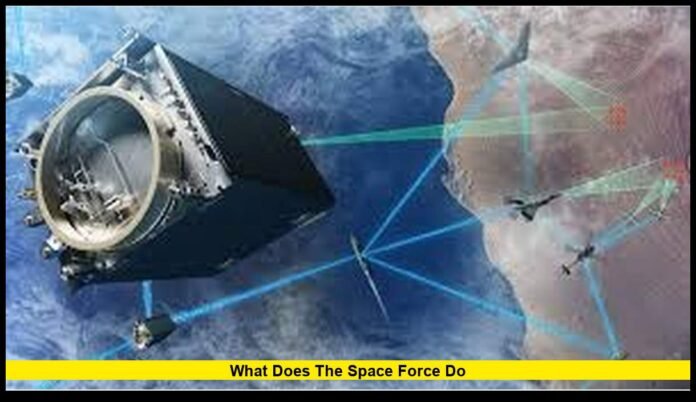

A Modern Military Branch for a New Era
The question “what does the Space Force do” has become increasingly relevant as the United States enters an age where space is no longer a distant frontier—it’s a vital part of national defense. The U.S. Space Force (USSF), established in December 2019, is the newest branch of the U.S. Armed Forces. Its mission is clear: to organize, train, and equip personnel—known as Guardians—to protect U.S. and allied interests in space while ensuring the freedom to operate there.
In 2025, the Space Force has grown beyond its initial start-up phase and now plays a crucial role in global security. From managing military satellites to deterring adversaries’ space operations, the Space Force ensures that America’s advantage extends far above Earth.
The Core Mission: What the Space Force Does Every Day
When we ask what does the Space Force do, the answer lies in three core missions that guide its operations:
- Protecting America’s Space Assets
The Space Force is responsible for defending the U.S. satellite infrastructure that powers modern life—GPS, communications, weather forecasting, and surveillance systems. These satellites support both military operations and civilian conveniences like navigation, mobile communication, and financial transactions. - Providing Space-Based Capabilities to the Military
Every branch of the U.S. Armed Forces depends on space systems. From guiding precision strikes to enabling encrypted communications, the Space Force ensures that these capabilities are uninterrupted, secure, and globally available. - Denying Adversaries the Use of Space for Hostile Purposes
The Space Force’s mission is not only defensive. It also involves deterring and, if necessary, disrupting hostile actions from other nations that might threaten U.S. satellites or space operations.
These missions define what the Space Force does—ensuring that the United States maintains dominance in the space domain.
The Guardians: Who They Are and What They Do
Personnel serving in the Space Force are called Guardians, a name chosen to represent their role as protectors of the “ultimate high ground.” Guardians specialize in a range of critical areas:
- Satellite Operations: Managing constellations that provide navigation, communication, and intelligence data.
- Space Domain Awareness: Monitoring thousands of objects in orbit to prevent collisions and detect potential threats.
- Cyber Defense: Protecting the networks and systems that control U.S. space assets.
- Missile Warning Systems: Using satellites to detect and track potential missile launches against the U.S. or its allies.
- Space Launch Operations: Overseeing launches of both military and commercial satellites to ensure reliable access to orbit.
Every Guardian plays a role in maintaining America’s technological and operational superiority in space.
Expanding Capabilities in 2025
The Space Force has significantly expanded its capabilities in 2025 to address the growing challenges of a contested space environment. Here’s how:
- New Satellite Constellations: The Space Force has deployed more advanced and smaller satellites capable of maneuvering to avoid threats. These new constellations provide greater coverage and resilience against potential attacks or technical failures.
- Advanced Missile Warning Systems: Improved sensors and detection algorithms allow faster identification of missile launches, giving the U.S. and its allies more time to respond.
- Cybersecurity Enhancements: With cyberattacks targeting space infrastructure, the Space Force has bolstered its cyber defense units to safeguard command systems and communications networks.
- Allied Cooperation: The U.S. now works closely with partners like the U.K., Japan, and Australia to share intelligence and coordinate space operations for collective defense.
- Training and Warfighting Exercises: The Space Force conducts annual exercises that simulate space conflict scenarios, preparing Guardians to respond quickly to any hostile event in orbit.
These developments reflect the service’s rapid evolution and growing global importance.
Defending the Final Frontier
One of the Space Force’s most important missions is maintaining space superiority—the ability to operate freely in space while preventing adversaries from doing the same.
In practice, this means:
- Monitoring Adversary Satellites: Tracking and analyzing the movement of foreign satellites to identify unusual or threatening activity.
- Developing Counterspace Capabilities: Designing technology to neutralize or mitigate potential attacks on U.S. space systems.
- Building Redundant Systems: Ensuring that the loss of any one satellite does not cripple operations by creating multiple backup systems.
- Rapid Launch Capabilities: Maintaining readiness to deploy replacement satellites on short notice if existing ones are damaged or destroyed.
The Space Force is not about weaponizing space—it’s about ensuring peace and stability by deterring aggression.
How the Space Force Supports Everyday Life
While much of its work is military, what the Space Force does also benefits everyday civilians. Nearly every modern technology relies on space-based systems maintained or protected by the USSF.
Here’s how:
- GPS Navigation: The Space Force operates and maintains the GPS satellites that guide millions of cars, aircraft, and ships worldwide.
- Weather Forecasting: Satellites managed by the Space Force help provide accurate weather predictions and natural disaster tracking.
- Global Communications: Military satellites also enable international communications, including emergency response systems.
- Financial Transactions: Precise satellite timing ensures synchronization for digital banking and stock trading.
Without the Space Force’s continuous oversight, these systems would be vulnerable to interference, outages, or attacks.
Technology and Innovation at the Core
Innovation drives everything the Space Force does. The branch continually invests in cutting-edge research to improve speed, accuracy, and resilience.
Some of the technologies shaping the Space Force’s work in 2025 include:
- Artificial Intelligence (AI): Used to analyze vast amounts of orbital data and predict potential collisions or adversary movements.
- Quantum Computing: Enhancing encryption to protect satellite communications.
- Autonomous Satellites: Capable of self-diagnosing and self-repairing in space.
- Reusable Launch Vehicles: Reducing costs and improving flexibility for satellite deployment.
- Advanced Tracking Sensors: Providing real-time visibility of space objects, including debris and unknown satellites.
These innovations allow the Space Force to stay ahead in a rapidly evolving domain.
The Structure of the Space Force
Understanding what the Space Force does also means understanding how it’s structured. The service operates under three main commands:
- Space Operations Command (SpOC): Handles day-to-day satellite operations, communications, and missile warning missions.
- Space Systems Command (SSC): Oversees the acquisition and development of new technologies and systems.
- Space Training and Readiness Command (STARCOM): Focuses on training Guardians and developing tactics for space warfare.
This structure ensures efficiency, innovation, and readiness across all aspects of U.S. space defense.
Why the Space Force Matters More Than Ever
Space has become an essential arena for national power. With growing competition from countries developing their own space capabilities, the Space Force plays a key role in maintaining American leadership and preventing potential conflicts.
The importance of what the Space Force does can be summarized in three main points:
- National Security: Space assets provide intelligence and communications that keep U.S. forces safe and effective.
- Economic Stability: Satellites managed and protected by the Space Force support industries worth trillions of dollars.
- Technological Dominance: The Space Force ensures America remains at the forefront of innovation, both militarily and commercially.
By investing in the Space Force, the United States is protecting not just its military interests, but the everyday technologies its citizens depend on.
Challenges Ahead
Even with rapid growth, the Space Force faces challenges that define its future:
- Space Debris: The growing amount of orbital junk poses collision risks for critical satellites.
- Cyber Threats: Adversaries increasingly target space systems through digital attacks.
- Budget Constraints: Balancing rapid expansion with responsible spending remains an ongoing issue.
- Public Awareness: Many Americans still ask “what does the Space Force do,” highlighting a need for transparency and outreach.
Despite these challenges, the Space Force continues to prove its worth as a cornerstone of national security.
The Future of the Space Force
Looking ahead, the Space Force aims to create a more resilient, flexible, and autonomous space architecture. This means smaller, faster satellites, smarter networks, and deeper international cooperation.
By 2030, the Space Force plans to achieve:
- Full integration with allied space forces.
- Real-time global monitoring of orbital activity.
- Increased automation of satellite systems.
- Rapid deployment of defense and communication assets during crises.
The branch’s ultimate goal is simple yet powerful: to keep the United States and its allies safe in the most complex domain of modern warfare—space.
In Closing
So, what does the Space Force do? It protects the systems that power modern civilization, defends America’s interests in orbit, and ensures the nation’s freedom to operate in the vastness of space. Every GPS signal, weather forecast, and satellite communication you rely on exists because Guardians are standing watch above the Earth.
If you’ve learned something new about the Space Force, share your thoughts below and stay connected as America’s newest military branch continues shaping the future of defense in space.