
What does the company Stripe do is a question many business owners, founders, and online sellers ask as digital payments continue to dominate the global economy in 2026. Stripe has become one of the most influential financial technology companies, powering transactions for startups, global brands, marketplaces, and software platforms.
Stripe sits behind countless online purchases. When customers pay for subscriptions, order products, book services, or pay creators, Stripe often handles the transaction quietly in the background. Its tools help companies accept money, manage revenue, and build financial features directly into their products.
Understanding Stripe’s Core Purpose
Stripe provides financial infrastructure for businesses. Instead of acting like a traditional payment processor alone, it offers a platform that manages the entire payment lifecycle.
Companies use Stripe to:
- Accept payments online and in person
- Manage subscriptions and invoices
- Send payouts to sellers, freelancers, or partners
- Prevent fraud
- Handle global tax and compliance requirements
- Build financial services into apps
This infrastructure approach allows businesses to focus on growth while Stripe manages complex financial operations.
Why Stripe Matters in Today’s Digital Economy
The internet economy depends on fast, reliable payments. Stripe helps remove friction from that process.
Businesses choose Stripe because it:
- Works globally
- Supports many payment methods
- Integrates with websites and apps quickly
- Scales as companies grow
- Supports modern business models such as subscriptions and marketplaces
Stripe’s technology has become essential for software companies, e-commerce brands, and platforms that manage large transaction volumes.
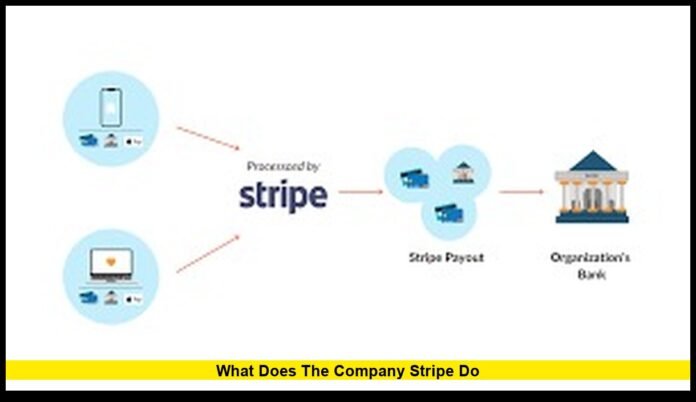
How Stripe Payments Work
Stripe connects customers, businesses, banks, and payment networks.
When someone pays:
- Payment details are securely captured.
- Stripe sends the request to card networks or banks.
- The bank approves or declines the payment.
- Funds move to the business account.
Stripe manages encryption, compliance, fraud checks, and reporting automatically.
This process happens in seconds and supports global transactions.
Stripe’s Main Product Categories
Stripe offers a wide range of tools beyond basic payment processing.
Payments
Stripe Payments enables businesses to accept credit cards, debit cards, digital wallets, bank transfers, and local payment methods worldwide.
Billing
Stripe Billing supports recurring subscriptions, usage-based pricing, invoicing, and automated revenue workflows.
Connect
Stripe Connect helps platforms and marketplaces pay sellers, creators, drivers, or service providers at scale.
Terminal
Stripe Terminal enables businesses to accept in-person payments with integrated hardware and software.
Issuing
Stripe Issuing allows companies to create physical or virtual cards for customers or employees.
Atlas
Stripe Atlas helps founders launch companies, handle incorporation, and start operating globally.
Stripe and Subscription Businesses
Subscription models continue to grow across industries. Stripe plays a major role in this shift.
Companies rely on Stripe to:
- Manage recurring billing cycles
- Handle upgrades and downgrades
- Support free trials
- Automate invoices
- Reduce churn through smart payment retries
Software platforms, streaming services, and membership businesses often depend on Stripe for revenue operations.
Stripe’s Role in Marketplaces and Platforms
Many modern businesses operate as platforms connecting buyers and sellers. Stripe provides the infrastructure that powers those ecosystems.
With Stripe Connect, platforms can:
- Onboard sellers quickly
- Split payments automatically
- Handle global payouts
- Manage compliance requirements
- Provide financial dashboards to users
This functionality is critical for gig economy apps, creator platforms, and multi-vendor marketplaces.
Stripe and Global Commerce
Global expansion is difficult for businesses due to currency differences, regulations, and payment preferences. Stripe simplifies this process.
Stripe supports:
- Multiple currencies
- Local payment methods
- Cross-border payouts
- International tax handling
- Regional compliance
Companies can launch internationally without building separate payment systems for each market.
Embedded Finance: Stripe’s Strategic Direction
Embedded finance allows businesses to offer financial services directly inside their products. Stripe has invested heavily in this area.
Businesses can now:
- Offer branded cards
- Hold customer balances
- Provide financing options
- Enable faster payouts
- Build banking-like features
This shift moves Stripe from payment processor to financial platform provider.
Stripe’s Developer-First Advantage
Stripe gained early traction because developers found it easier to integrate compared to legacy systems.
Key benefits include:
- Flexible APIs
- Custom checkout experiences
- Automation tools
- Strong documentation
- Scalable architecture
This developer-friendly approach helped Stripe become popular among startups and fast-growing tech companies.
Enterprise Growth
Stripe initially focused on startups, but large enterprises now represent a major growth area.
Large organizations use Stripe for:
- Complex global billing
- High transaction volumes
- Multi-region payment routing
- Platform payouts
- Advanced reporting
Enterprise adoption has increased Stripe’s influence across industries.
Industries That Depend on Stripe
Stripe supports many sectors across the digital economy.
Common industries include:
- SaaS and software companies
- E-commerce brands
- Marketplaces
- Creator economy platforms
- Education platforms
- Travel and booking services
- AI companies selling usage-based tools
This wide adoption strengthens Stripe’s position as core infrastructure.
Stripe’s Revenue Model
Stripe earns money primarily through transaction fees. Businesses pay a percentage of each payment plus a fixed fee.
Additional revenue streams include:
- Billing software fees
- Financial services tools
- Currency conversion
- Platform services
- Enterprise solutions
Diversified revenue helps Stripe maintain steady growth.
Stripe and Fraud Prevention
Fraud prevention is critical for online businesses. Stripe uses machine learning to detect suspicious activity.
Its tools help companies:
- Identify risky transactions
- Reduce chargebacks
- Automates verification steps
- Improve approval rates
- Protect customer data
Strong fraud tools reduce operational risk for businesses.
Stripe’s Role in the Creator Economy
Creators now sell subscriptions, digital products, courses, and memberships. Stripe powers many of these transactions.
Creators use Stripe to:
- Accept payments globally
- Manage recurring memberships
- Receive payouts quickly
- Track revenue
- Integrate with platforms
This has made Stripe important for independent entrepreneurs.
Stripe and AI-Driven Commerce
AI companies often charge based on usage. Stripe supports this model through flexible billing systems.
Businesses can:
- Bill per API call
- Track usage automatically
- Adjust pricing dynamically
- Automate invoices
- Manage complex pricing structures
This capability has positioned Stripe as a financial layer for AI products.
Competitive Landscape
Stripe operates in a competitive fintech market. However, its infrastructure approach differentiates it.
Compared with traditional processors, Stripe offers:
- More customization
- Strong platform tools
- Built-in subscription support
- Marketplace capabilities
- Embedded finance features
This breadth reduces the need for multiple vendors.
Challenges Stripe Faces
Despite strong growth, Stripe faces several challenges.
These include:
- Increasing competition
- Pricing pressure from large merchants
- Regulatory complexity across regions
- Fraud at scale
- Economic slowdowns affecting payment volume
Stripe continues investing in automation and global infrastructure to address these risks.
Stripe’s Influence on Startups
Stripe has played a major role in the startup ecosystem.
Startups choose Stripe because it:
- Launches quickly
- Supports modern pricing models
- Scales without major infrastructure changes
- Integrates with developer tools
- Enables global expansion early
This has made Stripe a default choice for many new companies.
Stripe and Financial Operations Automation
Businesses increasingly want automated finance workflows. Stripe supports this shift.
Automation includes:
- Revenue recognition
- Payment reconciliation
- Tax calculations
- Financial reporting
- Subscription lifecycle management
Automation reduces manual work for finance teams.
Stripe’s Growing Importance for Platforms
Platform businesses require complex payment flows. Stripe simplifies these operations.
Key platform capabilities:
- Split payments
- Instant payouts
- Seller onboarding
- Compliance management
- Financial dashboards
These features are essential for modern platform economics.
Why the Question Continues to Trend
The question what does the company Stripe do continues trending because Stripe operates behind the scenes. Consumers interact with Stripe regularly without realizing it.
As digital commerce expands, more people want to understand the infrastructure powering online transactions.
Stripe touches:
- Online shopping
- Software subscriptions
- Marketplace payments
- Creator income
- Business tools
- AI services
That broad reach keeps public interest high.
Key Stripe Facts
- Founded in 2010
- Headquarters in the United States
- Serves millions of businesses globally
- Focuses on payments and financial infrastructure
- Strong presence among startups and enterprises
- Expanding embedded finance capabilities
These points highlight Stripe’s scale and influence.
The Future Direction
Stripe continues investing in automation, global payments, and financial services.
Major focus areas include:
- Real-time payments
- AI-driven financial operations
- Embedded banking tools
- Cross-border commerce
- Enterprise infrastructure
The company aims to become the default financial layer for internet businesses.
Conclusion
Stripe has transformed how businesses handle payments and financial operations. Instead of stitching together multiple systems, companies can rely on a single platform that manages transactions, subscriptions, payouts, and financial workflows.
Its developer-friendly approach, global reach, and expanding financial tools have made Stripe central to modern commerce. As online business models evolve, Stripe’s role continues to grow across startups, enterprises, platforms, and creators.
Understanding what Stripe does helps explain how the internet economy functions today. If you run a business, build software, or follow fintech innovation, Stripe remains a company worth watching. Share your perspective or return for more insights as digital payments continue to evolve.
FAQ
1. What type of company is Stripe?
Stripe is a financial technology company that provides payment processing and financial infrastructure for businesses.
2. Does Stripe work for small businesses?
Yes. Stripe supports startups, small businesses, and large enterprises with scalable payment tools.
3. Can Stripe handle international payments?
Yes. Stripe supports multiple currencies, global payment methods, and cross-border transactions.
Disclaimer
This content is provided for informational purposes only. Company features, product availability, and business developments may change over time. Readers should independently verify details before making financial or business decisions.