
A Comprehensive Look at the Power, Purpose, and Limits of Presidential Clemency in the United States
The question what does a presidential pardon mean is more than a matter of legal definition — it’s a question about power, mercy, and accountability at the highest level of American government. A presidential pardon is one of the most far-reaching authorities granted to the President of the United States under the Constitution. It allows the president to forgive federal crimes, restore rights, and, in many cases, reshape lives.
In an era of political polarization, the presidential pardon has often sparked both praise and controversy. Understanding what this power truly means — legally, historically, and morally — offers insight into how justice and forgiveness coexist in a democratic society.
The Constitutional Foundation of Presidential Pardons
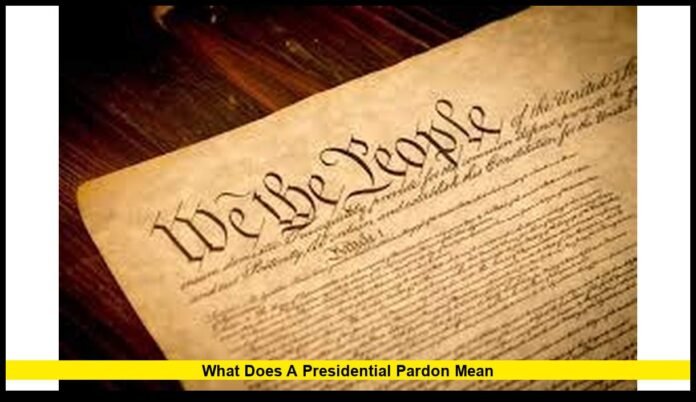
To understand what does a presidential pardon mean, we start with its constitutional origin. The power is explicitly granted by Article II, Section 2, Clause 1 of the United States Constitution:
“The President shall have Power to grant Reprieves and Pardons for Offenses against the United States, except in Cases of Impeachment.”
This brief line gives the president nearly absolute authority to forgive federal crimes. The only explicit limitation is that the pardon cannot be used in cases of impeachment.
Unlike many presidential powers, this authority does not require the consent of Congress, the courts, or any other government body. The president alone has the discretion to decide who is forgiven and for what offense.
What Does a Presidential Pardon Actually Do?
At its core, a presidential pardon represents forgiveness under the law. It does not declare that the person was innocent of the crime; rather, it removes the legal consequences of the conviction.
Here’s what a pardon generally accomplishes:
- Eliminates Federal Penalties: The person no longer faces punishment, fines, or probation for the federal offense.
- Restores Civil Rights: Rights that were lost due to the conviction — such as the right to vote, hold public office, or serve on a jury — are often restored.
- Symbolic Redemption: The pardon acts as a public statement of mercy, recognizing rehabilitation or an unfair sentence.
- Permanent Record: The conviction remains on the person’s criminal record, but it will show that a presidential pardon was granted.
It’s important to note that the pardon applies only to federal offenses — it has no effect on state-level crimes, civil lawsuits, or impeachment proceedings.
The Different Forms of Clemency
When people ask what does a presidential pardon mean, they often confuse it with other forms of clemency. The president’s power actually includes several distinct actions:
| Form of Clemency | Definition | Purpose |
|---|---|---|
| Pardon | Official forgiveness for a federal offense | Removes penalties and restores rights |
| Commutation | Reduction of a prison sentence | Provides relief without erasing conviction |
| Reprieve | Temporary delay of punishment | Often used for humanitarian reasons |
| Remission of Fine | Cancellation or reduction of a monetary penalty | Offers financial relief |
While these powers are related, the presidential pardon remains the most sweeping and symbolically powerful.
The Legal and Moral Meaning of a Presidential Pardon
A presidential pardon carries both legal and ethical weight. It is not just a matter of clearing a sentence — it’s an act that expresses the president’s sense of justice, mercy, or even political strategy.
1. Legal Meaning
In legal terms, a pardon is an act of forgiveness that ends punishment for a federal crime. However, courts have repeatedly ruled that accepting a pardon implies acknowledgment of guilt. This distinction matters because it clarifies that a pardon doesn’t declare innocence; it simply eliminates the legal consequences.
2. Moral and Social Meaning
Morally, a presidential pardon can signify compassion and redemption. It acknowledges that individuals can change, reform, and re-enter society as productive citizens. Historically, presidents have used pardons to heal divisions and signal national reconciliation — from George Washington’s forgiveness of the Whiskey Rebellion participants to Jimmy Carter’s pardons of Vietnam draft evaders.
The Process: How a Presidential Pardon Is Granted
Although the president can issue a pardon at any time, most requests go through a formal process managed by the Office of the Pardon Attorney, a division of the Department of Justice.
Steps in the Pardon Process:
- Petition Submission: The individual seeking clemency submits an application to the Office of the Pardon Attorney.
- Investigation and Review: Officials review the applicant’s background, behavior since conviction, and evidence of rehabilitation.
- Recommendation: The Office of the Pardon Attorney forwards a recommendation to the President via the Attorney General.
- Presidential Decision: The president makes the final decision — with full authority to approve or deny the request.
However, the president can bypass this process entirely and grant a pardon unilaterally, which often happens in politically charged cases or during the final days of a presidency.
Historic Examples of Presidential Pardons
Throughout American history, presidential pardons have played a major role in shaping the nation’s moral and political landscape. Here are some of the most notable examples that define what does a presidential pardon mean in practice:
- George Washington (1795): Pardoned rebels from the Whiskey Rebellion to promote national unity and healing.
- Abraham Lincoln (1863): Issued numerous pardons during the Civil War, including to Confederate soldiers who swore loyalty to the Union.
- Gerald Ford (1974): Granted a full pardon to Richard Nixon following the Watergate scandal, aiming to restore trust in government.
- Jimmy Carter (1977): Pardoned Vietnam War draft evaders, framing it as a move toward reconciliation and national forgiveness.
- Bill Clinton (2001): Issued a controversial pardon to financier Marc Rich, sparking debates over political favoritism.
- Donald Trump (2020–2021): Granted pardons to several political allies, reigniting debates over the limits of executive clemency.
- Joe Biden (2022): Pardoned thousands of individuals convicted of simple marijuana possession under federal law, marking a shift toward criminal justice reform.
Each of these examples reflects the diverse reasons presidents exercise this power — from healing national wounds to rewarding loyalty or addressing injustices.
Modern Relevance: Why Presidential Pardons Matter Now
Today, the question of what does a presidential pardon mean carries renewed importance. In a politically divided climate, the use of pardons reveals much about a president’s values and priorities.
1. Criminal Justice Reform
Modern presidents, especially Joe Biden, have used the pardon power to address systemic injustices. By pardoning individuals with nonviolent drug convictions, Biden has advanced efforts to reduce over-incarceration and dismantle outdated sentencing laws.
2. Political Strategy
Pardons can serve as powerful political tools. Presidents sometimes issue pardons to close allies or controversial figures, leading critics to accuse them of using clemency for personal or partisan advantage.
3. National Healing
In other cases, pardons have been used to unite the country after conflict. For example, Carter’s pardons of draft evaders helped heal the lingering divisions of the Vietnam War.
4. Public Debate and Accountability
Because pardons require no approval from Congress or the courts, their use is often debated as either a symbol of presidential compassion or a loophole for abuse of power.
Controversies and Limits of the Pardon Power
While the Constitution grants broad pardon authority, the question what does a presidential pardon mean is often challenged when that power appears politically motivated.
Controversial aspects include:
- Political Favoritism: Some presidents have been accused of using pardons to protect political allies or supporters.
- Timing and Transparency: Last-minute “midnight pardons” at the end of presidential terms often raise suspicion of corruption.
- Public Trust: Excessive or controversial use of pardons can erode public confidence in the justice system.
Despite these controversies, courts have consistently upheld the president’s pardon authority as nearly absolute. The only clear legal limit is that pardons cannot apply to impeachment cases.
Why the Presidential Pardon Endures as a Symbol of Justice and Mercy
The enduring power of the presidential pardon lies in its dual nature: it is both a legal instrument and a moral statement. It embodies two core American ideals — accountability and compassion.
By using the pardon power responsibly, presidents can correct injustices, promote rehabilitation, and reinforce faith in the justice system. However, misuse of the power can produce the opposite effect — eroding trust, fueling division, and turning an act of mercy into a political weapon.
The meaning of a presidential pardon, therefore, extends far beyond law. It reflects how America balances the rule of law with the values of forgiveness and redemption.
Conclusion
So, what does a presidential pardon mean? It means more than just the stroke of a pen. It represents the President’s constitutional ability to forgive a federal offense, restore civil rights, and offer a second chance — all while carrying profound legal and moral consequences.
From George Washington to Joe Biden, each president’s use of this power has shaped how the nation views justice, fairness, and mercy. A pardon can heal divisions, correct injustices, or, in some cases, deepen controversy.
In the end, the presidential pardon is a reminder that justice in America is not only about punishment but also about the possibility of redemption.
Do you believe presidential pardons promote justice and compassion, or do they risk undermining accountability? Share your thoughts below and stay connected for deeper insights into the balance between power and mercy in American politics.