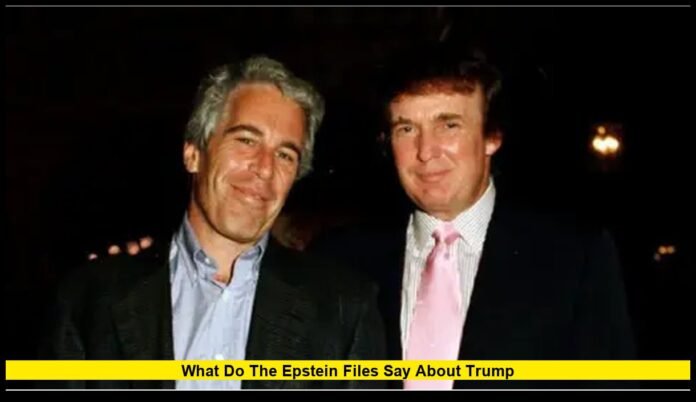

What do the Epstein files say about Trump remains one of the most searched and debated questions as Americans continue to examine the full scope of records connected to Jeffrey Epstein. With thousands of pages of documents now publicly available, the files provide a clearer but often misunderstood picture. They record social contact, travel references, and background investigative material involving Donald J. Trump. At the same time, they do not present verified allegations, criminal findings, or legal actions against him. This article offers a comprehensive, fact-based explanation of what the Epstein files contain, what they exclude, and why the issue continues to attract national attention.
Understanding the Nature of the Epstein Files
The Epstein files are not a single report or verdict. They are a vast archive compiled over decades by law enforcement, prosecutors, and courts. These records were created for different purposes at different times, often long before Epstein’s crimes were fully understood by the public.
The files include administrative records, travel documentation, photographs, contact lists, witness interviews, court filings, and internal notes. Some documents were created as part of active investigations. Others were collected simply to preserve information that might later prove relevant.
Their public release reflects transparency requirements rather than new findings. The documents show who Epstein interacted with and how investigators tracked those interactions. They do not automatically assign guilt to everyone mentioned.
Why Names Appear in the Files
One of the most common misunderstandings surrounding the Epstein files is the assumption that appearing in them suggests criminal involvement. In reality, Epstein interacted with hundreds of people across business, social, and political worlds.
Names appear for many reasons:
- Social interaction at public or private events
- Business or financial contact
- Travel documentation
- Secondhand references recorded by investigators
- Background mapping of Epstein’s network
Donald Trump appears in the files for these reasons, not because he was charged or accused.
The Social World Epstein Operated In
During the 1980s and 1990s, Epstein positioned himself within elite social circles in New York, Florida, and other locations. He cultivated relationships with wealthy individuals, celebrities, and political figures.
At that time, Epstein was publicly viewed as a financier and social connector. His criminal behavior had not yet been exposed, allowing him access to spaces where influential people gathered.
Donald Trump, already a prominent real estate developer and public figure, occupied some of the same social spaces. The Epstein files reflect that overlap.
Travel Records and Flight Logs
One of the most widely discussed components of the Epstein files involves private aircraft travel records. These logs list individuals who traveled aboard Epstein’s planes during the 1990s.
The records show that Trump was listed as a passenger on Epstein’s aircraft on several occasions. These entries are factual travel logs. They do not explain the purpose of the trips or what occurred during them.
Important context about these records:
- They were created as routine travel documentation
- They do not describe behavior during flights
- They do not identify illegal activity
- They do not include accusations or conclusions
Investigators have repeatedly emphasized that flight logs alone do not indicate wrongdoing. Many individuals listed were never investigated or accused of crimes.
Timing of the Recorded Flights
The flights involving Trump occurred before Epstein’s first criminal case and before widespread awareness of Epstein’s abuse. At that time, Epstein had not yet been publicly identified as a serial offender.
This timing matters. Investigators have noted that interactions during this period must be understood within the context of what was known at the time, not what later emerged.
Photographs Included in the Files
The Epstein files also contain photographs collected during investigations. Some images show Trump and Epstein together at social gatherings.
These photographs generally depict:
- Public or semi-public events
- Group settings with multiple attendees
- Social occasions common among wealthy circles
They do not show criminal acts or exploitation. Before release, images were reviewed to ensure that no victims were exposed.
Their inclusion documents social proximity, not criminal behavior.
Internal Notes and Background References
Some Epstein-related documents include internal notes or emails created by investigators. These materials often reference individuals who interacted with Epstein, including Trump.
These references served investigative purposes, such as:
- Mapping Epstein’s social connections
- Identifying potential witnesses
- Understanding Epstein’s access to influence
Such notes were not accusations. Investigators evaluated recorded claims for credibility, dismissing those that lacked evidence.
What the Epstein Files Do Not Show
Understanding what do the Epstein files say about Trump also requires clarity about what they do not show.
The released records do not contain:
- Criminal charges against Trump
- Arrest records or indictments
- Verified allegations of sexual abuse
- Evidence linking Trump to trafficking operations
- Sworn testimony accusing Trump
Federal reviewers have stated that references to Trump did not meet standards for prosecution or further investigation.
Federal Interpretation of Trump Mentions
Agencies overseeing the release of Epstein files have addressed Trump-related references directly. Their position is consistent and clear.
They have stated that:
- Names in the files reflect contact, not guilt
- Investigative conclusions remain unchanged
- Trump-related references were reviewed and closed
- No new evidence emerged from releases
The documents are being released for transparency, not to reopen resolved determinations.
Trump’s Public Position on Epstein
Donald Trump has acknowledged knowing Epstein socially before Epstein’s criminal behavior became public. He has also stated that he distanced himself from Epstein years before Epstein’s arrest.
Trump has said Epstein was barred from Trump-owned properties following allegations of misconduct. While these statements are not part of the Epstein files themselves, they align with timelines showing a breakdown in their association.
Separation Before Criminal Exposure
Records and public timelines indicate that Trump’s association with Epstein ended well before Epstein’s prosecution. This separation occurred prior to Epstein’s first conviction.
This distinction is significant. Investigators consider the duration and nature of relationships when evaluating potential involvement.
Why Public Interest Remains High
The severity of Epstein’s crimes left deep public mistrust. Many Americans want accountability wherever possible.
High-profile names draw attention, and Trump’s prominence amplifies interest. However, public curiosity does not change the factual content of the files.
The records show association, not criminal participation.
Media Coverage and Public Confusion
Media reporting on the Epstein files often highlights recognizable names. This can create the impression that inclusion equals implication.
Common sources of confusion include:
- Headlines lacking context
- Selective document excerpts
- Social media speculation
- Conflation of association with guilt
Federal officials have urged careful reading of full documents to avoid misinterpretation.
Legal Standards Applied to the Records
Investigators applied strict legal standards when reviewing Epstein-related material. Allegations required corroboration, witness testimony, or physical evidence to advance.
In Trump’s case:
- No corroborated allegations emerged
- No victims identified Trump as an abuser
- No evidence tied Trump to criminal conduct
As a result, references to Trump remained informational rather than evidentiary.
Courts and Epstein-Related Material
Courts reviewing Epstein-related cases consistently separated evidence from background material. Only substantiated evidence advanced to legal proceedings.
There are no court rulings or judgments linking Trump to Epstein’s crimes. This legal record aligns with federal interpretations of the files.
Comparing Trump to Other Names in the Files
Trump is one of many prominent individuals whose names appear in Epstein-related records. Hundreds of people are mentioned across different documents.
In most cases:
- Names appear briefly
- Context is limited
- No allegations follow
Trump’s mentions fit this broader pattern of social documentation.
Transparency and Its Limits
The release of Epstein files serves an important transparency goal. It allows the public to see how investigations were conducted and how conclusions were reached.
However, transparency has limits. Releasing documents does not rewrite history or alter investigative outcomes.
Responsible interpretation requires context and restraint.
Ongoing Releases and Expectations
Epstein-related documents continue to be released in stages. Agencies have indicated that most substantive material has already been reviewed.
Future releases may add detail but are not expected to change conclusions regarding Trump.
Why Accuracy Matters
In cases involving serious crimes, accuracy matters. False implications can harm reputations and distract from victims.
Focusing on verified facts helps:
- Preserve public trust
- Prevent misinformation
- Maintain investigative integrity
- Center the real harm caused
The Epstein files deserve careful reading, not assumptions.
Clarifying the Central Question
So, what do the Epstein files say about Trump?
They say that Trump interacted socially with Epstein during a time when Epstein’s crimes were not publicly known. They document travel references and social proximity. They do not accuse Trump of crimes. They do not present evidence of abuse. They do not support legal action.
Verified Summary Points
Based on publicly released records:
- Trump appears due to social overlap
- Flight logs list Trump as a passenger
- Photographs show social settings
- No verified allegations involve Trump
- No charges or investigations resulted
These points represent the full factual scope of the files as they relate to Trump.
Responsible Public Discussion
Public discussion benefits from clarity and restraint. Document releases should inform, not inflame.
Separating documented facts from speculation allows meaningful accountability while protecting due process.
Final Perspective
The Epstein files provide a detailed historical record of Jeffrey Epstein’s interactions, including documented contact with Donald Trump during a period before Epstein’s crimes were publicly exposed. They do not establish criminal conduct by Trump and contain no verified allegations against him. Understanding this distinction is essential for informed public dialogue.
How should Americans interpret large document releases involving high-profile figures? Share your thoughts and continue following developments as transparency efforts move forward.