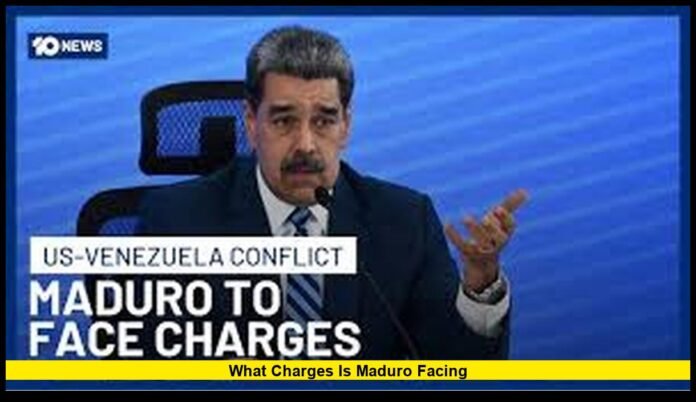

What charges is Maduro facing continues to be a central question in U.S. foreign policy and international criminal law as federal indictments against Venezuelan President Nicolás Maduro remain active and enforceable today. Although Maduro is not in U.S. custody, the criminal case filed by American prosecutors has not been dismissed, withdrawn, or resolved, keeping the issue firmly in focus for U.S. audiences.
The charges accuse Maduro of leading and benefiting from a transnational criminal operation tied to cocaine trafficking, narco-terrorism, and weapons-related conspiracies. These allegations place the case among the most serious criminal actions ever initiated by the United States against a foreign head of state.
Understanding the Scope of the U.S. Case
The U.S. criminal case against Nicolás Maduro is not based on a single event or limited incident. Federal prosecutors describe a long-running structure that allegedly involved drug production, international distribution routes, and the protection of those operations through force and corruption.
The indictment outlines accusations that Maduro used influence and authority to support criminal networks whose activities directly affected the United States. This framework is key to understanding why U.S. courts claim jurisdiction despite the international implications.
Narco-Terrorism Allegations Explained
The most serious charge Maduro faces is narco-terrorism conspiracy.
Under U.S. law, narco-terrorism involves participation in drug trafficking activities that are linked to violence, intimidation, or coordination with armed groups. Prosecutors allege that Maduro played a role in facilitating such operations while holding senior political power.
This charge carries the harshest potential penalty under federal law, including life imprisonment. Its inclusion signals that U.S. authorities consider the alleged conduct a threat not only to public health but also to national security.
Cocaine Trafficking Conspiracy
Another major accusation centers on conspiracy to import cocaine into the United States.
Prosecutors allege that Maduro participated in efforts to move large quantities of cocaine from South America toward U.S. markets. These alleged operations involved coordination across borders and exploitation of existing transportation routes.
The charge focuses on intent and coordination rather than physical presence, meaning the alleged planning and approval of trafficking activities form the basis of the accusation.
Weapons and Firearms Conspiracy Charges
In addition to drug-related allegations, Maduro faces charges involving weapons conspiracies.
These counts allege that firearms and destructive devices were connected to protecting trafficking routes and enforcing control over criminal operations. Prosecutors argue that access to weapons strengthened the alleged network’s ability to operate without interference.
Weapons conspiracy charges add significant weight to the case and increase potential sentencing exposure if a conviction were ever secured.
Alleged Criminal Enterprise Structure
Federal prosecutors describe the alleged activities as part of an organized criminal enterprise rather than independent crimes.
According to the indictment, this structure:
- Operated over multiple years
- Included high-ranking officials
- Generated profits from illegal narcotics
- Used corruption to avoid accountability
This enterprise-based framing allows prosecutors to link various alleged acts into a single prosecutable case.
Who Else Is Connected to the Case
The indictment includes references to other Venezuelan officials and associates accused of participating in related activities.
Some are named directly, while others are described through their roles. These connections are presented to demonstrate coordination and hierarchy rather than isolated misconduct.
This broader scope reinforces the claim that the alleged conduct involved institutional cooperation rather than personal actions alone.
Current Legal Status
As of today, the legal status of the case remains unchanged.
- Nicolás Maduro has not been arrested by U.S. authorities
- He has not appeared before a U.S. judge
- The charges have not been dismissed
- The indictment remains active
This means the case is legally open, even without courtroom proceedings.
Why the Charges Remain Active
U.S. law allows indictments to remain pending when defendants are outside the court’s reach.
Prosecutors maintain the case to preserve the ability to pursue accountability if circumstances change. The ongoing status also reflects the seriousness of the allegations and the government’s intent not to abandon the case.
Head-of-State Immunity Questions
A major legal issue surrounding the case involves head-of-state immunity.
Traditionally, sitting presidents are protected from prosecution by foreign courts. However, U.S. authorities argue that immunity does not apply to criminal acts involving narcotics trafficking and organized crime.
Courts have not invalidated the indictment on immunity grounds, allowing it to remain in force.
Potential Penalties Under U.S. Law
If Maduro were ever tried and convicted, penalties could be severe.
Possible consequences include:
- Life imprisonment for narco-terrorism
- Life imprisonment for cocaine trafficking conspiracy
- Additional decades for weapons offenses
- Asset forfeiture tied to alleged criminal proceeds
These penalties reflect the scale of the alleged conduct rather than any judicial finding.
Why This Case Matters to Americans
For U.S. audiences, the case matters because it directly involves drug trafficking into American communities.
Federal prosecutors argue that the alleged actions contributed to the flow of cocaine into the United States, impacting public health, law enforcement, and community safety.
The case also signals that political status does not automatically shield individuals from criminal accountability under U.S. law.
Diplomatic and Global Impact
The indictment has influenced international relations, particularly between the United States and Venezuela.
It has also shaped discussions about how nations address alleged crimes committed by powerful political figures and how far domestic courts can reach in transnational cases.
What Could Happen Next
There is no set timeline for resolution.
The case could advance if:
- Maduro enters U.S. jurisdiction
- Legal rulings alter immunity interpretations
- Diplomatic conditions shift
Until then, the charges remain pending.
Clarifying What Charges Is Maduro Facing Today
To clearly answer the question, what charges is Maduro facing today includes:
- Narco-terrorism conspiracy
- Cocaine importation conspiracy
- Weapons and firearms conspiracy
- Participation in an alleged criminal enterprise
These charges remain active and unresolved under U.S. federal law.
The case continues to stand as one of the most significant unresolved international criminal prosecutions involving a sitting head of state, and its outcome will shape future legal and diplomatic boundaries.