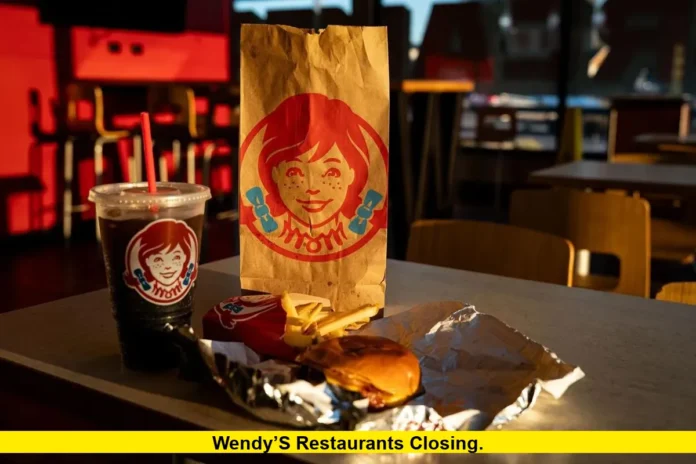

The phrase “Wendy’s restaurants closing” has recently taken center stage as the fast-food giant undergoes one of its biggest operational shake-ups in years. The company has confirmed that it will shutter hundreds of underperforming locations across the United States as part of a larger effort to modernize and refocus its business model.
Latest Update on Wendy’s Closures
Wendy’s, which operates roughly 6,000 restaurants nationwide, has begun closing stores that no longer meet the company’s financial or operational goals. Executives revealed that approximately 200 to 350 locations will be closed over the next several months, extending into 2026.
This large-scale reduction follows an earlier phase of closures completed in late 2024, when around 140 U.S. restaurants were permanently shut down. The move is part of the company’s ongoing modernization initiative—known internally as “Project Fresh”—aimed at improving performance and profitability across its domestic market.
While Wendy’s has not released a full list of impacted restaurants, early reports indicate that the closures are concentrated in areas where sales have declined, store infrastructure is outdated, or market competition has intensified.
Why Wendy’s Is Closing Restaurants
Wendy’s executives have made it clear that the decision to close hundreds of locations is strategic, not a sign of collapse. The goal is to strengthen the company’s footprint by eliminating weaker stores and reinvesting in modern, efficient operations.
Several key factors are driving the closures:
- Underperforming Stores: Many of the restaurants being shut down have reported declining sales and high operating costs over the past few years.
- Aging Infrastructure: Some older buildings are too expensive to renovate or no longer meet the company’s new design standards.
- Market Realignment: Wendy’s aims to focus on regions where customer demand remains strong, while reducing overlap in oversaturated areas.
- Shifting Consumer Habits: With the rise of digital ordering and delivery services, some traditional dine-in locations have seen reduced foot traffic.
In short, the brand’s focus is on quality over quantity—streamlining operations to ensure each restaurant contributes positively to its overall growth.
The Numbers Behind the Closures
To understand the scale of the current shift, here’s a breakdown of what the restructuring looks like in numbers:
| Category | Details |
|---|---|
| Approximate U.S. Wendy’s locations | ~6,000 |
| Estimated closures (2025–2026) | 200–350 |
| Locations closed in 2024 | 140 |
| Average store size targeted for closure | Small to mid-volume |
| New store concepts planned | “Next Gen” digital-first models |
These closures represent only a small percentage of the company’s total footprint but mark a significant change in Wendy’s long-term domestic strategy.
Timeline of Closures
- Early 2024: Wendy’s began identifying low-performing franchise units in several U.S. states.
- Mid-2024: Roughly 100 stores were closed as part of the first phase of restructuring.
- Late 2024: Another 40 stores were added to the closure list before year-end.
- November 2025: The company confirmed plans to close up to 350 additional stores through 2026.
This timeline illustrates a consistent effort to streamline operations while reinvesting in newer, more efficient restaurants.
Impact on Employees and Communities
Each Wendy’s restaurant typically employs between 25 and 40 workers, meaning that several thousand employees could be affected nationwide. However, the company has stated that many displaced workers will have opportunities to transfer to nearby locations or join newly opened restaurants.
Communities in smaller towns or rural regions may feel the impact more sharply, as Wendy’s closures could reduce local dining options or temporarily increase travel time for customers. Still, the brand insists that its focus remains on “long-term growth,” with plans to open hundreds of new, modernized locations over the next few years.
Where Closures Are Happening
While the company has not published a detailed state-by-state list, closures are expected to span both corporate-owned and franchise-operated locations. Reports suggest that certain areas in the Midwest, Southeast, and parts of the West Coast will see the highest number of shutdowns.
Urban centers with overlapping Wendy’s stores may also experience consolidation, where two or more nearby restaurants merge into one upgraded, high-traffic site.
Wendy’s “Next Gen” Transformation
Despite the closures, Wendy’s is actively investing in growth. The brand’s “Next Gen” restaurants are designed with:
- Dual drive-thru lanes for faster service
- Enhanced digital menu boards
- Pickup zones for delivery services
- Streamlined kitchens for mobile and kiosk orders
This new model aims to cut operating costs, improve speed, and enhance digital engagement—a key part of staying competitive in today’s fast-food industry.
The company has already begun construction on dozens of these new-generation restaurants and expects more than 300 new openings in 2025 and 2026. This simultaneous wave of closures and openings signals a strategic rebalancing rather than a contraction.
Customer Reactions and Market Response
Public reaction has been mixed. Loyal Wendy’s fans have expressed disappointment as long-standing neighborhood locations close. Others, however, have praised the company’s plan to modernize and keep pace with newer rivals.
In the broader fast-food market, Wendy’s remains a top-tier brand—competing closely with McDonald’s, Burger King, and Chick-fil-A. Analysts note that while the closures may seem alarming, they are relatively small compared to Wendy’s total footprint and are typical for major restaurant chains undergoing modernization cycles.
What’s Next for Wendy’s
Looking forward, Wendy’s expects its remodel and re-investment program to pay off by 2026. The company plans to:
- Continue upgrading older facilities across the U.S.
- Expand delivery and mobile ordering options nationwide.
- Strengthen franchise partnerships with incentives for remodels.
- Launch new menu items and seasonal promotions to drive traffic.
The closures are expected to wrap up by late 2026, after which Wendy’s will shift fully into its growth phase with a leaner, more modernized U.S. footprint.
The ongoing news of Wendy’s restaurants closing reflects a changing fast-food landscape—one where innovation, digital efficiency, and strategic positioning define long-term success. While some local favorites may shut their doors, the brand’s future is far from dim. Wendy’s is restructuring to stay stronger, faster, and more relevant in a rapidly evolving industry.
Have you noticed a Wendy’s closure in your area? Share your thoughts or local experiences below—your insights matter as this story continues to develop.