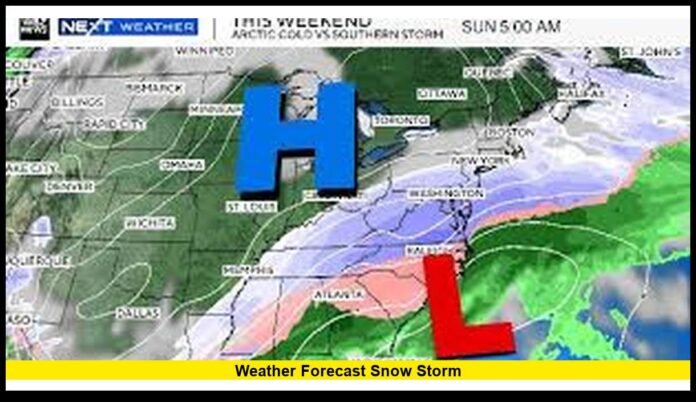

A powerful weather forecast snow storm is developing and is expected to affect a large portion of the United States this weekend, bringing widespread snow, ice, freezing rain, and dangerous travel conditions from the southern Plains to the Northeast. As of today, meteorological data confirms that this system is strengthening and will draw moisture from the Gulf of Mexico while pulling cold Arctic air southward, creating the ingredients for a significant winter weather event.
Forecasters indicate that this storm could become one of the most impactful of the current winter season, with the potential to disrupt transportation, close schools and offices, and strain power infrastructure across several states. Confidence continues to grow regarding the storm’s broad reach, though exact snowfall totals will vary by region.
Storm Development and Timing
The system is expected to organize over the southern Plains late this week before tracking northeastward through the Ohio Valley and into the Mid-Atlantic and New England. Snow and ice are forecast to begin in parts of Texas, Oklahoma, and Arkansas before spreading east and north from Friday into Sunday.
As the storm intensifies, colder air will wrap in from the north, allowing rain to change to sleet and snow across many areas. The interaction between warm, moist air aloft and freezing surface temperatures will also create a risk of significant ice accumulation in certain zones.
Southern States: Rare but Hazardous Winter Conditions
Parts of the Deep South are expected to experience a mix of freezing rain, sleet, and snow. Regions that normally see mild winter weather could face slick roads, downed trees, and isolated power outages.
Even small amounts of ice in these areas can lead to widespread disruptions because infrastructure and road treatment resources are limited compared to northern states. Bridges, overpasses, and elevated roadways are likely to become hazardous first, increasing the risk of accidents and traffic delays.
Central U.S.: Snow and Blowing Winds
Across the central Plains and Midwest, the storm is forecast to bring moderate to heavy snowfall, accompanied by gusty winds. These conditions could create periods of low visibility and drifting snow, particularly in open rural areas.
Travel on major interstates may become difficult at times, especially during the heaviest bands of snowfall. Airlines are also preparing for possible delays and cancellations as the storm moves through major transportation hubs.
Mid-Atlantic and Northeast: Potential for Heavy Accumulation
From the Mid-Atlantic into New England, the track of the storm favors significant snow for many communities. Colder air already in place will allow precipitation to fall primarily as snow, with some areas also facing periods of sleet or freezing rain near the storm’s southern edge.
Urban centers could experience slowed commutes and disruptions to public transportation. In higher elevations and inland locations, snowfall totals may be higher, leading to more prolonged impacts and the possibility of snow-covered roads lasting into early next week.
Ice Threat and Power Concerns
One of the most serious risks with this weather forecast snow storm is the potential for ice accumulation. Freezing rain can coat trees, power lines, and road surfaces with a layer of ice, increasing the likelihood of power outages and making travel extremely dangerous.
Utility crews in several states are preparing for the possibility of downed lines and are coordinating response plans to restore service quickly if outages occur.
Travel and Safety Implications
Motorists are urged to plan ahead and avoid unnecessary travel during periods of heavy snow or icing. Sudden changes in road conditions, especially when temperatures hover near the freezing mark, can catch drivers off guard.
Airports across the storm’s projected path are monitoring conditions closely, and travelers should expect potential delays. Rail and bus services may also operate on adjusted schedules if conditions deteriorate.
Preparation and Community Response
Local and state agencies are preparing road treatment crews, emergency shelters, and communication systems to respond as the storm unfolds. Residents in affected areas are encouraged to ensure they have essential supplies, including food, water, medications, and flashlights, in case travel becomes difficult or power interruptions occur.
Schools and businesses may announce closures or delayed openings depending on the storm’s evolution and the severity of local conditions.
Why This Storm Stands Out
This system is notable not only for its size but also for its potential to impact regions that do not often see significant winter weather. The combination of moisture, cold air, and strong atmospheric dynamics increases the likelihood of widespread effects across multiple climate zones.
Such storms highlight the complexity of winter weather patterns in the United States, where a single system can bring snow to the Great Lakes, ice to the Southeast, and heavy precipitation to the Northeast all within a short time frame.
Looking Ahead
While the core of the storm is expected to move out by early next week, lingering cold air could keep temperatures below normal in its wake. Some areas may see additional light snow or flurries as the system departs, prolonging winter conditions and cleanup efforts.
Weather agencies will continue to refine forecasts and issue updates as new data becomes available, helping communities prepare for the most likely scenarios.
Stay alert, follow local updates, and share how the approaching winter weather is affecting your area as conditions continue to develop.