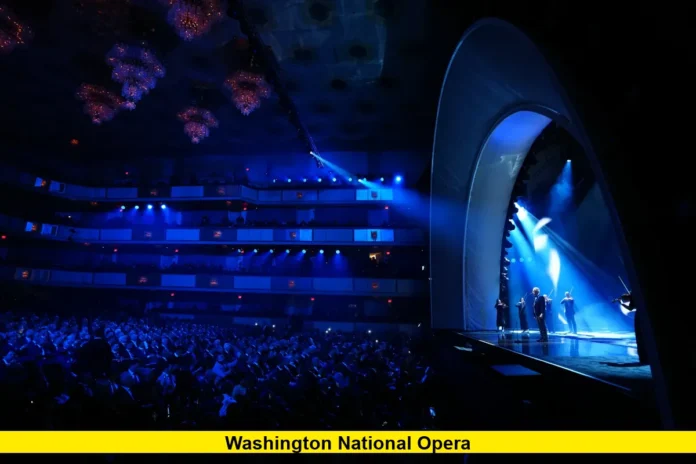

The washington national opera has officially entered a transformative phase in its history, confirming its departure from the Kennedy Center and preparing to operate as an independent nonprofit opera company in the nation’s capital. This decision marks one of the most significant shifts in the organization’s modern history and signals a broader change in how major U.S. arts institutions adapt to evolving financial, cultural, and audience realities.
The opera company will continue presenting performances in Washington, D.C., but no longer as a resident organization at the Kennedy Center. Instead, it is reshaping its structure to gain greater autonomy over artistic planning, finances, and community engagement.
A long-standing cultural institution
For more than half a century, the Washington National Opera has played a central role in American opera. Its productions have drawn national attention, featuring renowned vocalists, conductors, and orchestras while also supporting emerging talent.
The company’s residency at the Kennedy Center became a defining element of Washington’s cultural identity. Generations of opera lovers associated the Kennedy Center Opera House with grand productions, elegant staging, and ambitious programming that placed the city among the country’s leading opera destinations.
Over time, the organization built a reputation for balancing classical masterworks with modern operas, educational initiatives, and outreach programs that extended opera beyond traditional audiences.
Why the separation happened
The decision to leave the Kennedy Center did not arise suddenly. It followed extended internal evaluations and discussions about long-term sustainability. In recent years, financial pressures affecting arts organizations nationwide also impacted opera companies, which face particularly high production costs.
Operational changes at the Kennedy Center introduced new funding expectations that required productions to be financially secured before being staged. While this model aligns with certain performing arts formats, it created difficulties for opera, which traditionally relies on layered funding streams that develop over time.
Combined with shifts in ticket-buying behavior and donor engagement, these constraints made long-range planning increasingly difficult. Leadership ultimately concluded that remaining under the existing structure could limit artistic flexibility and pose risks to the company’s future stability.
Choosing independence over uncertainty
Independence offers the opera company greater control over its direction. Without the constraints of a residency agreement, leadership can adapt programming to align with available resources while preserving artistic standards.
This change allows the company to design seasons that better match audience demand, financial capacity, and creative goals. It also provides the freedom to explore new performance spaces across the city, potentially reaching broader and more diverse audiences.
The move reflects a strategic choice to prioritize long-term health over tradition alone, ensuring the organization can continue operating as a vital cultural force rather than struggling under an incompatible model.
How future seasons may look
While specific venues and schedules are still being finalized, future seasons are expected to feature a mix of production scales. Grand operas will remain part of the repertoire, but smaller, more flexible productions may play a larger role.
This approach allows the company to maintain artistic ambition while managing costs responsibly. It also opens doors to innovative staging, contemporary works, and collaborations that may not have been feasible under previous arrangements.
By diversifying performance formats and locations, the opera can experiment creatively while staying closely connected to its audience base.
Impact on performers and creative teams
Artists remain at the heart of the opera’s mission. Singers, musicians, conductors, designers, and technical professionals will continue to shape productions as the organization transitions.
Independence may offer artists increased creative input, as programming decisions become more agile and responsive. While operational changes can be challenging, leadership has emphasized its commitment to maintaining high artistic standards and supporting the professional community that sustains opera production.
For many performers, the change represents an opportunity to engage with audiences in new and meaningful ways.
Audience experience in a changing landscape
For longtime patrons, the departure from the Kennedy Center represents a shift in tradition. However, the core experience—live opera performed at a high level—remains unchanged.
Audiences can expect adjustments in ticketing, seating, and performance locations. At the same time, new venues may offer more intimate settings that enhance the connection between performers and listeners.
The opera’s leadership views this moment as a chance to reintroduce opera to the city, welcoming both devoted supporters and newcomers who may feel more comfortable in varied performance environments.
What this means for Washington, D.C.
Washington’s cultural ecosystem continues to evolve, and the opera’s transition reflects broader trends affecting major arts organizations. As institutions reassess traditional models, independence is increasingly seen as a way to preserve artistic identity while responding to economic realities.
The city remains home to a vibrant arts community, and the opera’s continued presence ensures that opera will remain a visible and influential part of Washington’s cultural life.
Rather than diminishing the city’s status as a performing arts hub, the move has the potential to expand it by spreading opera across multiple venues and neighborhoods.
The Kennedy Center after the change
The Kennedy Center will continue presenting opera through visiting companies and special engagements. While the absence of a resident opera company alters its programming structure, the center remains committed to offering a wide range of performing arts.
The conclusion of the residency represents an institutional shift rather than an end to opera performances at the venue. Both organizations have emphasized mutual respect and a shared history that shaped American opera for decades.
Preserving legacy while redefining identity
The opera’s legacy is rooted in decades of landmark performances, national recognition, and cultural influence. Independence does not erase that history; instead, it provides a framework for carrying it forward.
Educational programs, community initiatives, and national collaborations remain core components of the organization’s mission. These efforts help cultivate future audiences and ensure opera remains relevant in a rapidly changing cultural landscape.
By redefining how opera is produced and presented, the company aims to honor tradition while embracing innovation.
Looking ahead with purpose
The months ahead will be critical as operational details take shape. Leadership has committed to transparency as plans develop, with announcements expected regarding venues, seasons, and audience engagement.
This transition represents both challenge and opportunity. It requires careful planning, strong community support, and continued artistic excellence.
What remains clear is that opera in Washington is not disappearing—it is evolving.
A pivotal moment for American opera
The decision by the washington national opera to chart an independent path reflects resilience and adaptability at a time when cultural institutions face unprecedented pressures.
By choosing reinvention over stagnation, the company positions itself to continue serving audiences while shaping the future of opera in the United States.
Readers are invited to share their thoughts on this historic transition and stay connected as the next chapter of opera in Washington continues to unfold.