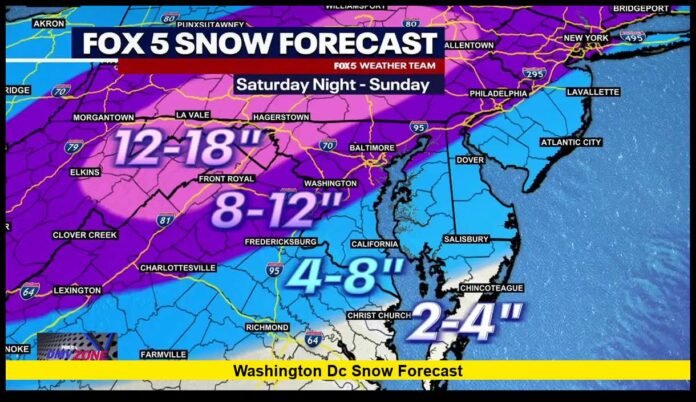

The Washington DC snow forecast shows a major winter storm arriving late Saturday night with accumulating snow, sleet, and freezing rain expected through Sunday and into early Monday as Arctic air grips the region. This weather event will bring some of the most significant winter conditions seen in the area in years.
As of today, Washington, D.C., Maryland, and Northern Virginia are preparing for heavy snowfall and dangerous travel conditions. Emergency declarations are in place, and winter storm warnings cover the greater Washington metropolitan region. The forecast reflects confirmed weather patterns that will shape how this winter storm unfolds.
Storm Arrival and Timing
The Washington DC snow forecast calls for the first flakes to begin changing the landscape Saturday night, with snow starting after sunset and intensifying overnight. The snow is expected to overspread the area by late evening, with periods of steady precipitation continuing through Sunday morning and into Sunday afternoon.
As the storm evolves, varying precipitation types — including sleet and freezing rain — will mix with the snow, especially in areas south and east of the city. This mixture will complicate travel and increase the threat of icy surfaces across roads, bridges, and sidewalks.
The storm is expected to taper off early Monday morning, but bitter cold temperatures and lingering snow and ice will continue to dominate the weather through much of the week that follows.
Snowfall Accumulations Across the Region
Forecasters predict significant snowfall across the entire DMV (District, Maryland, Virginia) area. The Washington DC snow forecast centers on these expected accumulations:
- Washington, D.C.: 6–12 inches of snow likely, with localized higher amounts possible
- Northern Suburbs: 8–14 inches or more, especially farther from downtown
- Central Maryland & Northern Virginia: 7–14 inches across many communities
- South and Southeast of D.C.: 4–8 inches with a greater chance of sleet and freezing rain
Snowfall totals will vary depending on exact storm track and temperature profiles, but most areas should prepare for several inches of snow and periods of heavy precipitation. The northern and western suburbs tend to see higher accumulations due to colder surface temperatures and longer snow duration.
Temperature Trends and Arctic Air
The cold air mass that has settled over the region will not only support snow accumulation but will also bring dangerously low temperatures before, during, and after the storm. Overnight lows are expected to dip into the teens, while daytime highs may struggle to rise above freezing.
Wind chills will make it feel significantly colder, especially on Sunday when the storm is at its peak. The prolonged arctic conditions mean that snow and ice will melt slowly over the coming days, prolonging travel hazards.
Mixed Precipitation and Ice Risk
One of the most challenging aspects of the Washington DC snow forecast is the potential for mixed winter precipitation. As warmer air briefly moves aloft above the cold surface layer, snow could mix with sleet and freezing rain. This will be most likely Sunday afternoon and evening, particularly in southern and eastern portions of the region.
Ice from sleet and freezing rain can:
- Make roads slippery and dangerous
- Accumulate on power lines and tree branches
- Lead to power outages
- Break branches and damage property
Ice accumulation even of a few tenths of an inch can create hazardous conditions, especially combined with heavy snowfall.
Travel Disruptions and Safety Concerns
This winter storm will have widespread effects on travel, infrastructure, and daily life.
Road Travel
- Major highways may become snow-covered or icy
- Secondary roads could be treacherous or impassable
- Black ice could develop early in the morning and overnight hours
Commuters should plan for potentially long delays and extremely difficult driving conditions. Avoiding travel during peak snowfall is strongly advised.
Air Travel
Airports in and around the D.C. area may experience flight delays and cancellations due to snow, ice, and reduced visibility. Travelers should check flight status before heading to terminals and expect disruptions on Sunday and possibly early Monday.
Public Transit
Public transit services, including local rail and buses, may operate on reduced schedules or experience delays. Riders should give extra time for trips and monitor service alerts.
Power and Infrastructure Preparedness
Heavy snow combined with freezing rain increases mechanical stress on utility infrastructure. Ice can add weight to power lines and tree limbs, potentially leading to downed lines and localized power outages.
What Residents Should Do
- Charge essential devices before the storm arrives
- Keep flashlights and extra batteries handy
- Have a supply of food, water, and medications
- Prepare alternative heating options in case of outages
- Stay off roads during the worst conditions
Utility crews and emergency responders are staging equipment and planning response operations, but residents should assume that restoration efforts may take time, especially if ice and snow accumulate substantially.
Impact on Schools and Businesses
With this storm expected to bring several inches of snow and periods of ice, many schools, businesses, and government offices may announce closures or delayed openings, particularly on Sunday and Monday.
Parents should check school district alerts and employers may adjust operations to prioritize safety. Community services such as snow removal and emergency response will be working throughout the storm to clear main roads and assist where needed.
Historical Context for Washington Snowstorms
The Washington area has seen significant snow events in the past, and this storm may rank among the more impactful in recent memory. While not record-breaking, the expected amounts are notable for the mid-Atlantic region and will certainly disrupt normal routines.
Residents who have lived through past winter storms understand the challenges that come with heavy snowfall, mixed precipitation, and prolonged cold. That experience can help communities prepare and respond more effectively.
What to Expect After the Storm
Once the precipitation ends early Monday, the cold air will remain locked in place. Temperatures are expected to stay below average well into the next week, meaning:
- Snow and ice will melt slowly
- Roads and walkways may remain slick
- Outdoor activities will remain challenging
Freezing overnight temperatures will enhance the need for continued caution when venturing outside.
Key Takeaways from the Washington DC Snow Forecast
- Snow begins: Saturday night
- Heaviest snow: Sunday morning and afternoon
- Mix with sleet/freezing rain: Sunday afternoon into evening
- Storm exit: Early Monday
- Snow totals: 6–14 inches depending on location
- Cold persists: Temperatures remain below freezing afterward
This broad pattern indicates a sustained winter impact, with multiple hazards for residents and travelers throughout the weekend and into early next week.
Share your snow totals, road conditions, and winter preparation tips in the comments below as we continue to watch the Washington DC snow forecast evolve and affect life across the capital region.