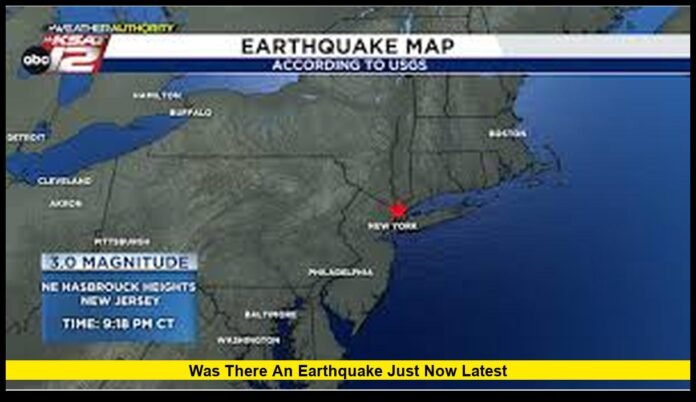

Was there an earthquake just now became a widely asked question on March 10, 2026, after residents across parts of New York and the Hudson Valley reported feeling unexpected shaking. People in communities including Sleepy Hollow, Tarrytown, and other areas of Westchester County noticed brief vibrations inside homes and buildings. Seismic monitoring systems soon confirmed that a small earthquake had occurred in the region, prompting local officials to conduct safety checks.
The tremor lasted only a short time, but it quickly captured public attention because earthquakes are relatively uncommon in the northeastern United States. Within minutes, people across multiple towns began discussing the shaking and sharing their experiences.
Residents Across the Hudson Valley Feel the Tremor
The earthquake occurred during the morning hours of Tuesday, March 10, 2026. Residents described the sensation as a sudden vibration followed by a few seconds of light shaking.
For many people, the experience came without warning.
Some residents noticed objects rattling or moving slightly on tables. Others heard a rumbling sound before the shaking began.
Communities where residents reported feeling the tremor include:
- Sleepy Hollow
- Tarrytown
- Ossining
- White Plains
- Yonkers
- Parts of northern New York City
In several areas, people stepped outside after feeling the movement to check whether neighbors noticed the same thing.
Because earthquakes are rare in the region, many residents initially suspected other causes such as construction or heavy vehicles passing nearby.
Seismic Monitoring Systems Detect the Event
Shortly after reports appeared, seismic monitoring networks detected ground movement consistent with an earthquake.
Seismographs across the region recorded vibrations traveling through the Earth’s crust.
These instruments measure seismic waves and allow scientists to determine important details about an earthquake.
Researchers analyze several factors when studying an event:
- The magnitude of the earthquake
- The exact location of the epicenter
- The depth beneath the surface
- The pattern of seismic wave movement
Initial readings indicated that the earthquake was small in magnitude, which explains why the shaking lasted only a few seconds.
Even minor earthquakes can be noticeable when they occur near populated areas.
How Long the Shaking Lasted
Most residents reported that the movement lasted between three and ten seconds.
Short-duration shaking is typical for earthquakes with lower magnitudes.
Inside buildings, the sensation may feel stronger because structures respond to ground vibrations.
In some homes, people saw ceiling lights sway slightly or heard dishes rattle in cabinets.
Residents in taller apartment buildings sometimes experience more noticeable movement because high floors can sway during seismic activity.
Despite the brief duration, the event quickly became a major topic of discussion across local communities.
Emergency Services Respond to Reports
After the tremor, local authorities began routine safety inspections throughout the affected areas.
Emergency services checked key infrastructure to ensure public safety.
Inspections focused on several important locations:
- Bridges and highways
- Schools and government buildings
- Hospitals and medical centers
- Utility systems including electricity and water
Officials confirmed that the earthquake caused no widespread damage.
Power systems continued operating normally, and no major disruptions to public services were reported.
For most residents, the event ended as quickly as it began.
Why Earthquakes Occur in the Northeastern United States
Many Americans associate earthquakes with California or other regions along active tectonic plate boundaries.
The northeastern United States lies far from those major boundaries, but earthquakes can still occur.
Ancient fault lines exist beneath the surface of the region. These faults formed millions of years ago when continents collided and shifted.
Although these geological structures remain mostly stable, stress slowly builds within the Earth’s crust over time.
When that stress releases suddenly, the result is an earthquake.
These events tend to be smaller than earthquakes along major plate boundaries, but they can still be felt across populated areas.
Why Tremors Travel Far in the Northeast
Earthquakes in the northeastern United States behave differently than those in many other regions.
One key reason involves the type of rock beneath the surface.
The region contains hard bedrock that transmits seismic waves efficiently. Vibrations travel through this rock with relatively little energy loss.
As a result:
- Earthquakes can be felt across large distances
- Tremors may reach multiple counties
- People far from the epicenter may still notice shaking
This geological characteristic explains why residents across the Hudson Valley and nearby areas experienced the same event.
Historical Earthquakes in the New York Region
Although earthquakes are uncommon in New York State, they have occurred several times in recorded history.
Most earthquakes in the region measure below magnitude 4.0.
Events of this size usually cause brief shaking but little structural damage.
Because the region is densely populated, even minor earthquakes attract widespread attention.
Residents often remember where they were when they felt an unexpected tremor.
The Hudson Valley has experienced occasional seismic events over the decades, reminding residents that the region is not entirely free from earthquake activity.
How Scientists Measure Earthquakes
Earthquake magnitude represents the amount of energy released during a seismic event.
Scientists calculate magnitude using data collected by seismographs.
These instruments record the strength and duration of seismic waves.
Here is a simplified overview of how magnitude levels affect people:
| Magnitude | Typical Experience |
|---|---|
| Below 3.0 | Rarely felt |
| 3.0–3.9 | Light shaking indoors |
| 4.0–4.9 | Noticeable shaking and possible minor damage |
| 5.0 and above | Strong shaking with potential structural damage |
The tremor reported in the Hudson Valley falls within the lower range of this scale.
That level of magnitude usually produces noticeable movement without serious consequences.
Public Reaction After the Earthquake
Within minutes of the shaking, residents across New York turned to social media to ask whether others felt the same tremor.
Online posts described similar experiences across several communities.
Common descriptions included:
- Houses shaking briefly
- Windows rattling
- Floors vibrating
- Pets reacting suddenly
Many people were surprised because earthquakes rarely occur in the region.
Some residents initially believed an explosion or nearby construction activity caused the vibration.
Once seismic monitoring confirmed the earthquake, the situation became clearer.
Understanding Aftershocks
Aftershocks sometimes occur following an earthquake.
These smaller tremors happen as the Earth’s crust adjusts after the initial release of energy.
Most aftershocks are weaker than the main event.
In many cases, they are too small for people to feel.
Scientists continue monitoring seismic activity after any earthquake to determine whether additional tremors occur.
Monitoring systems operate around the clock across the United States.
Earthquake Safety Tips for Residents
Even though this earthquake caused minimal impact, experts recommend that people understand basic earthquake safety practices.
One widely recognized method is known as Drop, Cover, and Hold On.
Safety guidelines include:
- Drop to the ground when shaking begins
- Take cover under a sturdy table or desk
- Hold on until the shaking stops
- Stay away from windows and heavy objects
- Move outside only after shaking ends if necessary
These simple steps help reduce the risk of injury during stronger earthquakes.
Preparedness programs encourage communities to learn these safety practices in advance.
Life Returns to Normal Across the Region
After the brief tremor ended, daily life across Westchester County and surrounding communities quickly returned to normal.
Schools, businesses, and public transportation continued operating without interruption.
Residents who felt the shaking shared stories with neighbors and coworkers.
For many people, the earthquake became a memorable moment rather than a disruptive event.
Officials continue reviewing seismic data from the tremor while monitoring for additional activity.
A Shared Experience Across New York
When buildings began to shake unexpectedly, thousands of residents across the region asked the same question: was there an earthquake just now.
The answer soon arrived as seismic systems confirmed the tremor.
Although the earthquake lasted only a few seconds, it reminded residents that natural forces can affect any region.
Events like this often spark curiosity about how earthquakes work and why they occur in unexpected places.
Did you feel the tremor in your area? Share your experience and stay informed about seismic activity affecting communities across New York.