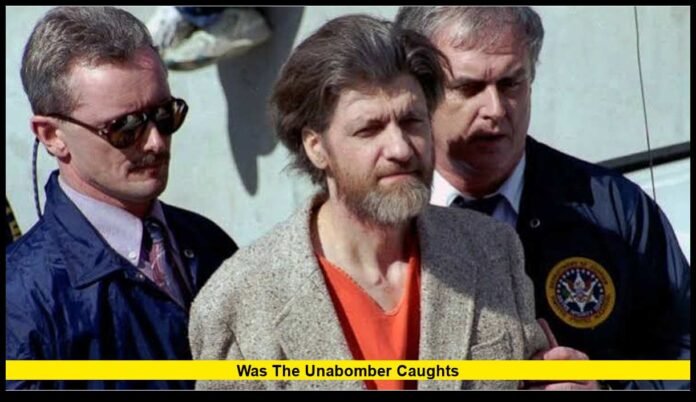

Yes, was the Unabomber caught is a question with a definitive answer: Theodore “Ted” Kaczynski was arrested by federal agents on April 3, 1996, at his isolated cabin near Lincoln, Montana. His capture ended a nearly two-decade investigation into a series of homemade bomb attacks that killed three people and injured more than 20 others.
The arrest became one of the most significant moments in the history of the FBI’s domestic terrorism investigations. What made the case particularly unusual was that investigators eventually connected Kaczynski to the attacks through a combination of linguistic analysis, family information, investigative work and evidence discovered inside his remote cabin.
Although Kaczynski died in federal custody in 2023, renewed public interest in his story continues because of documentaries, books and screen productions examining the case and the investigation that brought him down.
The Man Behind the Unabomber Name
Theodore John Kaczynski was a highly accomplished mathematician who attended Harvard University as a teenager and later earned a doctorate in mathematics from the University of Michigan. He became a mathematics professor at the University of California, Berkeley, but left academia in the late 1960s.
Years later, Kaczynski moved to a small cabin in rural Montana and adopted an increasingly isolated lifestyle.
That isolation became an important part of the eventual investigation. Kaczynski lived without many of the conveniences associated with modern life, and his remote surroundings made it considerably more difficult for authorities to connect him with the attacks occurring around the country.
Beginning in 1978, homemade bombs were mailed or delivered to targets connected primarily with universities, airlines, technology and other institutions. Over the next 17 years, the attacks became increasingly sophisticated.
The FBI eventually linked 16 bombings to the Unabomber investigation. Three people were killed, while many others suffered injuries.
Why Was He Called the Unabomber?
The nickname “Unabomber” came from the FBI’s investigative designation for the case.
Early targets included people associated with universities and airlines, leading investigators to use an abbreviation derived from “university,” “airline” and “bomber.”
At first, authorities did not know the attacker’s identity.
The bomber appeared to operate alone and carefully constructed his devices. His attacks were spread across different parts of the country, making it difficult for investigators to establish a conventional geographic pattern.
The investigation continued for years as authorities examined bomb components, correspondence, witness accounts and other evidence.
The lack of an identified suspect made the case one of the FBI’s most challenging long-running investigations.
The First Attacks and the Growing Investigation
The first known Unabomber attack occurred in 1978.
A homemade device was found at the University of Chicago and eventually exploded at Northwestern University, injuring a security officer.
Additional attacks followed.
Over the years, bombs were associated with university researchers, airline executives, technology companies and other individuals. The campaign became increasingly frightening because victims could not easily determine whether an ordinary package or object contained an explosive.
The Unabomber also demonstrated an ability to change tactics.
Some attacks involved packages sent through the mail, while others involved devices placed in specific locations. Investigators were forced to analyze each incident while also determining whether seemingly unrelated bombings were actually part of the same campaign.
By the 1980s, investigators understood that the attacks were connected, but they still did not know the identity of the person responsible.
The 1987 Witness Sketch
One of the most important early clues came in 1987.
A woman reported seeing a man near a computer store in Salt Lake City shortly before a bomb was discovered. She provided investigators with a description of the person she had seen.
That information helped authorities produce a composite sketch.
The image became one of the first recognizable public representations of the unknown bomber.
However, the sketch did not immediately lead investigators to Kaczynski.
The Unabomber subsequently reduced his activity for several years, contributing to the difficulty of maintaining the investigation’s momentum.
The bombing campaign eventually resumed in the early 1990s.
The Investigation Intensifies
The attacks in the 1990s increased pressure on federal authorities.
Bombs injured people at universities, and later attacks resulted in deaths.
In 1994, a bomb killed advertising executive Thomas Mosser at his home in New Jersey. In 1995, a bombing killed Gilbert Murray, who was president of the California Forestry Association.
The attacks demonstrated that the bomber was not simply targeting large institutions. Individual people could also become victims.
The federal investigation expanded significantly as authorities attempted to identify the person responsible.
Investigators eventually established a dedicated task force involving multiple federal agencies.
Despite the enormous effort, the suspect remained unidentified.
The Unabomber Makes a Demanding Proposal
The case changed dramatically in 1995.
The Unabomber sent a lengthy manuscript to major newspapers and demanded that it be published. He claimed that publication would help communicate his ideas and indicated that he would stop his bombing campaign.
The decision to publish the document was controversial.
Authorities understood that publishing material from a terrorist could potentially give the perpetrator an enormous public platform. At the same time, investigators believed the document could provide an opportunity to identify its author.
The Washington Post and The New York Times ultimately published the manuscript in September 1995.
That decision produced the breakthrough investigators had been hoping for.
David Kaczynski Recognizes His Brother’s Writing
One of the most important developments came from Kaczynski’s younger brother, David.
After reading the published manifesto, David noticed similarities between its language and ideas and writings he had previously seen from Ted.
The similarities raised serious concerns.
David did not immediately confront his brother or publicly identify him. Instead, he worked through an attorney and eventually provided documents to federal investigators.
Those documents became extremely important.
Investigators could now compare writing known to have come from Ted Kaczynski with the writing contained in the Unabomber’s published material.
Linguistic Analysis Becomes a Critical Clue
The comparison was not based simply on the subject matter of the writings.
Investigators and linguistic experts examined patterns in language, word choice, sentence construction and distinctive expressions.
The analysis indicated strong similarities between Kaczynski’s known writings and the Unabomber’s manifesto.
That information became especially powerful when combined with other evidence about Kaczynski’s background.
Investigators knew that the Unabomber had demonstrated considerable technical ability. Kaczynski’s mathematical education and academic career provided an important connection.
His former association with Berkeley was also significant because some of the Unabomber’s targets had connections to the university.
The evidence eventually gave investigators sufficient grounds to seek a search warrant.
The Arrest in Montana
Federal agents arrested Kaczynski on April 3, 1996.
He was taken into custody at his remote cabin near Lincoln, Montana.
The arrest marked the end of a massive manhunt that had lasted almost two decades.
Kaczynski had lived in an extremely basic structure that stood in sharp contrast to the academic career he had once pursued.
The cabin’s remote location had helped him remain outside the attention of authorities for years.
But by the time investigators arrived, they had already developed a substantial case against him.
What Investigators Found Inside the Cabin
The search of the cabin produced an extraordinary amount of evidence.
Investigators found bomb-making materials, chemicals, electrical wire, pieces of metal and plastic pipe and other components associated with explosive devices.
They also discovered extensive handwritten material.
Among the evidence were thousands of pages documenting Kaczynski’s thoughts, experiments and activities.
Investigators also discovered a live bomb inside the cabin.
The discovery was particularly significant because it suggested that another attack could have occurred if Kaczynski had not been arrested.
The cabin effectively became a physical record of the investigation.
It contained evidence that connected Kaczynski to the bomb-making process and provided investigators with additional material for reconstructing the crimes.
The Manifesto Became Evidence
Investigators also found material associated with the manifesto inside the cabin.
This was important because the published document had been one of the central elements that led David Kaczynski to suspect his brother.
The connection between the writings, Kaczynski’s background and the physical evidence in the cabin created a powerful case.
The investigation had progressed from an unknown bomber with no known identity to a named suspect whose residence contained extensive evidence.
What Happened After the Arrest?
Kaczynski was formally charged with federal crimes connected to the bombing campaign.
The legal proceedings became complicated because of disagreements involving his defense strategy.
Kaczynski opposed an insanity defense and wanted his political motivations to play a central role in the case.
Ultimately, he pleaded guilty in January 1998.
The guilty plea allowed prosecutors to avoid a lengthy trial while securing a sentence of life imprisonment without the possibility of parole.
Kaczynski received multiple life sentences along with additional prison time.
He was sent to federal prison and remained incarcerated for the rest of his life.
Did the Unabomber Ever Leave Prison?
No.
Kaczynski remained imprisoned after his 1998 sentencing.
He later spent time at the Federal Medical Center in Butner, North Carolina.
Kaczynski died in federal custody on June 10, 2023, at the age of 81.
His death meant that the criminal case could no longer result in his release or another court proceeding against him.
However, the historical significance of the investigation has continued.
Why the Capture Remains Important
The Unabomber investigation remains notable because of the unusual combination of investigative techniques that eventually identified Kaczynski.
For years, investigators had physical evidence from bombs but did not have a name.
The publication of the manifesto changed that situation.
The document gave investigators something they could compare with writings from potential suspects. David Kaczynski’s decision to contact authorities supplied an important connection, while linguistic analysis helped strengthen the link.
Investigators then used traditional police work and a search warrant to examine Kaczynski’s cabin.
The evidence found there provided additional confirmation.
The case therefore demonstrates how seemingly separate clues can become decisive when investigators connect them correctly.
Why People Still Search for the Unabomber Case
Interest in the case has remained strong decades after Kaczynski’s arrest.
One reason is the extraordinary length of the investigation. Few criminal investigations have involved such a long search for a single suspect.
Another is the unusual path that led authorities to Kaczynski.
Instead of being identified through a simple fingerprint, eyewitness identification or straightforward digital trail, he was ultimately connected to the attacks through his writing, family members and investigative analysis.
The case also continues to appear in documentaries, books, podcasts and dramatized productions.
In 2026, renewed entertainment interest is bringing the story to another generation of viewers. Netflix’s upcoming film Unabomber, starring Jacob Tremblay as a young Kaczynski, is scheduled for release on September 25, 2026. The production explores both Kaczynski’s early years and the investigation that eventually led to his arrest.
That renewed attention is likely to keep public interest in the historical case alive.
Was the Unabomber Caught? The Final Answer
There is no uncertainty about the outcome.
The Unabomber was caught, identified as Theodore John Kaczynski, and arrested at his Montana cabin on April 3, 1996.
His identification followed years of investigation and became possible after the publication of his manifesto led his brother David to recognize similarities in the writing. Investigators then compared the documents, developed evidence connecting Kaczynski to the crimes and obtained authorization to search his cabin.
Inside, agents found extensive evidence, including bomb-making materials, handwritten journals and a live explosive device.
Kaczynski later pleaded guilty and received life imprisonment without parole. He remained incarcerated until his death in 2023.
The case is now part of American criminal history, remembered not only for the devastating bombing campaign but also for the extraordinary investigation that finally identified the man behind it.
The Unabomber case remains one of America’s most remarkable criminal investigations—share your thoughts in the comments and stay tuned for more stories behind the headlines.