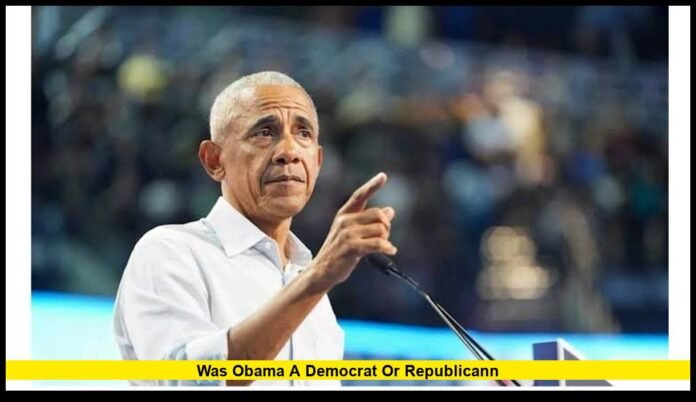

The question was obama a democrat or republican has a clear answer: Barack Obama was a Democrat who served as the 44th president of the United States from 2009 to 2017. He represented the Democratic Party throughout his political career, from his early years in Illinois politics to his election victories in 2008 and 2012. His presidency brought major changes to American healthcare, economic policy, civil rights, environmental protection, and foreign relations.
Obama became one of the most recognizable Democratic leaders in modern American history. His political message emphasized opportunity, economic recovery, government reform, and greater access to essential services. While his policies attracted both support and criticism, his party affiliation was never in doubt. He ran for president as the Democratic nominee twice and continued supporting Democratic candidates after leaving office.
Understanding Obama’s political identity requires looking beyond his party label. His background as a community organizer, his years in the Illinois legislature, his work in the U.S. Senate, and his two presidential terms all help explain the political principles that shaped his administration.
Key Points Summary
╔════════════════════════════════════════════════════════════════════╗
║ – Barack Obama was a member of the Democratic Party throughout his political career. ║
║ – He served as the 44th U.S. president from January 2009 to January 2017. ║
║ – His political career included service in the Illinois State Senate and the U.S. Senate. ║
║ – Obama won the 2008 and 2012 presidential elections as the Democratic nominee. ║
║ – His major accomplishments included the Affordable Care Act and legislation supporting economic recovery. ║
║ – He supported civil rights, marriage equality, environmental action, and expanded healthcare access. ║
║ – Obama remains an influential figure in Democratic politics and American public life. ║
╚════════════════════════════════════════════════════════════════════╝
Barack Obama’s Political Party and Ideology
Barack Obama belonged to the Democratic Party, one of the two major political parties in the United States. The party generally supports government initiatives intended to improve access to healthcare, strengthen consumer protections, expand educational opportunities, and address economic inequality.
Obama’s political positions reflected many of these priorities. He argued that the federal government could help create opportunities for families, protect workers, and respond to problems that individual communities or private businesses might struggle to solve independently.
He also supported private enterprise, economic growth, and cooperation between the government and businesses. His approach combined liberal policy goals with a pragmatic governing style that sometimes involved negotiations with political opponents.
Obama is generally described as a liberal or center-left Democrat. However, the Democratic Party includes a wide range of political views, from moderates to progressives. Not every Democrat agreed with Obama’s positions, and his administration occasionally faced criticism from members of his own party.
How Barack Obama Entered Democratic Politics
Obama’s path into politics began well before his presidential campaigns. Born in Honolulu, Hawaii, on August 4, 1961, he later studied at Columbia University and Harvard Law School. After completing his education, he developed an interest in public service and worked as a community organizer in Chicago.
His community work involved helping residents address neighborhood challenges, including employment opportunities, housing conditions, and access to local resources. These experiences helped shape his interest in public policy and the role government could play in improving people’s lives.
In 1996, Obama was elected to the Illinois State Senate. He served in the state legislature until 2004, developing experience in legislative negotiations and public administration.
His work in Illinois included issues related to healthcare, ethics, criminal justice, and government transparency. These years provided a foundation for his later career at the national level.
Obama’s political rise accelerated in 2004 when he won election to the U.S. Senate from Illinois. His keynote speech at the Democratic National Convention that year attracted national attention and introduced him to a much larger audience.
The speech helped establish him as a rising Democratic figure and increased speculation about his future in national politics.
Why Obama Ran for President as a Democrat
Obama announced his presidential campaign in February 2007. His campaign presented a message of political change, national unity, and a different approach to government.
He competed against several candidates during the Democratic presidential primaries, including Hillary Clinton, who had considerable political experience and national recognition.
The contest attracted widespread attention, with both campaigns building large organizations and attracting millions of supporters. Obama ultimately secured the Democratic nomination.
His campaign emphasized several issues that became central to his presidency:
- Economic recovery: Responding to financial instability and creating conditions for job growth.
- Healthcare reform: Making health insurance more accessible and affordable.
- Education: Improving opportunities for students and supporting access to higher education.
- Civil rights: Promoting equal treatment and protections under the law.
- Energy and climate: Encouraging clean energy and addressing environmental challenges.
- Foreign policy: Reconsidering aspects of America’s international commitments and diplomatic relationships.
These priorities distinguished his campaign from the Republican platform and helped him build a broad coalition of voters.
Obama’s Victory in the 2008 Presidential Election
The 2008 presidential election marked a historic moment for the Democratic Party and the United States.
Obama defeated Republican nominee John McCain on November 4, 2008, receiving 365 electoral votes compared with McCain’s 173. Obama also won approximately 52.9% of the popular vote.
The election took place during a severe financial crisis. Problems in the housing market, instability in financial institutions, and rising economic uncertainty had become major concerns for American households.
Obama’s campaign argued that the country needed economic reform, stronger oversight of financial markets, and renewed attention to working families.
His message resonated with younger voters, minority communities, independents, and many Americans dissatisfied with the direction of the country.
His victory made him the first African American president of the United States. It also gave Democrats an opportunity to advance several major legislative priorities.
Major Democratic Policies During Obama’s Presidency
Obama’s two terms in office produced significant changes across several areas of American public policy. Some initiatives became defining achievements of his administration, while others generated lasting political disagreements.
1. The Affordable Care Act
The Affordable Care Act, widely known as Obamacare, was signed into law on March 23, 2010.
It sought to reduce the number of uninsured Americans and establish protections for people purchasing health insurance. The legislation introduced health insurance marketplaces, provided financial assistance to eligible consumers, and expanded Medicaid eligibility in states that adopted the expansion.
It also prohibited insurers from denying coverage or charging higher premiums because of preexisting health conditions under the law’s consumer protections.
Another important provision allowed young adults to remain on a parent’s health insurance plan until age 26.
The law became one of Obama’s most recognizable achievements. Supporters viewed it as an important step toward broader healthcare access, while opponents raised concerns about costs, federal authority, and the effects on insurance markets.
The debate over healthcare reform continued long after Obama left office.
2. Economic Recovery and Job Creation
Obama took office during the Great Recession, when the U.S. economy faced severe financial pressure.
In February 2009, he signed the American Recovery and Reinvestment Act. The legislation provided funding and tax relief intended to support economic activity, protect jobs, and encourage recovery.
His administration also worked to stabilize the financial system and support the American automobile industry during a difficult period.
The economic recovery took place over several years, and assessments of the administration’s performance remain influenced by broader debates about government spending, employment, wages, and economic inequality.
Nevertheless, managing the financial crisis became one of the central responsibilities of Obama’s presidency.
3. Civil Rights and Social Equality
Civil rights featured prominently in Obama’s political record.
In 2009, he signed the Lilly Ledbetter Fair Pay Act, which strengthened the ability of workers to challenge certain forms of pay discrimination.
In 2010, he signed legislation ending the military’s “Don’t Ask, Don’t Tell” policy, allowing gay and bisexual service members to serve openly once implementation was completed.
Obama also supported marriage equality. In June 2015, the Supreme Court ruled in Obergefell v. Hodges that same-sex couples had a constitutional right to marry nationwide.
His administration’s position on these issues contributed to his standing among many Democratic voters and civil rights advocates.
4. Climate Change and Clean Energy
Obama supported federal measures aimed at reducing greenhouse gas emissions and encouraging cleaner energy production.
His administration introduced environmental regulations, promoted renewable energy development, and participated in international climate negotiations.
In 2015, the United States joined the Paris Agreement, an international effort to address climate change through national emissions-reduction commitments.
These policies reflected the Democratic Party’s broader emphasis on environmental protection, although disagreements over energy costs, regulation, and economic effects continued.
5. Financial Regulation and Consumer Protection
Following the financial crisis, Obama supported stronger oversight of the banking and financial industries.
The Dodd-Frank Wall Street Reform and Consumer Protection Act, signed in July 2010, introduced changes intended to reduce certain financial risks and strengthen consumer protections.
The legislation established the Consumer Financial Protection Bureau and created new regulatory requirements for parts of the financial system.
Supporters argued that these measures would help prevent another financial crisis. Critics contended that some requirements increased compliance costs and placed burdens on businesses.
The law became another important example of the administration’s approach to federal oversight.
How Obama’s Democratic Party Differed From Republicans
Obama’s party affiliation helps explain many of the policy disagreements that defined his presidency.
Democrats generally favored a more active federal role in healthcare, social programs, and environmental protection. Republicans often emphasized lower taxes, less federal regulation, and greater reliance on market-based solutions.
These broad differences appeared in debates over healthcare reform, stimulus spending, financial regulation, and climate policy.
| Issue | Obama’s Democratic approach | Common Republican approach |
|---|---|---|
| Healthcare | Expand coverage and consumer protections | Favor market-based reforms and alternatives to extensive federal involvement |
| Taxes | Support higher taxes on some high-income households | Generally favor lower taxes |
| Government spending | Invest in selected public programs and economic recovery | Emphasize spending restraint |
| Climate policy | Support emissions reductions and international cooperation | Often oppose extensive federal climate regulations |
| Financial regulation | Strengthen oversight and consumer protections | Often favor reducing regulatory burdens |
| Social issues | Support marriage equality and broader civil rights protections | Views vary, with many conservatives holding more traditional positions |
These are general distinctions rather than absolute rules. Both parties contain lawmakers with different views, and political positions can change over time.
Obama’s Reelection in 2012
Obama sought a second term in 2012, facing Republican nominee Mitt Romney, the former governor of Massachusetts.
The campaign focused heavily on the economy, healthcare, taxes, federal spending, and the direction of the country.
Romney criticized the administration’s economic record and argued for a different approach to taxation and government policy. Obama defended his recovery measures and healthcare reforms.
On November 6, 2012, Obama won reelection with 332 electoral votes, while Romney received 206. Obama secured approximately 51.1% of the popular vote.
His victory confirmed that he would serve a second term, although Republicans retained control of the House of Representatives.
That divided government made it more difficult to pass major legislation and contributed to continued disputes over spending, taxation, immigration, and federal policy.
Did Obama Remain a Democrat After His Presidency?
Yes. Obama remained associated with the Democratic Party after leaving the White House on January 20, 2017.
He continued to support Democratic candidates, speak at party events, and participate in major political discussions. He also became involved in civic engagement and leadership development through the Obama Foundation.
During subsequent election cycles, his endorsements and campaign appearances attracted considerable attention.
His continuing involvement reinforces the answer to was obama a democrat or republican: Obama has consistently been identified with the Democratic Party, including after his presidency.
Although he no longer holds elected office, he remains an influential figure in Democratic politics and continues to shape discussions about the party’s direction.
Barack Obama’s Relationship With Joe Biden
Joe Biden served as Obama’s vice president from 2009 to 2017. Their partnership became a significant part of the Democratic Party’s modern history.
Biden brought extensive experience in the U.S. Senate and participated in the administration’s policy discussions and legislative negotiations.
After Obama’s presidency, Biden continued his political career and won the 2020 presidential election as the Democratic nominee. He served as the 46th president from 2021 to 2025.
Obama publicly supported Biden during his campaigns, and their political relationship remained an important connection between Democratic administrations.
Their partnership also illustrates how presidential leadership can influence a political party beyond a single administration.
Barack Obama’s Continuing Influence on American Politics
Obama’s political legacy extends beyond the laws he signed and the elections he won.
His campaigns demonstrated the importance of digital communication, grassroots organizing, small-dollar fundraising, and broad voter participation.
His presidency also shaped continuing debates about healthcare access, economic inequality, race relations, climate change, and America’s role in the world.
The Affordable Care Act remains a central part of national healthcare policy, while financial regulation and environmental measures introduced during his administration continue to influence political discussions.
Obama’s legacy is viewed differently by supporters and critics. Admirers emphasize his historic election, healthcare reform, and civil rights positions. Critics question aspects of his economic policies, foreign policy decisions, and the scope of federal government involvement.
These contrasting views are part of the broader debate over his place in American history.
Conclusion
Barack Obama was a Democrat who built his political career within the Democratic Party and served two terms as president of the United States. From his early work in Illinois politics to his historic presidential victories, his career reflected priorities involving healthcare, economic recovery, civil rights, education, and environmental protection.
His presidency produced major legislative changes, including the Affordable Care Act and financial regulatory reforms, while also generating substantial political opposition.
Even after leaving office, Obama remained an important Democratic voice through endorsements, public appearances, and civic initiatives. His political career continues to provide insight into the values, achievements, and internal debates of the modern Democratic Party.
What do you consider Barack Obama’s most lasting political achievement? Share your opinion in the comments and follow the latest updates on American politics.