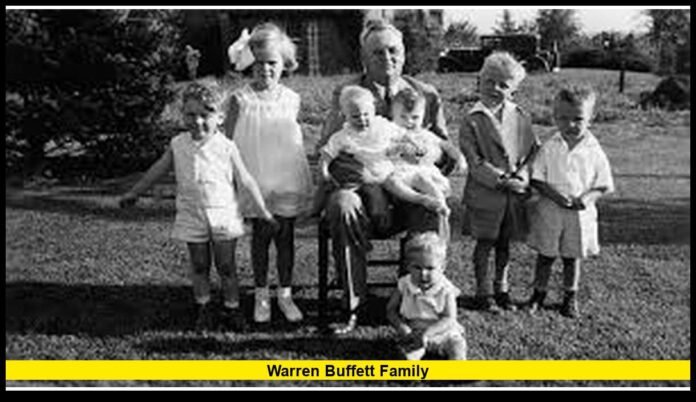

The Warren Buffett family continues to command global attention in 2026, not because of lavish lifestyles or celebrity culture, but due to the extraordinary way one of the world’s largest fortunes is being transitioned into long-term public benefit. With Warren Buffett stepping back from day-to-day corporate leadership and focusing fully on legacy planning, his three children now stand at the center of one of the most carefully structured philanthropic successions in modern American history.
Rather than concentrating on inheritance, the Buffett family story is about stewardship, responsibility, and the deliberate transfer of influence to institutions designed to outlast any individual. Their approach reflects decades of planning and a philosophy that wealth should serve society rather than dominate it.
The Buffett Family Structure and Core Members
The Warren Buffett family consists of his three children from his first marriage to Susan Thompson Buffett: Susan Alice Buffett, Howard Graham Buffett, and Peter Buffett. Each has built an independent career and public identity, yet all are united by a shared commitment to philanthropy and long-term social investment.
They do not operate as passive heirs. Instead, each child oversees large-scale foundations with specific missions, governance structures, and professional leadership teams. Together, they form the backbone of the family’s charitable strategy.
Susan Alice Buffett: Education and Opportunity
Susan Alice “Susie” Buffett, the eldest child, plays a central role in shaping the family’s domestic philanthropic footprint. Her work focuses on early childhood development, education systems, and community stability.
As chair of the Sherwood Foundation and a leader of the Susan Thompson Buffett Foundation, she has guided billions of dollars toward:
- Early learning programs
- Access to higher education
- Support for low-income families
- Public health and reproductive care initiatives
Her leadership style emphasizes long-term institutional reform rather than short-term aid. The organizations under her guidance invest heavily in research, policy development, and community partnerships designed to produce measurable outcomes across generations.
Susie Buffett also serves on the board of Berkshire Hathaway, maintaining a formal connection between the family’s business legacy and its philanthropic future.
Howard Graham Buffett: Food Security and Global Stability
Howard Buffett brings an international and operational focus to the family’s mission. His foundation works extensively in regions affected by hunger, environmental degradation, and conflict.
His initiatives center on:
- Agricultural innovation
- Soil and water conservation
- Rural economic development
- Post-conflict stabilization
Howard’s background in farming and public service shapes a hands-on approach. Projects often involve long-term field presence, local partnerships, and data-driven evaluation. His foundation supports training for farmers, sustainable irrigation systems, and food supply resilience in areas vulnerable to climate volatility and political instability.
This global focus reflects the belief that philanthropy must operate at the system level, not just through emergency relief.
Peter Buffett: Cultural Change and Social Equity
Peter Buffett represents the most unconventional path among the siblings. A musician and composer by profession, he channels creativity into philanthropy through the NoVo Foundation, which he leads with his wife, Jennifer.
The foundation’s work emphasizes:
- Gender equity
- Prevention of violence against women and girls
- Indigenous rights
- Community-driven social change
Rather than funding traditional service models alone, NoVo invests in leadership development, advocacy, and grassroots movements. Its philosophy centers on shifting power structures and supporting voices that have historically been excluded from decision-making.
Peter’s approach broadens the definition of philanthropy beyond financial assistance, placing cultural transformation at the core of lasting progress.
Warren Buffett’s Vision for Family Wealth
Warren Buffett has long rejected the idea of dynastic inheritance. His public statements over decades consistently emphasize that extreme wealth should not be passed down in ways that limit independence or distort personal motivation.
Instead, his estate planning centers on:
- Distributing the vast majority of his wealth to charity
- Empowering his children as stewards rather than beneficiaries
- Requiring joint decision-making for major allocations
- Ensuring transparency and accountability within governance structures
A significant portion of his Berkshire Hathaway shares has already been transferred to family foundations. Additional assets are designated to flow into a charitable trust that the three children will manage together, with unanimous consent required for large disbursements.
This structure reflects both trust in their judgment and a system designed to prevent unilateral control.
How the Family Coordinates Philanthropic Strategy
Despite leading separate organizations, the Buffett siblings operate within a coordinated framework. Regular planning sessions, shared data platforms, and aligned investment principles allow their foundations to complement rather than compete with one another.
Key elements of this coordination include:
- Common evaluation standards
- Long-term funding commitments
- Focus on systemic solutions
- Avoidance of duplicative projects
While each foundation maintains independence, their collective efforts span education, health, food systems, environmental protection, and social justice, creating a diversified yet coherent philanthropic portfolio.
Berkshire Hathaway and the Family’s Ongoing Role
Although Warren Buffett no longer oversees daily operations, the family retains strategic involvement through board representation and long-term ownership. This ensures continuity of values even as professional managers guide the corporation.
The separation between business management and philanthropic leadership is deliberate. It allows the family to focus on public benefit while the company continues to operate under market discipline and corporate governance standards.
A Distinct Model of American Wealth Transfer
The Warren Buffett family offers a contrast to traditional models of intergenerational wealth. Instead of concentrating power within private holdings, their strategy distributes influence through institutions designed for public service.
This model rests on several principles:
- Wealth is temporary; impact should be permanent
- Institutions matter more than individual personalities
- Accountability must match scale
- Philanthropy should address root causes, not symptoms
Their approach has influenced broader conversations among high-net-worth families in the United States about estate planning, charitable governance, and ethical responsibility.
Public Perception and Cultural Influence
In American public life, the Buffett family occupies a rare position. They are associated with extraordinary financial success, yet also with modest living, disciplined decision-making, and a consistent commitment to social good.
This reputation strengthens trust in their foundations and attracts collaboration with universities, governments, and nonprofit organizations. It also reinforces the idea that philanthropy can be both strategic and compassionate without becoming performative.
Looking Ahead
As the next decade unfolds, the Warren Buffett family will likely play an even greater role in shaping major philanthropic trends. With significant capital already deployed and additional assets scheduled for future transfer, their institutions are positioned to influence education policy, food security strategies, and equity initiatives on a national and global scale.
Their story is not one of inheritance, but of responsibility. It is a narrative centered on how wealth, when guided by structure, values, and long-term vision, can become a tool for broad societal progress rather than private accumulation.
The Warren Buffett family continues to redefine what legacy means in modern America, and their evolving work will remain a powerful example of how leadership, values, and purpose can shape generations to come. Join the conversation and stay connected as this extraordinary story continues to unfold.