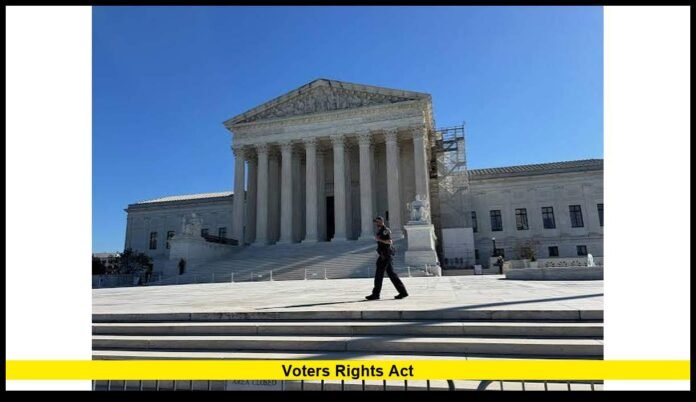

The voters rights act remains one of the most important laws affecting elections in the United States, and 2026 has become a pivotal year for its future. Major court rulings, ongoing redistricting disputes, and new state-level voting laws have placed voting rights at the center of national attention. As lawmakers, judges, election officials, and advocacy groups respond to these developments, the debate over how Americans vote and how their votes are protected continues to evolve.
More than six decades after its passage, the Voting Rights Act still influences congressional districts, local elections, voter access policies, and legal challenges across the country. Yet the law is operating in a much different environment than it did when it first became a landmark achievement of the Civil Rights Movement.
Why the Voting Rights Act Remains So Important
The Voting Rights Act became law in 1965 after years of efforts to end discriminatory voting practices that prevented many Americans from fully participating in elections. At the time, lawmakers sought to remove barriers that disproportionately affected Black voters and other minority groups.
The legislation dramatically changed American elections. It increased voter participation, improved representation, and created legal protections designed to ensure fair access to the ballot box.
For decades, the law served as one of the strongest civil-rights protections in the nation. Courts repeatedly relied on it to evaluate election systems, district maps, and voting procedures.
Today, the law remains active, but several major court decisions have changed how some of its provisions are enforced.
The Legal Foundation of Voting Protections
The Voting Rights Act contains several sections that have shaped election law for generations.
Among the most important is Section 2, which prohibits voting practices that discriminate based on race or ethnicity. This section allows challenges to election systems that may weaken the political influence of minority voters.
For years, Section 2 became the primary legal tool used in disputes involving:
- Congressional redistricting
- State legislative maps
- Local government elections
- Voting access policies
- Minority representation claims
Another major component was Section 5, which once required certain jurisdictions with histories of discrimination to obtain federal approval before changing election procedures.
Although some provisions have been narrowed through court rulings, the law continues to influence election administration nationwide.
The Major Supreme Court Development of 2026
One of the most significant legal events of the year arrived when the U.S. Supreme Court issued a major ruling involving congressional redistricting and the application of Section 2.
The case centered on Louisiana’s congressional districts and broader questions regarding race-conscious redistricting. The decision immediately drew attention because legal experts viewed it as a ruling that could affect voting-rights litigation throughout the United States.
The Court examined the relationship between constitutional requirements and protections contained within federal voting-rights law. The ruling altered the legal framework that courts have used in certain redistricting disputes.
As a result, election lawyers, state officials, and advocacy groups quickly began reviewing how the decision could affect existing and future challenges.
The ruling is expected to influence voting-rights litigation for years to come.
Why Redistricting Has Become a National Issue
Redistricting occurs after population data is collected and governments redraw political boundaries.
Congressional and legislative maps determine how communities are represented in government. Because district boundaries can influence election outcomes, redistricting often becomes one of the most contested aspects of American politics.
Supporters of stronger voting-rights protections argue that district maps should reflect diverse communities and provide fair opportunities for representation.
Others believe states should have broader authority when drawing districts and that race should play a more limited role in the process.
The legal battles surrounding redistricting continue to shape political representation across the nation.
The Growing Role of State Voting Rights Laws
As federal voting-rights protections face new legal challenges, states have increasingly stepped into the spotlight.
Several states have adopted their own voting-rights legislation that provides protections beyond federal requirements.
State-level laws often focus on:
- Preventing vote dilution
- Expanding language assistance
- Protecting minority voting power
- Improving election transparency
- Strengthening voter participation
These laws vary significantly from one state to another.
Some states have embraced broader voting protections, while others have focused on election administration reforms and verification procedures.
The result is a voting-rights landscape that increasingly differs across state lines.
Election Access Remains a Key Debate
Voting rights discussions involve much more than district maps.
Election access policies continue to generate debate across the country.
Issues frequently discussed include:
- Early voting periods
- Mail voting procedures
- Voter registration systems
- Ballot collection rules
- Polling place availability
Supporters of expanded access often argue that elections should be as convenient as possible for eligible voters.
Others emphasize security measures designed to protect confidence in election results.
Both sides agree that public trust in elections remains essential to a healthy democracy.
Voter Registration and Verification Efforts
Election officials continue to focus on voter registration accuracy.
Several states have implemented updated procedures designed to maintain voter rolls and verify eligibility.
These efforts aim to ensure that registration records remain current and accurate.
At the same time, critics of aggressive voter-roll maintenance programs have raised concerns that eligible voters could be affected if records contain errors.
The balance between election security and voter access remains one of the most discussed issues in election administration.
As technology evolves, states continue exploring new systems for managing voter information.
How Courts Continue to Shape Voting Rights
Federal courts remain deeply involved in voting-rights disputes.
Judges regularly hear cases involving election procedures, district maps, and voting-access claims.
Many of these lawsuits focus on whether election systems provide equal opportunities for all voters.
Common areas of litigation include:
| Issue Area | Key Questions |
|---|---|
| Congressional Maps | Are districts drawn fairly? |
| State Legislative Districts | Do maps provide equal representation? |
| Voting Procedures | Do rules affect voter access? |
| Registration Policies | Are voters treated equally? |
| Election Administration | Are procedures consistent and lawful? |
Court rulings often have nationwide implications because election law decisions can influence how similar disputes are handled elsewhere.
Read More – Trump Voting Rights Lawsuits: Court Fights Over Election Rules Continue Across the United States
Political Leaders Continue the Debate
Voting rights remains one of the most closely watched political issues in America.
Republican and Democratic leaders frequently disagree about how elections should be administered and regulated.
Many Republicans support reforms focused on election security, voter verification, and state authority over election administration.
Many Democrats advocate for broader federal protections and expanded access to voting opportunities.
The debate extends beyond Washington and reaches state capitals, local governments, and community organizations across the country.
Because elections affect every level of government, voting-rights discussions remain highly visible.
The Historical Evolution of Voting Rights Law
Understanding today’s debates requires looking at how voting-rights law has changed over time.
The Voting Rights Act was originally designed to address widespread discrimination in elections.
Over the decades, lawmakers, courts, and election officials adapted the law to changing circumstances.
Several milestones helped shape the modern landscape:
1965: Passage of the Voting Rights Act
Congress enacted the law to eliminate discriminatory voting barriers.
1970s and 1980s: Expanded Protections
Additional amendments strengthened voting-rights enforcement and broadened protections for minority communities.
1990s and 2000s: Continued Enforcement
Federal courts regularly applied the law to redistricting disputes and election-related litigation.
2013: Major Change in Federal Oversight
A Supreme Court ruling altered the preclearance system that had been a central feature of federal election oversight.
2021: Additional Voting-Rights Decisions
The Court further refined legal standards governing certain voting-rights claims.
2026: New Redistricting Framework
The latest Supreme Court decision introduced significant changes affecting future litigation involving representation and district maps.
Each of these developments contributed to the legal environment that exists today.
Technology and Modern Elections
Election administration has changed significantly since 1965.
Digital voter-registration systems, electronic poll books, online information portals, and updated election-management tools now play major roles in administering elections.
Technology has helped many jurisdictions improve efficiency and voter access.
However, technological advancements have also introduced new questions regarding data security, voter verification, and election administration.
State and local election officials continue investing in systems designed to improve both accessibility and public confidence.
Community Representation Remains Central
At the heart of voting-rights discussions lies a fundamental question: how should communities be represented in government?
Representation affects public policy, funding decisions, infrastructure projects, education priorities, and many other aspects of daily life.
Supporters of strong voting-rights protections often emphasize the importance of ensuring that minority communities have meaningful opportunities to elect candidates of their choice.
Others stress the importance of constitutional limits and equal treatment under the law.
These competing perspectives continue to shape public discussions and legal challenges.
What Election Officials Are Watching
Election administrators across the United States are carefully monitoring legal developments.
Officials must ensure compliance with federal law, state law, and court decisions while preparing for upcoming elections.
Key areas of focus include:
- Redistricting implementation
- Voter registration maintenance
- Poll worker recruitment
- Election security procedures
- Ballot processing systems
- Public education efforts
Election offices face increasing responsibilities as legal standards evolve.
Many jurisdictions continue reviewing policies to ensure they remain consistent with current requirements.
The Future of Voting Rights in America
The future direction of voting-rights law remains one of the most important issues facing American democracy.
Several trends are likely to influence future developments:
More State-Level Action
States may continue adopting their own voting-rights protections and election reforms.
Additional Court Challenges
New lawsuits are expected as parties test how recent legal rulings apply to future disputes.
Continued Redistricting Litigation
District maps will likely remain a major focus of voting-rights cases.
Election Administration Reforms
States may pursue changes designed to improve both access and security.
National Political Debate
Voting rights will remain a significant issue in elections and legislative discussions.
The outcome of these developments will shape how future generations participate in the democratic process.
Why the Issue Matters to Every Voter
Voting rights affect every American regardless of political affiliation.
Election laws determine how voters register, where they vote, how districts are drawn, and how representation is structured.
Changes to these rules can have lasting consequences for communities across the country.
That is why court rulings, legislative proposals, and election-administration decisions often receive intense public attention.
The ongoing discussions surrounding voting rights reflect broader questions about fairness, representation, and democratic participation.
Conclusion
The voters rights act continues to play a central role in American elections more than sixty years after its passage. Recent court decisions, redistricting disputes, state legislative actions, and election-administration reforms have created a new chapter in the nation’s voting-rights history. As legal challenges continue and policymakers debate future reforms, the law remains a defining force in how elections are conducted and how communities are represented across the United States.
The conversation surrounding voting rights is far from over, and future developments will continue to shape the American electoral system for years to come.