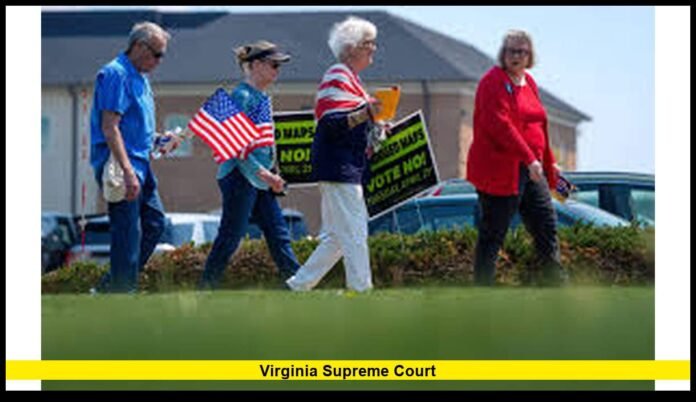

The Virginia Supreme Court issued a landmark ruling that halted a voter-approved congressional redistricting amendment, creating immediate political consequences across the state and drawing national attention ahead of the upcoming midterm elections.
The court’s narrow 4-3 decision invalidated the amendment after determining that Virginia lawmakers failed to follow constitutional procedures before placing the proposal before voters. Because of the ruling, the state’s current congressional district map will remain in place for the next election cycle.
The decision quickly became one of the most important election law developments in the country this year. Virginia’s congressional districts have long played a key role in the balance of power in Washington, and political leaders from both parties closely watched the legal battle for months.
The ruling now reshapes campaign strategy, fundraising plans, and congressional expectations throughout Virginia and beyond.
Why the Virginia Supreme Court Case Became National News
Virginia remains one of the nation’s most competitive political states. Presidential races, congressional contests, and statewide elections often produce narrow margins that attract heavy attention from national political organizations.
The rejected redistricting amendment would have significantly changed several congressional districts across the state. Election analysts believed the new map could make multiple Republican-held seats more favorable to Democratic candidates.
With control of the U.S. House expected to remain highly competitive, even a small shift in Virginia districts carried major national implications.
That political importance transformed the legal challenge into a closely monitored case across the country.
The court’s final decision preserved the existing congressional map and removed a major opportunity for Democrats to gain additional seats through redistricting.
What the Court Decided
The state’s highest court focused on the constitutional process used to place the amendment on the ballot.
Under Virginia law, constitutional amendments must pass through a carefully structured legislative process before voters can approve them. The court found that lawmakers violated required timing procedures connected to legislative approval and election scheduling.
Justices in the majority concluded that the procedural failure invalidated the amendment, even though voters later approved it during the statewide referendum.
The ruling immediately blocked the implementation of the proposed congressional map.
The majority opinion emphasized that constitutional requirements cannot be ignored or altered by political urgency or election timing.
The dissenting justices disagreed strongly with that interpretation and argued that overturning the referendum disregarded the will of Virginia voters.
The split reflected deep disagreements about judicial authority and election law.
How the Redistricting Fight Started
The debate over congressional boundaries in Virginia intensified after lawmakers introduced the amendment during the previous legislative session.
Supporters argued the measure would modernize the redistricting process and respond to changing population patterns throughout the state.
Opponents claimed the proposal mainly aimed to create districts that would benefit one political party during future congressional elections.
The amendment eventually appeared on the statewide ballot, where it narrowly passed after a highly competitive campaign.
Soon after the vote, legal challenges emerged questioning whether lawmakers followed the correct constitutional process before placing the measure before voters.
Those lawsuits moved rapidly through Virginia’s judicial system before reaching the state supreme court.
Current Congressional Map Will Stay in Place
The ruling means Virginia will continue using its existing congressional district boundaries.
That outcome dramatically changes expectations for several competitive House races.
Political strategists had already begun preparing for the proposed new districts before the court intervened. Candidates adjusted campaign plans, outreach efforts, and fundraising operations based on the expectation that new maps would take effect.
Now many campaigns must reverse course and reorganize under the current district structure.
Election officials across Virginia also avoided a major administrative challenge because changing district maps close to an election cycle often creates logistical complications for voters and local governments.
The existing map already shapes how millions of Virginians vote in congressional elections, and officials will continue using those boundaries unless future legal or legislative changes occur.
Political Reactions Across Virginia
The decision sparked immediate reactions from political leaders throughout the state.
Democratic officials criticized the ruling and argued that the court disregarded the choices made by Virginia voters during the referendum.
Some Democratic lawmakers said the decision weakened confidence in the electoral process because voters had already approved the amendment at the ballot box.
Republican leaders praised the ruling and described it as a victory for constitutional accountability.
Several GOP officials argued that election procedures exist to protect fairness and prevent lawmakers from bypassing legal safeguards.
The sharp divide reflected the broader national battle over election law and redistricting policy.
Impact on the U.S. House of Representatives
The Virginia ruling may influence control of Congress during the next election cycle.
The U.S. House remains narrowly divided, making every competitive district especially important. Political analysts had viewed Virginia as one of the states most likely to affect the national balance of power.
The proposed congressional map could have created several districts favorable to Democratic candidates.
Because the amendment was struck down, Republicans now enter the election season with stronger odds of defending key Virginia seats.
National campaign organizations from both parties have already started adjusting spending strategies following the ruling.
Political groups often invest millions of dollars in Virginia races because the state regularly hosts closely contested elections.
The preserved district map now changes how those resources may be distributed during the midterm campaign season.
Virginia’s Growing Importance in Election Law Battles
Virginia has become increasingly important in national legal debates involving elections and voting procedures.
State courts across the country now play a major role in disputes involving congressional maps, voting access, ballot measures, and election administration.
The Virginia case highlighted how state-level legal decisions can influence national political outcomes.
Redistricting disputes have intensified in recent years as both major political parties seek advantages through district boundaries.
Courts frequently become the final authority when lawmakers, advocacy groups, or voters challenge those maps.
The Virginia Supreme Court ruling adds another major chapter to that national trend.
Why Redistricting Matters So Much
Congressional redistricting determines how voters are grouped into districts for House elections.
States redraw district boundaries after each census to reflect population changes.
Because district lines influence election outcomes, redistricting often becomes one of the most politically sensitive processes in American government.
Critics of aggressive map changes often accuse lawmakers of gerrymandering, a practice in which district boundaries are designed to favor one party or weaken the influence of certain voting groups.
Supporters of redistricting changes usually argue that maps should reflect shifting demographics and political realities.
Virginia’s legal battle centered not only on politics but also on whether the constitutional process behind the amendment complied with state law.
The Court’s Majority Opinion
The majority opinion focused heavily on procedural compliance.
The justices stated that constitutional amendments require strict adherence to every legal step outlined in Virginia’s governing framework.
According to the ruling, lawmakers failed to complete necessary actions within the constitutionally required timeline before voters cast ballots.
The court concluded that allowing the amendment to stand despite procedural violations would weaken constitutional safeguards.
The majority stressed that courts have a responsibility to enforce constitutional rules regardless of political consequences.
That reasoning formed the foundation of the final decision.
Arguments Raised by the Dissent
The dissenting justices viewed the case differently.
They argued that millions of Virginia voters participated in the referendum and approved the amendment through the democratic process.
From their perspective, overturning the measure after the election risked undermining public confidence in the value of voting.
The dissent also suggested that procedural concerns should not outweigh the direct expression of voter intent once the election concluded.
The disagreement between the justices reflected larger national debates over the balance between constitutional procedure and democratic outcomes.
How Campaigns Are Responding
Candidates running for Congress in Virginia now face a rapidly changing political environment.
Several campaigns had already begun adjusting messaging and outreach plans based on the proposed district changes.
Political consultants, campaign staff, and fundraising organizations spent months preparing for possible new boundaries.
Now campaigns must return to strategies designed around the current districts.
That transition affects advertising decisions, volunteer recruitment, voter targeting, and campaign travel schedules.
The ruling also influences outside political organizations that invest heavily in battleground districts.
Groups aligned with both parties are reassessing which Virginia races deserve the largest financial commitments heading into the election season.
Public Interest Surges After the Decision
The ruling generated enormous public attention across social media and political news platforms.
Search interest involving Virginia elections, congressional maps, and redistricting procedures rose sharply after the decision became public.
Many voters expressed confusion about how a referendum approved by voters could later be invalidated by the courts.
Legal experts explained that courts maintain authority to review whether constitutional procedures were properly followed before ballot measures appear before voters.
That explanation became central to public discussion surrounding the case.
The ruling also renewed interest in how state constitutions regulate election law and legislative procedures.
Read More – Virginia Attorney General Race
Virginia’s Political Landscape Remains Competitive
Even without the proposed district changes, Virginia remains one of the country’s most closely watched political battlegrounds.
Northern Virginia continues to trend strongly Democratic due to population growth and suburban voting patterns.
At the same time, Republican strength remains significant in many rural regions and smaller cities throughout the state.
That political divide produces highly competitive statewide elections.
Congressional contests in Virginia frequently attract national attention because control of several districts can shift between parties.
The preserved map means those same competitive dynamics will likely continue into the next election cycle.
National Redistricting Battles Continue
Virginia is not the only state facing legal fights over congressional boundaries.
Courts and legislatures across the country continue debating how districts should be drawn and what standards should apply.
Some disputes involve allegations of partisan gerrymandering, while others focus on racial representation or constitutional procedures.
The Virginia ruling may influence future court cases because it reinforced the importance of procedural compliance in constitutional amendments.
Legal scholars are already studying how the decision could affect challenges in other states.
Election Officials Avoid Major Disruptions
The decision also provided clarity for election administrators.
Implementing new congressional maps shortly before an election often creates confusion involving polling locations, voter registration databases, and ballot preparation.
Because the existing map remains in place, local election offices can continue preparing for the next election cycle without major structural changes.
That stability may reduce confusion among voters who would otherwise need to learn new district boundaries.
Election officials across Virginia are now moving forward under the established congressional framework.
Timeline of the Virginia Redistricting Dispute
| Date | Event |
|---|---|
| 2025 | Virginia lawmakers advanced the constitutional amendment |
| Late 2025 | Critics raised concerns about procedural timing |
| Early 2026 | Amendment appeared on statewide ballot |
| April 2026 | Virginia voters narrowly approved the measure |
| April 2026 | Legal challenges moved through state courts |
| May 8, 2026 | Virginia Supreme Court struck down the amendment |
What Happens Next
The ruling likely ends the immediate legal battle because the Virginia Supreme Court serves as the final authority on state constitutional matters.
Lawmakers may attempt future redistricting reforms through a revised constitutional process.
Some political groups also plan to push for broader election law changes during upcoming legislative sessions.
For now, though, the state’s congressional map remains unchanged.
Candidates, political organizations, and voters must prepare for elections using the current district lines.
The ruling therefore carries lasting consequences not only for Virginia politics but also for the national fight over congressional control.
Why the Decision Matters Beyond Politics
The case became important not just because of elections, but because it highlighted how constitutional procedures shape American democracy.
The ruling demonstrated that courts can invalidate even voter-approved measures if legal requirements are not followed properly.
Supporters of the decision view that principle as necessary for preserving constitutional order.
Critics see it as an example of judicial power overriding public opinion.
That debate will likely continue well beyond the next election cycle.
Virginia’s redistricting battle now stands as one of the defining election law stories of the year.
What are your thoughts on the Virginia Supreme Court ruling and its impact on congressional elections? Share your opinion and follow the latest political updates as the election season continues.