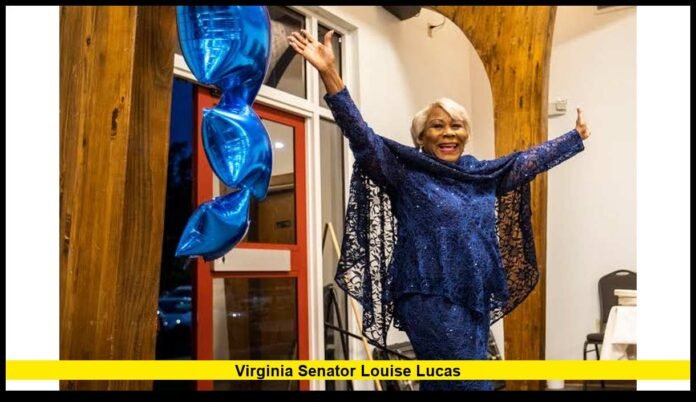

Virginia Senator Louise Lucas is facing a major legal challenge after a federal indictment unsealed on October 22, 2026, accused the longtime Democratic lawmaker of involvement in an alleged marijuana trafficking and money-laundering enterprise. The case has brought renewed attention to her business interests, legislative leadership, and decades of public service in Portsmouth and Chesapeake. The allegations remain unproven, and the indictment does not establish criminal guilt.
Latest News About Virginia Senator Louise Lucas
The latest development in the case is the public release of federal criminal charges against Lucas and several other defendants. Prosecutors allege that the group participated in a marijuana-related enterprise and engaged in financial activity connected to the business.
The investigation became widely known in May 2026, when federal agents searched Lucas’s political office and a cannabis retail business in Portsmouth. Those searches raised questions about the nature of the investigation, but the full allegations were not publicly established at that stage.
The October indictment represents a significant development because it sets out the government’s accusations in a formal criminal case. The charges concern alleged business activity, marijuana distribution, financial transactions, and the claimed use of political influence.
Lucas is one of Virginia’s most prominent Democratic lawmakers. She has represented the 18th Senate District since 1992 and serves as president pro tempore of the Virginia Senate. She has also chaired the Senate Finance and Appropriations Committee, a powerful panel responsible for major decisions involving the state’s budget.
The case has attracted attention because it places allegations involving a private business alongside questions about the responsibilities of an elected official. However, the allegations must be examined through the judicial process rather than treated as established facts.
Lucas has denied wrongdoing and characterized the federal investigation as politically motivated, according to reporting published with the indictment. Her response is an important part of the public record, while prosecutors must still prove their allegations in court.
The central issue now is whether the government can establish the charged offenses with admissible evidence. Until a court reaches a determination, Lucas remains presumed innocent under the law.
What the Federal Indictment Alleges
The indictment unsealed on October 22 accuses Lucas and six other people of participating in an alleged criminal enterprise associated with marijuana distribution and financial transactions. The case reportedly includes allegations involving conspiracy, money laundering, and fraud-related conduct.
Prosecutors allege that the operation involved a cannabis business and a network of people connected to it. They also claim Lucas used her political position to protect or benefit the enterprise.
These allegations concern specific conduct, not simply Lucas’s support for cannabis policy reform or her involvement in business. Prosecutors must establish the legal elements of each charged offense and connect the evidence to each defendant.
Several principles are important when interpreting the case:
- An indictment presents allegations. It does not mean a defendant has been convicted.
- Each defendant has an individual case. Evidence against one person does not automatically prove another person’s guilt.
- Business ownership is not proof of a crime. The government must establish the unlawful conduct alleged in the indictment.
- Political influence allegations require evidence. A lawmaker’s position alone does not establish criminal wrongdoing.
- The legal outcome remains unresolved. Court proceedings will determine whether prosecutors can prove their claims.
The charges are serious because they reportedly involve coordinated business activity and financial transactions. Nevertheless, the precise legal consequences will depend on the actual counts, the evidence, court rulings, and any eventual verdict or other lawful resolution.
It is also important to distinguish the indictment from the investigation that preceded it. Federal agents can collect evidence during a legally authorized search, but the search itself does not establish guilt. The indictment formally identifies the government’s allegations for prosecution.
How the Investigation Became Public in May 2026
The investigation entered public view in May, when federal agents searched Lucas’s political office and a cannabis retail business in Portsmouth.
The searches immediately drew attention because Lucas held senior legislative responsibilities and had a connection to the cannabis industry. However, the public did not have a complete account of the government’s allegations at that time.
Searches are investigative steps. Authorities may seek access to offices, records, electronic devices, financial documents, or business premises when they believe those materials could provide relevant evidence. The legal basis and scope of a particular search depend on the applicable authorization.
A search does not mean that investigators have proven a criminal offense. The evidence gathered must still be evaluated, and prosecutors must determine whether the facts support formal charges.
The October indictment provided a more detailed public account of the government’s case. It connected the investigation to allegations involving marijuana distribution, financial activity, and the alleged use of political influence.
The difference between the May searches and the October charges is important. Early reporting about an investigation should not be treated as if it already contained every allegation later included in an indictment.
As the case proceeds, court documents may clarify the alleged transactions, the roles prosecutors assign to individual defendants, and the legal arguments raised by the defense.
For readers following the story, the most meaningful developments will be formal court actions, confirmed statements, and decisions that change the legal status of the case.
Who Is Louise Lucas?
L. Louise Lucas is a Democratic state senator from Portsmouth, Virginia. She represents the 18th Senate District, which includes portions of Portsmouth and Chesapeake in southeastern Virginia.
Lucas entered the Virginia Senate in January 1992 after winning election in November 1991. Her tenure has made her one of the longest-serving members of the chamber.
Before entering state politics, she served on the Portsmouth City Council. She was elected in 1984 and became the first Black woman to serve on the council, marking an important milestone in the city’s political history.
Her career has also included work in government, education, and community development. Before her election to the state legislature, she worked at Norfolk Naval Shipyard and later held positions connected to workforce development and public service.
Lucas became known for her direct political style and ability to participate in high-stakes legislative negotiations. Her work has covered public spending, education, business regulation, and other issues affecting Virginia residents.
Her political career provides context for understanding the attention surrounding the indictment. Yet her history in public service does not determine the outcome of the criminal case. That question must be resolved through evidence and legal proceedings.
The current investigation has introduced a serious challenge to a career built over decades. Its consequences will depend on the judicial process and any separate decisions made by the Virginia Senate.
Her Education and Professional Background
Lucas was born in Portsmouth on January 22, 1944, and attended public schools in the city. She later studied at Norfolk State University, where she earned a bachelor’s degree in vocational-industrial education in 1971.
She returned to the university for graduate study and earned a master’s degree in urban affairs in 1982. Her educational background reflects an early focus on workforce development, public administration, and community needs.
Before beginning her political career, Lucas worked at Norfolk Naval Shipyard. She became the facility’s first woman shipfitter in 1971, a notable achievement in an industrial workplace historically dominated by men.
She later held positions involving technical work, workforce programs, and equal employment opportunity. Her professional experience also included leadership in the Southeastern Tidewater Opportunity Project, an organization associated with community development and efforts to address economic hardship.
Those roles helped establish her public-service profile before she entered the Virginia Senate. Her work in Portsmouth also brought her into contact with local concerns involving housing, employment, and community resources.
Lucas subsequently built a long career in state government. Over time, she became a senior legislative figure whose responsibilities extended beyond representing individual constituents.
Her professional background remains relevant to understanding her public identity. However, it must be kept separate from the present allegations, which concern conduct that prosecutors claim occurred in connection with a business enterprise.
<WritingBlock id=”74182″ variant=”document”>## Louise Lucas’s Leadership in the Virginia Senate
Lucas’s influence grew considerably during her years in the General Assembly. She became president pro tempore of the Virginia Senate in 2020, making history as the first Black lawmaker to hold the position.
The role places her among the chamber’s senior leaders and gives her an important part in its institutional operations. She has also chaired the Senate Finance and Appropriations Committee, which oversees legislation involving state revenues, expenditures, and budget priorities.
The committee’s work affects funding for public services, state agencies, education, and other government functions. Its decisions can shape how Virginia distributes resources among competing priorities.
Lucas’s position has made her an influential participant in negotiations among lawmakers. It has also placed her at the center of disputes over policy, public spending, and the direction of state government.
The federal allegations have consequently raised questions about the relationship between public office and private business interests. Prosecutors claim Lucas used her political position to benefit the alleged enterprise. That claim must be evaluated through evidence, not assumed to be true because of her leadership role.
An indictment does not automatically remove an elected official from office. Criminal proceedings and legislative procedures operate under different rules, and any change to Lucas’s responsibilities would depend on the applicable law and decisions by the relevant institutions.
Her continued status as a prominent lawmaker therefore remains an important part of the story. The legal case will determine criminal responsibility, while the Senate retains responsibility for its own operations and rules.
The Cannabis Business at the Center of the Case
The investigation is closely associated with The Cannabis Outlet, a Portsmouth business that Lucas co-owns. The business has drawn attention because federal prosecutors connect its operations to the alleged enterprise described in the indictment.
The case concerns more than the fact that Lucas has a business interest in cannabis. Prosecutors allege that the operation involved unlawful marijuana distribution and financial transactions designed to handle proceeds from the activity.
The government also alleges that Lucas used political influence to shield the business from scrutiny and benefit its interests. Those claims will require evidence showing what the defendants allegedly did and how their actions relate to the charged offenses.
Virginia’s cannabis laws are an important part of the background. The state has changed its approach to marijuana possession and regulation, but the rules governing legal retail sales have not treated every form of cannabis commerce in the same way.
In particular, Virginia’s authorization of certain cannabis-related activities does not automatically authorize every commercial transaction. Federal law also creates a separate legal framework for marijuana.
That distinction matters when assessing the allegations. A business can operate in a regulated industry without every transaction being unlawful, while particular activities may still violate applicable law.
The court will need to assess the specific transactions and conduct described in the indictment. The business’s ownership, the senator’s policy positions, and the government’s allegations are related parts of the story, but they are not interchangeable evidence of guilt.
Marijuana Policy and the Federal-State Legal Divide
Lucas has long supported marijuana policy reform in Virginia. Her political career includes advocacy for changes to state cannabis laws, placing her among the lawmakers involved in debates over regulation and access.
The legal framework surrounding marijuana remains complicated because state and federal laws do not always align. Virginia has permitted certain marijuana-related activities, but recreational retail sales have faced separate legislative and regulatory restrictions.
Federal law continues to impose restrictions on marijuana, even where states have adopted more permissive rules. As a result, state authorization does not provide blanket protection from federal prosecution for conduct prohibited under federal law.
The current allegations must be considered within that legal context. Prosecutors must establish the specific offenses charged and show that the evidence satisfies the applicable legal requirements.
Lucas’s support for legalization does not, by itself, establish criminal wrongdoing. Equally, a political position supporting cannabis reform does not determine whether particular business transactions complied with the law.
The distinction is especially important because the case involves a sitting lawmaker whose policy work overlaps with the industry connected to the investigation.
Questions about financial disclosures, potential conflicts of interest, and transparency may arise separately from the criminal proceedings. However, those questions should not be confused with a judicial finding that a crime occurred.
The court’s task is to evaluate the charged conduct and the evidence presented by both sides. Any broader conclusions about Virginia’s marijuana policy would require separate consideration of the state’s laws and regulatory system.
What the Case Could Mean for Virginia Politics
Lucas’s legal troubles have created a significant issue for Virginia’s Democratic leadership. Her seniority, committee responsibilities, and role in major legislative debates make the case consequential beyond Portsmouth.
An indictment involving a prominent elected official can affect public confidence and create pressure for political responses. Lawmakers may face questions about accountability, transparency, and the standards expected of people who hold public office.
However, political consequences are not the same as criminal findings. A party’s response, a public statement, or a change in committee assignments cannot establish whether the charged offenses occurred.
The case also raises questions about how lawmakers manage business interests that overlap with policy areas they influence. Public officials routinely work on legislation affecting industries, but their private interests can create concerns that require careful scrutiny.
Those concerns should be assessed using established disclosure rules, ethics requirements, and evidence of specific conduct. The existence of a business interest alone does not establish that an official abused public authority.
The federal case could also affect the political environment surrounding cannabis regulation. Nevertheless, the allegations against particular defendants do not prove that the state’s overall policy framework is unlawful or that other cannabis businesses have engaged in similar conduct.
For now, the central issues remain the charges, the defense response, and the court’s handling of the case. Any institutional or political consequences will depend on developments that can be confirmed rather than anticipated.
What Happens Next in the Federal Case?
The indictment moves the investigation into a formal criminal prosecution. The next stages will depend on court orders, the charges filed, and the steps taken by prosecutors and defense attorneys.
Federal criminal cases commonly involve several stages:
Initial appearances and arraignment: The court addresses the defendants’ appearances, informs them of the charges, and handles applicable procedural matters.
Legal representation and pretrial conditions: The court addresses representation and any applicable release or detention conditions under federal law.
Pretrial motions: Lawyers may challenge legal aspects of the indictment, seek rulings on evidence, or raise other issues that the court must resolve.
Preparation and evidence review: The prosecution and defense prepare their cases under the rules governing discovery and admissible evidence.
Trial or another lawful resolution: The case may proceed to trial, or the parties may reach another resolution permitted by law.
The timeline can vary, particularly when a case involves several defendants, business records, and complex financial allegations.
The public should also distinguish among an arrest, an indictment, a plea, a pretrial ruling, and a verdict. Each has a different legal meaning.
An indictment signals that formal charges have been brought. It does not mean the government has already proved its case. Prosecutors must establish guilt beyond a reasonable doubt at trial if the case proceeds that far.
The defense may challenge the allegations and contest the evidence. The court will determine the legal issues presented during the proceedings.
As of October 22, 2026, the latest major development is the unsealing of the federal indictment. The case’s final outcome remains unresolved.
Frequently Asked Questions
Who is Virginia Senator Louise Lucas?
L. Louise Lucas is a Democratic state senator representing Virginia’s 18th Senate District, which includes parts of Portsmouth and Chesapeake. She has served in the Senate since 1992 and holds senior legislative leadership responsibilities.
What is the latest news about Louise Lucas?
A federal indictment unsealed on October 22, 2026, accuses Lucas and six other defendants of involvement in an alleged marijuana-related criminal enterprise. The charges reportedly include marijuana distribution, money laundering, and other alleged offenses.
Why was Louise Lucas indicted?
Prosecutors allege that Lucas participated in a criminal enterprise associated with marijuana distribution and financial transactions. They also claim she used her political influence to benefit the operation. The allegations have not been established as proven facts.
Has Louise Lucas been convicted?
No conviction is established by the indictment. Lucas is presumed innocent unless the government proves the charges through the legal process or the case reaches another lawful resolution.
What business is connected to the investigation?
The case is associated with The Cannabis Outlet, a Portsmouth cannabis retail business that Lucas co-owns. Prosecutors allege that the business was connected to unlawful activity, but the claims must be proven in court.
When did federal agents search her office?
Federal agents searched Lucas’s political office and a neighboring cannabis business in Portsmouth in May 2026. The searches formed part of the investigation that later resulted in the October indictment.
What is Louise Lucas’s role in the Virginia Senate?
Lucas serves as president pro tempore of the Virginia Senate and has chaired the Senate Finance and Appropriations Committee. Her legislative responsibilities are distinct from the criminal allegations.
Why does the cannabis industry matter in this case?
The investigation involves allegations concerning marijuana distribution and financial transactions. Virginia’s cannabis laws and federal restrictions provide relevant legal context, but the court must assess the specific conduct charged.
What happens after the indictment?
The case may proceed through initial court appearances, arraignment, pretrial motions, evidence review, and potentially a trial. The court will determine the schedule and resolve legal issues raised by the parties.
Where does the case stand now?
The indictment was unsealed on October 22, 2026. The allegations remain subject to the judicial process, and the indictment itself does not establish guilt.
Virginia Senator Louise Lucas’s case combines serious federal allegations with the record of a longtime public official. The distinction between accusations and proven facts will remain central as the legal proceedings develop.
Share your thoughts on the case and stay informed as verified developments emerge in the legal proceedings involving Virginia Senator Louise Lucas.