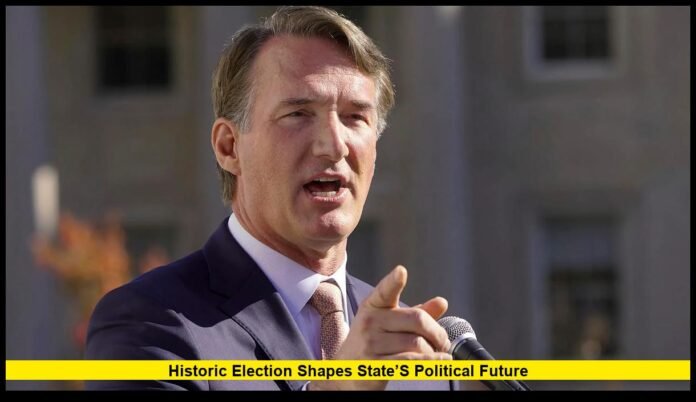

The Virginia governor race is reaching a decisive moment. With the election just weeks away, the contest between Democratic nominee Abigail Spanberger and Republican nominee Winsome Earle-Sears has become one of the most closely watched political battles in the country. It’s not just about who will govern Virginia for the next four years — it’s a race that could signal broader political shifts heading into 2026.
This election is historic for several reasons. Both major party nominees are women, each with compelling personal stories and sharply different visions for Virginia’s future. Their leadership styles, policy priorities, and political strategies are shaping what many consider a defining moment for the state.
The Stakes for Virginia and Beyond
Virginia occupies a unique position in American politics. Once a reliably Republican stronghold, the state has evolved into a key bellwether over the last two decades. It has leaned Democratic in recent statewide elections, but remains highly competitive. Suburban growth, shifting demographics, and changing political attitudes have made statewide races increasingly dynamic.
This year’s governor’s race carries added weight. The outcome will determine whether Democrats maintain their recent grip on statewide offices or if Republicans can mount a comeback and reshape Virginia’s policy direction. National political observers see the race as an early indicator of voter sentiment heading into the midterm election cycle.
Meet the Candidates
Abigail Spanberger, the Democratic nominee, is a former CIA officer and three-term congresswoman who represented a competitive district in Virginia. She built her political career on a reputation for bipartisanship, national security expertise, and pragmatic policymaking. Spanberger’s campaign emphasizes economic stability, education investment, reproductive rights, and a commitment to steady, unifying leadership.
Winsome Earle-Sears, the Republican nominee and current lieutenant governor, is a prominent conservative figure with a personal story that resonates with many voters. She is the first woman of color to hold statewide office in Virginia and is now seeking to become the state’s first Black woman governor. Her campaign focuses on lower taxes, cultural issues, parental rights in education, and conservative social policies.
The contrast between the two candidates is striking — not just ideologically, but in tone, experience, and campaign approach.
Debate Sparks Key Moments
Earlier this month, Spanberger and Earle-Sears faced off in their only scheduled debate, giving voters a clear view of their priorities and leadership styles. The event touched on several major themes shaping the race:
- Political Rhetoric and Leadership
A controversy involving text messages from a Democratic ally containing violent language dominated early exchanges. Spanberger condemned the language but did not withdraw support for the individual, emphasizing voters’ responsibility to judge character. Earle-Sears used the moment to question Spanberger’s judgment, framing herself as the candidate who would set a stronger tone of leadership. - Economic Policy
Earle-Sears advocated for significant tax cuts and deregulation to stimulate economic growth. Spanberger countered with a more targeted approach, focusing on tax relief for families and small businesses while investing in infrastructure to support long-term development. - Education
Education policy emerged as a major dividing line. Spanberger called for increased teacher pay, expanded access to early education, and measures to make higher education more affordable. Earle-Sears pushed for expanded school choice, charter schools, and curriculum reforms that reflect conservative priorities. - Reproductive Rights
This issue has become a defining one in the Virginia governor race. Spanberger emphasized her commitment to protecting reproductive rights and framed the issue as one of personal freedom and healthcare access. Earle-Sears expressed support for new restrictions, aligning with national conservative trends.
The debate highlighted Spanberger’s measured, pragmatic style versus Earle-Sears’s more fiery, values-driven approach. Both candidates aimed to appeal beyond their bases, knowing that independent and suburban voters will likely decide the outcome.
Polling Landscape and Trends
Current polling shows Abigail Spanberger with a lead, but the race remains competitive. Her advantage is strongest in suburban Northern Virginia, Richmond’s surrounding counties, and urban centers. She also holds a significant edge among independent voters, who have been decisive in recent state elections.
Winsome Earle-Sears maintains a solid base in rural areas and among conservative voters. Her challenge is to expand support in key suburban swing regions where Republican candidates have struggled in recent cycles.
A significant number of voters remain undecided, and turnout will play a critical role. Historically, Virginia’s off-year elections have lower turnout compared to presidential years, which means mobilization efforts can tip the balance.
Key Issues Driving the Race
Several core issues are shaping the direction of the Virginia governor race, reflecting both state concerns and national debates.
1. The Economy
With inflation concerns lingering and debates about tax policy dominating, the economy is at the center of the race. Spanberger is pitching herself as a steady hand focused on balanced growth, while Earle-Sears argues for a tax-cut-driven strategy to revitalize businesses and put more money in Virginians’ pockets.
2. Education Policy
Education remains a top concern for voters across the political spectrum. Spanberger emphasizes investment in public education systems, teacher support, and affordability for families. Earle-Sears is tapping into parental rights movements, advocating for more school choice and challenging what she describes as politicization in classrooms.
3. Reproductive Rights
Since the overturning of Roe v. Wade, reproductive policy has become a defining issue in Virginia politics. Spanberger has positioned herself as a defender of access to abortion services, while Earle-Sears supports restrictions, energizing conservative voters.
4. Public Safety and Political Culture
The recent controversy involving political rhetoric has shifted some attention toward leadership tone and the political climate in Richmond. Spanberger has stressed responsible governance and de-escalation, while Earle-Sears has framed herself as a decisive leader ready to set a different standard.
Campaign Strategies Intensify
As Election Day nears, both campaigns are ramping up their operations:
Spanberger’s Campaign Focus:
- Strengthening support among suburban voters through targeted outreach.
- Emphasizing her moderate credentials to appeal to independents.
- Highlighting her leadership background and bipartisan reputation.
Earle-Sears’s Campaign Focus:
- Energizing rural and conservative voters through grassroots events.
- Focusing on cultural and economic issues to rally the Republican base.
- Positioning herself as an outsider ready to bring bold change.
Both candidates are traveling across the state, holding rallies and town halls to galvanize their core supporters and make last-minute appeals to undecided voters.
National Implications
The Virginia governor race has captured the attention of national political strategists. A Spanberger victory would reinforce Virginia’s trajectory as a Democratic-leaning state in statewide elections, potentially signaling Democratic strength in suburban regions ahead of 2026.
An Earle-Sears upset, on the other hand, would signal renewed Republican competitiveness in a state that has slipped from their column in recent years. It could energize the party nationally and reshape narratives heading into the midterm cycle.
Both parties are pouring resources into the race, with outside organizations stepping in to boost turnout efforts and air targeted advertisements.
What to Watch as the Election Approaches
Several factors will determine how the Virginia governor race unfolds in the final weeks:
- Turnout Patterns: Suburban turnout is expected to be a decisive factor, with Democrats historically performing well in high-turnout scenarios. Republicans are banking on strong rural participation.
- Independent Voters: Polling indicates that independents lean toward Spanberger, but last-minute shifts could tighten the race.
- Campaign Discipline: Any missteps or controversies could alter momentum in the closing days.
- National Trends: Broader economic conditions and national political moods may influence late-breaking voters.
A Historic Election Awaits
The 2025 Virginia gubernatorial election is unlike any in the state’s history. Two women, each breaking barriers in their own ways, are competing for the highest office in the Commonwealth. Their visions for Virginia differ dramatically, offering voters a clear and consequential choice.
As the final stretch unfolds, the race is intensifying on every front — debates, polling, messaging, and ground operations. For Virginians and political observers across the country, this contest will provide important clues about where voters stand on critical issues and what political direction the state — and perhaps the nation — is heading next.