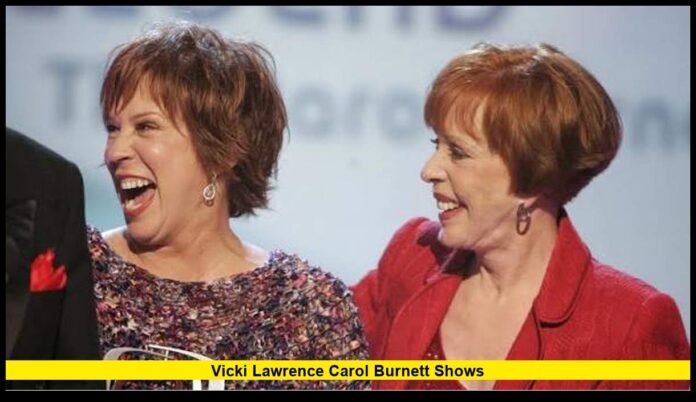

The Vicki Lawrence Carol Burnett Show partnership helped create some of the most recognizable moments in American television comedy. What began as an unusual opportunity for a teenage performer developed into an 11-year television journey, a celebrated comedy character, and a friendship that has continued across generations. Lawrence’s portrayal of Mama became a defining part of the show’s identity, while her work alongside Carol Burnett established her as one of the most memorable performers of classic television.
Lawrence was only 18 when she joined the CBS variety series in 1967. She entered an industry dominated by experienced entertainers but quickly found her place among a talented ensemble. Her natural comic instincts, willingness to experiment, and ability to transform herself for different roles helped her become an important member of the production.
Nearly six decades after her television debut, Lawrence’s association with Burnett remains an important part of entertainment history. Her career demonstrates how a single casting opportunity can lead to decades of professional success.
An Unexpected Opportunity Changed Vicki Lawrence’s Life
Lawrence’s path to television began with a resemblance that attracted attention in her hometown of Inglewood, California.
As a teenager, she noticed that people frequently compared her appearance to Carol Burnett. A local newspaper also highlighted the similarity after publishing her photograph.
Instead of ignoring the coincidence, Lawrence decided to contact Burnett. She sent the comedian a letter, included the newspaper photograph, and invited her to attend a local beauty contest.
Burnett accepted the invitation. Their meeting eventually opened the door to a television opportunity that Lawrence could hardly have imagined.
At the time, Burnett was preparing a new comedy variety program for CBS. She needed a young performer to portray her younger sister in recurring sketches. Lawrence’s resemblance to the established star made her an appealing choice.
The casting decision introduced a teenager with limited professional experience to a major television production. It also gave Lawrence an opportunity to learn directly from performers who already understood the demands of network entertainment.
Growing Into a Major Member of the Comedy Cast
When The Carol Burnett Show premiered in September 1967, Lawrence became part of its regular ensemble. Her original character, Carol’s younger sister, helped establish her presence on the program.
Working with experienced comedians required discipline and adaptability. Sketch comedy depended on precise delivery, quick reactions, and the ability to maintain character while responding to unexpected moments.
Lawrence developed these skills through rehearsals and performances. She learned how to use facial expressions, timing, physical movement, and dialogue to make different characters believable.
Carol Burnett supported the young performer as she gained confidence. Harvey Korman also became an important influence, helping her understand the mechanics of television comedy.
The cast’s professional chemistry helped create a comfortable environment for experimentation. Lawrence gradually moved beyond the role that had initially brought her to the program.
Her growing versatility allowed her to participate in sketches that demanded very different personalities. This development eventually led to the character that would become the most recognizable part of her career.
Mama Became Lawrence’s Signature Television Character
Lawrence’s most famous transformation began with the Family sketches, which featured an argumentative household and complicated relationships between its members.
She played Thelma Harper, a blunt, opinionated mother known to audiences as Mama. Burnett portrayed Eunice, Mama’s frequently frustrated daughter, while Korman played Eunice’s husband, Ed.
The sketches combined domestic conflict with exaggerated personalities. Their humor came from uncomfortable family conversations, emotional confrontations, and characters who rarely agreed on anything.
Mama stood out because Lawrence made her more than a collection of visual jokes. Her distinctive voice, expressions, stubborn attitude, and sharp observations gave the character a recognizable personality.
The role also highlighted Lawrence’s range. She was a young woman playing a much older character, yet her performance felt convincing enough to become one of the show’s defining attractions.
Audiences embraced Mama, and the character’s popularity eventually extended beyond the variety series.
How Mama’s Family Continued the Success
In 1983, Lawrence returned to the character in Mama’s Family, a sitcom that developed the Family sketches into a standalone television series.
The show placed Thelma Harper at the center of stories about family relationships and everyday disagreements. Lawrence carried the production with the same outspoken personality that had made Mama popular on Burnett’s program.
The sitcom initially aired on NBC before continuing in first-run syndication. Its run ended in 1990, giving the character a television life that extended well beyond the original variety show.
For Lawrence, the series represented an important career achievement. She had moved from playing a supporting character in sketches to leading a sitcom built around her own creation.
Mama also became a lasting part of American television culture. Reruns introduced the character to new viewers, while longtime fans continued to associate Lawrence with her unforgettable portrayal.
A Successful Music Career Added Another Dimension
Comedy was not Lawrence’s only accomplishment. She also achieved major success as a recording artist.
In 1973, her single The Night the Lights Went Out in Georgia reached No. 1 on the Billboard Hot 100. Her then-husband, Bobby Russell, wrote the song, which tells a dramatic story involving suspicion, betrayal, and a wrongful execution.
The recording became one of the biggest musical milestones of Lawrence’s career. It established that her entertainment abilities extended beyond acting and character comedy.
She later continued working in television and live entertainment, taking on different projects while retaining her connection to classic comedy.
Her achievements include a Primetime Emmy Award in 1976 for her work on The Carol Burnett Show. That recognition reflected her contribution to a series celebrated for its ensemble performances and inventive sketches.
Carol Burnett and Lawrence Reconnect for a New Generation
The relationship between the performers has endured long after their original series concluded in 1978.
One notable reunion occurred in the second season of Palm Royale, where Lawrence appeared as Lotte, the mother of Burnett’s character, Norma Dellacorte.
Their casting reunited two performers whose careers became closely linked through decades of television history. This time, Lawrence played Burnett’s character’s mother, reversing the familiar dynamic of their Family sketches.
The appearance introduced their chemistry to viewers who may know them through newer productions rather than the original CBS series.
Their continued association also demonstrates how classic television performers can bring their history into fresh creative settings without relying entirely on nostalgia.
Vicki Lawrence’s Current Projects in November 2026
Lawrence continues to perform for audiences through Vicki Lawrence & Mama: A Two-Woman Show. The touring production combines autobiographical storytelling, comedy, music, and appearances by her signature character.
The show is celebrating its 25th anniversary in 2026. Its format allows Lawrence to speak as herself before bringing Mama onstage for a separate portion filled with the character’s outspoken opinions.
On November 13 and 14, 2026, Lawrence is scheduled to perform at the George Street Playhouse in New Brunswick, New Jersey. The two performances are listed for Friday evening and Saturday afternoon.
The production offers fans an opportunity to experience both the entertainer’s personal stories and the character that helped define her television career.
Lawrence’s continued stage work is particularly significant because Mama originated in short television sketches before developing into a separate sitcom and a long-running live attraction.
Why Her Television Legacy Endures
The lasting appeal of Lawrence’s work comes from her ability to create characters that audiences remember long after an episode ends. Mama remains her most recognizable role, but the journey began with a teenager who received an extraordinary chance to learn from established performers.
Burnett’s support gave Lawrence the time to develop. The ensemble’s experience helped her build confidence, and the show’s format allowed her to discover new possibilities as a comic actress.
The Vicki Lawrence Carol Burnett Show story continues to interest television fans because it combines an unusual casting discovery, professional mentorship, memorable characters, and a career that continues decades later.
From her early appearances as Carol’s younger sister to her award-winning work as Mama, Lawrence has maintained a distinctive place in entertainment history.
Which Vicki Lawrence performance do you remember most fondly? Share your favorite moment from her television career and join the conversation about the comedy that continues to entertain audiences.