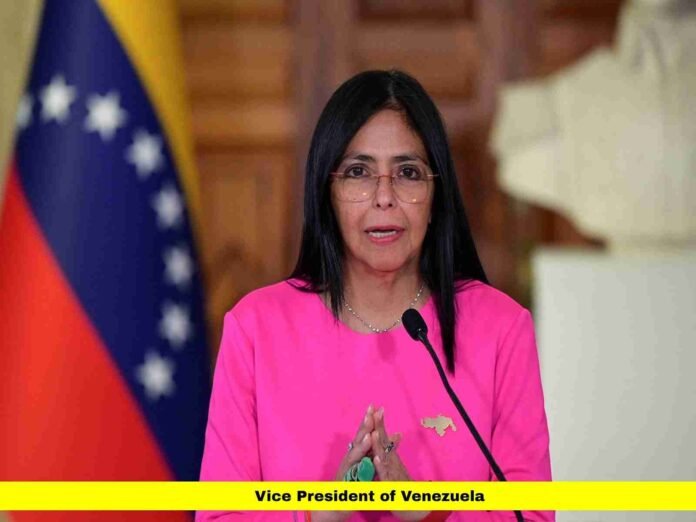

Venezuela’s executive deputy role stands at the core of national governance, shaping policy direction, managing state administration, and influencing the country’s position on the global stage during a period of sustained political and economic pressure.
This position functions as the engine room of the executive branch. It is deeply involved in daily decision-making, long-term planning, and crisis response. The office is not symbolic. It is operational, commanding, and central to how the state functions. At present, Delcy Rodríguez occupies this role, exercising broad authority across economic coordination, institutional oversight, and international engagement.
This long-form analysis offers a detailed, factual, and current look at this executive office, written for readers in the United States who want a clear understanding of how Venezuela’s leadership structure operates today.
Place Within the National Power Structure
The executive deputy role is constitutionally defined as the second-highest authority in the country’s political system. It serves as the principal extension of presidential power across all areas of government.
Key structural responsibilities include:
- Coordinating ministries and state agencies
- Ensuring implementation of national policy
- Supervising administrative execution
- Maintaining continuity during presidential absences
Unlike similar positions in other presidential systems, this office holds direct control over governance rather than serving as a secondary or ceremonial role.
Current Leadership and Institutional Stability
Delcy Rodríguez has held this position since 2018, making her one of the longest-serving figures at this level in recent Venezuelan history. Her continued presence reflects internal political cohesion within the ruling structure.
Her long tenure signals:
- Policy continuity
- Centralized coordination
- Reduced internal power fragmentation
Stability at this level has allowed the executive branch to maintain consistent operational control during periods of domestic and international pressure.
Professional Background and Political Development
Rodríguez is trained in law and entered public service through international diplomacy. Her early career emphasized legal advocacy and multilateral engagement, which later shaped her approach to executive leadership.
Before assuming her current responsibilities, she served in several high-profile roles, including:
- Leadership of the foreign affairs portfolio
- Participation in constitutional governance bodies
- Representation of the state in international legal forums
These experiences strengthened her institutional authority and prepared her for the demands of executive coordination.
Scope of Daily Executive Authority
This office exercises daily oversight across the government. The officeholder routinely chairs cabinet sessions, evaluates ministerial performance, and resolves administrative conflicts.
Daily functions include:
- Directing national initiatives
- Aligning ministry objectives
- Overseeing policy execution
- Enforcing executive directives
This level of involvement places the office at the operational center of governance.
Economic Coordination and Fiscal Oversight
Economic management has become one of the most critical responsibilities of this role. Venezuela’s prolonged financial challenges have expanded the office’s influence over fiscal policy.
Areas of confirmed involvement include:
- National budget coordination
- Oversight of public spending priorities
- Supervision of state-owned enterprises
Decisions taken here affect inflation management, public sector financing, and overall economic direction.
Energy Policy and Strategic Resources
Energy remains the foundation of Venezuela’s economy. Oversight of this sector falls under the coordination authority of the executive deputy role.
Responsibilities in this area include:
- Strategic planning for production
- Regulatory coordination
- Engagement with international energy partners
Given the country’s extensive resource base, actions taken in this office carry global implications, including for markets closely followed in the United States.
International Restrictions and Governance Challenges
The current officeholder operates under significant international restrictions that limit mobility and financial engagement. These constraints have reshaped how Venezuela conducts diplomacy and trade.
Governance continues through:
- Regional alliances
- Alternative diplomatic channels
- State-to-state engagement outside restricted systems
This environment has required adaptation without altering the internal command structure.
Relationship With Washington
The executive deputy role plays a key part in shaping interactions with the United States. Decisions made here influence bilateral dynamics, especially in areas tied to energy and regional policy.
Core areas of interaction include:
- Energy-related discussions
- Sanctions management
- Regional stability considerations
For U.S. readers, understanding this office provides context for shifts in diplomatic tone and policy direction.
Public Communication and Messaging
The officeholder maintains a strong national presence through official statements, public briefings, and digital communication channels. Major policy announcements often originate here.
Communication traits include:
- Formal presentation
- Legal and institutional framing
- Emphasis on executive authority
This visibility reinforces the perception of centralized governance.
Legal Orientation and Governance Style
A legal background shapes how decisions are presented and justified. Policies are commonly framed within constitutional and statutory language.
This approach is evident in:
- Emergency economic measures
- Administrative restructuring
- National directives
Such framing aims to reinforce institutional legitimacy during times of political strain.
Crisis Response and State Coordination
During national crises, this office becomes a focal point for coordination. Whether responding to economic disruption or infrastructure challenges, executive oversight is critical.
Crisis-related responsibilities include:
- Mobilizing state resources
- Coordinating inter-agency responses
- Communicating government actions
This function has increased the office’s visibility and authority.
Succession and Continuity of Power
The executive deputy position is central to constitutional continuity. In the event of a temporary presidential absence, authority transfers to this office.
This ensures:
- Uninterrupted governance
- Administrative stability
- Continued policy execution
Extended tenure in the role reduces uncertainty during transitional periods.
Domestic Political Influence
Within Venezuela’s political environment, this office exerts broad influence. Policy initiatives often pass through it before implementation.
Key areas of influence include:
- Social program coordination
- Infrastructure development
- Institutional reform
This reach makes the office one of the most powerful centers of decision-making.
International Interpretation and Policy Signals
Statements and actions from this office are closely monitored abroad. Analysts view them as indicators of future policy direction.
International attention focuses on:
- Energy policy signals
- Economic management
- Diplomatic posture
These interpretations shape Venezuela’s external relationships.
Public Debate, Support, and Criticism
The office attracts strong reactions both domestically and internationally.
Supporters highlight:
- Administrative experience
- Policy consistency
- Strong executive coordination
Critics raise concerns about:
- Economic outcomes
- Concentration of power
- Transparency in governance
These debates form part of the broader political discourse.
Historical Evolution of the Role
Over time, this executive office has evolved. Its authority has expanded significantly during recent years.
Compared with earlier periods:
- Economic oversight is broader
- Diplomatic engagement is deeper
- Daily governance responsibilities are greater
This evolution reflects structural changes within the state.
Relevance for American Readers
Actions taken in this office affect issues that matter beyond Venezuela’s borders.
These include:
- Energy market dynamics
- Migration patterns
- Regional political stability
Understanding this role offers valuable insight into policy decisions that influence the Western Hemisphere.
Current Status and Direction
At present, there are no confirmed leadership changes. Governance continues with an emphasis on economic coordination and international engagement.
The current outlook suggests:
- Continued policy continuity
- Strong executive control
- Ongoing diplomatic adaptation
Future developments will depend on economic conditions and geopolitical shifts.
Key Overview
| Category | Current Reality |
|---|---|
| Officeholder | Delcy Rodríguez |
| Start of Tenure | 2018 |
| Core Function | Executive coordination |
| Main Focus | Economy and energy |
| Global Impact | Regional and international |
Final Analysis
This executive deputy role has become one of the most influential positions in Venezuela’s political system. Its authority shapes governance, economic strategy, and international engagement on a daily basis. Understanding this office provides a clearer picture of how power operates in the country today.
How do you see this role influencing Venezuela’s path ahead? Share your thoughts in the comments or stay informed as developments continue.