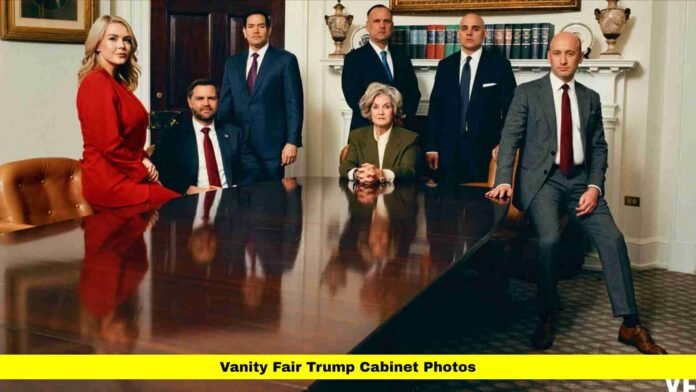

Vanity Fair Trump cabinet photos became one of the most talked-about political media moments in the United States in recent weeks. The release of a striking portrait series featuring senior members of President Donald Trump’s cabinet immediately drew widespread attention, intense online reactions, and sharp political debate. The images, published as part of a broader Vanity Fair feature, stood out for their raw visual style and unfiltered presentation of powerful political figures.
This in-depth report examines what made these photographs different, who appeared in them, why reactions were so polarized, and how the images have shaped public conversation. Every section stays fully focused on the same subject, providing a clear and factual look at why these portraits resonated so strongly across the country.
What Made the Vanity Fair Trump Cabinet Photos Stand Out
The Vanity Fair Trump cabinet photos departed sharply from traditional political portraiture. Instead of polished lighting, soft focus, and carefully staged backdrops, the images presented cabinet members in extreme close-up, revealing fine facial details, natural expressions, and subtle imperfections. This visual approach immediately distinguished the series from standard official portraits typically released by government offices.
The framing placed viewers uncomfortably close to the subjects, creating a sense of intimacy that many found unexpected. The lack of heavy retouching amplified this effect, making the portraits feel confrontational to some and refreshingly honest to others. These choices were deliberate and central to the reaction the photos generated.
The Creative Direction Behind the Portraits
The artistic direction of the Vanity Fair Trump cabinet photos focused on realism rather than refinement. The portraits were designed to strip away layers of political presentation and capture moments that felt spontaneous rather than rehearsed. Lighting emphasized texture rather than smoothing it, while composition avoided flattering angles typically used in political imagery.
This approach aligned with a broader editorial choice to present political power without traditional visual filters. The result was a series of images that demanded attention and challenged expectations about how high-ranking officials are usually portrayed in mainstream media.
Which Cabinet Members Appeared in the Series
The Vanity Fair Trump cabinet photos featured several of the most recognizable figures in the administration. These included senior officials responsible for shaping domestic and foreign policy, managing communications, and directing executive operations. Each portrait was paired with editorial context that reinforced the seriousness of the feature.
Rather than group shots or formal poses, each cabinet member was photographed individually. This choice reinforced the personal nature of the portraits and encouraged viewers to focus on each subject as an individual rather than as part of a collective administration.
Why Public Reaction Was Immediate and Intense
Public reaction to the Vanity Fair Trump cabinet photos began almost immediately after publication. Social media platforms filled with commentary, ranging from shock and humor to anger and praise. Many viewers were unprepared for the intensity of the close-ups, describing the images as startling or overwhelming while scrolling through their feeds.
Some reactions framed the portraits as visually aggressive, while others applauded them for refusing to sanitize political power. The immediacy of the response highlighted how deeply visual presentation influences political perception, especially in an era dominated by image-driven platforms.
Criticism From Conservative Voices
Conservative commentators were among the most vocal critics of the Vanity Fair Trump cabinet photos. Many argued that the magazine intentionally selected unflattering angles and lighting to portray cabinet members in a negative light. They viewed the portraits as evidence of editorial bias rather than neutral artistic expression.
Critics claimed the images would not have been presented the same way if the subjects belonged to a different political administration. This perception fueled broader debates about fairness in political media coverage and the role of editorial intent in visual storytelling.
Support From Advocates of Unfiltered Journalism
While criticism was loud, the Vanity Fair Trump cabinet photos also received strong support. Advocates of unfiltered journalism praised the series for breaking away from sanitized political imagery. They argued that political leaders should not be visually protected from realism simply because of their status.
Supporters viewed the portraits as a corrective to decades of carefully managed political branding. In their view, the images encouraged viewers to see power figures as human rather than symbolic, opening space for more honest public evaluation.
How the Images Became a Cultural Moment
The Vanity Fair Trump cabinet photos quickly evolved from a magazine feature into a broader cultural moment. Screenshots circulated widely, memes emerged, and discussions extended beyond politics into photography, ethics, and media responsibility. The images were referenced in talk shows, podcasts, and online debates.
This rapid spread demonstrated how political visuals can transcend their original context. Once released, the portraits took on lives of their own, shaped by interpretation, humor, and outrage across digital spaces.
The Role of Visual Framing in Political Narratives
The controversy surrounding the Vanity Fair Trump cabinet photos underscored the power of visual framing in shaping political narratives. A photograph does more than record appearance; it communicates tone, intent, and perspective. Lighting, distance, and composition all influence how viewers interpret authority and character.
In this case, the close framing reduced emotional distance between subject and viewer. That proximity made the images feel personal and, for some, intrusive. It also reinforced the idea that photography can act as commentary, not just documentation.
Why These Photos Felt Different From Official Portraits
Official government portraits are designed to project stability, confidence, and authority. They rely on consistent visual language meant to reassure the public. The Vanity Fair Trump cabinet photos rejected that formula entirely.
By presenting officials without visual polish, the images challenged the idea that leadership must always appear controlled and pristine. This contrast intensified reactions, as viewers compared the portraits with the carefully curated images they were accustomed to seeing from official channels.
Debate Over Respect and Representation
One of the most persistent debates sparked by the Vanity Fair Trump cabinet photos centered on respect. Critics argued that political leaders deserve dignified representation regardless of ideological differences. Supporters countered that dignity does not require visual manipulation.
This debate raised broader questions about journalistic responsibility. Should political photography prioritize neutrality, or should it reflect the photographer’s perspective? The lack of consensus revealed deep divisions in how Americans expect media to handle political imagery.
Impact on the Public Perception of the Cabinet
While opinions differed, the Vanity Fair Trump cabinet photos undeniably shaped public perception. For some viewers, the images reinforced existing views about the administration. For others, they introduced a new way of seeing familiar figures.
Visual impressions are powerful and often linger longer than written analysis. The portraits added another layer to how the cabinet is remembered during this period, influencing emotional responses even among those who did not read the accompanying article.
Why Timing Played a Key Role
The timing of the Vanity Fair Trump cabinet photos amplified their impact. Released during an active political cycle, the images entered an environment already charged with strong opinions. In such a climate, visual content carries extra weight and spreads more rapidly.
Had the portraits been released in a quieter political moment, reactions might have been less intense. Instead, their arrival during ongoing national debate ensured maximum visibility and engagement.
The Broader Implications for Political Media
The response to the Vanity Fair Trump cabinet photos may influence how future political figures are photographed. Media outlets may feel encouraged to experiment with less conventional styles, while political teams may become more cautious about participating in such projects.
The episode highlighted the ongoing tension between access and control. Political figures seek visibility, but media organizations seek editorial independence. This balance remains delicate and constantly negotiated.
How Audiences Engaged With the Images Online
Online engagement played a crucial role in elevating the Vanity Fair Trump cabinet photos. Viewers shared cropped images, added commentary, and recontextualized the portraits through captions and reactions. This user-driven engagement extended the life of the photos far beyond their initial release.
The images became conversation starters rather than static visuals. Each share added another layer of interpretation, proving how digital audiences actively shape media narratives.
Why These Photos Will Likely Be Remembered
The Vanity Fair Trump cabinet photos will likely be remembered not just for who appeared in them, but for how they were presented. They challenged conventions, provoked debate, and demonstrated the continuing power of photography in political discourse.
Whether viewed as bold journalism or biased presentation, the portraits left a lasting impression. They showed that in modern politics, images can be as influential as policy statements or speeches.
Final Perspective on the Photo Series
The Vanity Fair Trump cabinet photos represent more than a magazine spread. They reflect ongoing struggles over representation, power, and media trust in the United States. By rejecting traditional visual norms, the series forced audiences to confront their expectations of political imagery.
As political communication continues to evolve, moments like this reveal how deeply visuals shape understanding and emotion. The conversation sparked by these portraits is likely to influence both media practices and public perception moving forward.
💬 What are your thoughts on how political leaders should be portrayed in major publications? Share your perspective below and stay informed as this conversation continues.