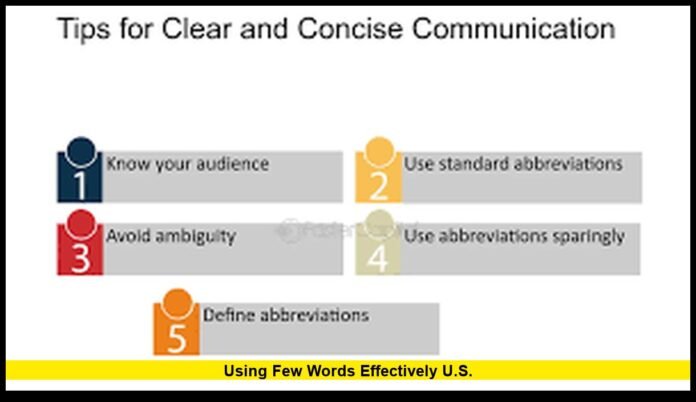

Using few words effectively has become one of the most valuable communication skills in the United States as digital platforms, workplace messaging tools, and mobile-first media reshape how people share information in 2026. Across industries, from journalism to business leadership, clear and concise messaging now determines how quickly ideas spread and how well audiences understand them.
Modern communication moves faster than ever. Millions of Americans read news alerts, social posts, and work updates throughout the day on smartphones. Messages compete for attention in crowded feeds and busy inboxes. In this environment, short, precise language often delivers stronger results than long explanations.
Writers, executives, educators, and digital creators now focus on clarity and brevity. A well-crafted sentence can capture attention instantly, while a long paragraph risks losing readers before the message lands.
The Digital Shift Toward Shorter Communication
The American communication landscape changed dramatically over the past decade. Mobile devices now dominate how people consume information.
Many digital platforms naturally encourage shorter messaging formats:
| Platform | Communication Style |
|---|---|
| X (formerly Twitter) | Short posts with a character limit |
| Brief captions paired with visual content | |
| TikTok | Quick storytelling through short videos |
| Workplace apps like Slack and Teams | Fast, short updates and responses |
These environments reward messages that reach the point quickly.
Users often scroll through hundreds of posts or notifications daily. If the main idea appears immediately, readers engage. If it takes several sentences to understand the topic, many move on.
This shift has influenced not only social media posts but also news headlines, marketing campaigns, and corporate announcements.
Why Attention Spans Are Changing Communication
Online reading habits differ from traditional reading. People rarely read every word on a screen. Instead, they scan for key points.
Research on digital behavior shows several patterns:
- Readers prefer short paragraphs.
- Clear headlines attract more clicks.
- Messages with simple language spread faster.
When information appears in a compact format, readers grasp the message faster and remember it more easily.
Busy professionals also value brevity. A short message that delivers a decision or update saves time and reduces confusion.
In many workplaces, long email chains have given way to quick updates inside team messaging channels.
Journalism Adapts to Concise Storytelling
News organizations across the United States have adjusted their writing style to meet modern reading habits.
Digital news platforms prioritize:
- Strong opening sentences
- Clear headlines
- Short paragraphs
- Direct explanations
Many newsrooms now write with mobile readers in mind. A significant portion of online news traffic comes from smartphones.
Articles must remain informative, but readability has become a priority. Editors often shorten sentences and remove unnecessary wording during the editing process.
Breaking news alerts also require compact wording. A notification must summarize the story within a few words while still capturing the main event.
This challenge pushes journalists to refine language carefully.
Workplace Communication Is Becoming More Efficient
The modern workplace has embraced faster communication methods. Teams often collaborate in real time using chat-based platforms rather than traditional email.
Short updates improve efficiency because employees can read and respond quickly.
Typical concise workplace messages include:
- Daily project updates
- Quick meeting summaries
- Action item lists
- Deadline reminders
A clear message might follow a simple structure:
- The key update
- Important details
- Next steps
This format helps teams stay organized without reading long reports.
Executives also value concise presentations. Many leaders encourage teams to present ideas in short summaries before expanding on details.
The goal is clarity, not complexity.
Education Is Teaching Clearer Writing Skills
Schools and universities increasingly emphasize concise writing as a core skill.
Students learn how to:
- Summarize complex topics
- Write clear thesis statements
- Edit unnecessary words
- Organize ideas logically
Teachers encourage shorter paragraphs and direct language. These techniques improve readability and help students communicate ideas confidently.
Professional writing courses also train students to prepare business emails, reports, and presentations using precise language.
Employers frequently seek candidates who can explain ideas clearly without excessive wording.
Social Media Creators Perfect Short Messaging
Content creators across the United States rely heavily on concise communication.
Popular creators often write scripts or captions designed to capture attention immediately. Many follow a simple pattern:
- A strong opening line
- A clear message
- A quick conclusion
This structure works well because audiences decide within seconds whether to keep watching or scrolling.
Short captions also encourage engagement. When the message is easy to understand, users respond with comments, likes, or shares.
Brands follow similar strategies. Marketing teams craft slogans, taglines, and product descriptions that communicate value quickly.
Effective campaigns often rely on just a few memorable words.
How Technology Encourages Simpler Writing
Modern digital tools now help people improve clarity in their writing.
Editing software analyzes text and highlights issues such as:
- Long sentences
- Passive voice
- Repetitive phrases
- Complex wording
These tools guide writers toward simpler language.
Voice-to-text features on smartphones also influence writing style. Spoken sentences tend to be shorter and more natural than traditional written language.
As a result, many messages now resemble natural conversation rather than formal writing.
This shift makes communication feel more direct and relatable.
Practical Techniques for Clearer Messages
Professionals often use specific editing methods to improve clarity.
These techniques help eliminate unnecessary words without losing meaning.
Remove Redundant Expressions
Certain phrases add extra words without improving understanding.
Examples include:
- “Future plans” instead of “plans”
- “Basic fundamentals” instead of “fundamentals”
- “Past history” instead of “history”
Eliminating redundancy makes writing more efficient.
Replace Long Phrases with Short Words
Some phrases can be shortened easily:
- “In order to” → “To”
- “Due to the fact that” → “Because”
- “At this point in time” → “Now”
These changes improve readability instantly.
Break Up Long Sentences
Long sentences can overwhelm readers. Splitting them into shorter statements often improves clarity.
For example:
Long version:
The marketing team is currently reviewing several campaign proposals that may potentially launch next quarter.
Short version:
The marketing team is reviewing campaign proposals. The launch may happen next quarter.
Both sentences deliver the same information more clearly.
Government and Public Communication Also Emphasize Clarity
Public agencies in the United States increasingly rely on concise language when sharing information with citizens.
Emergency alerts, health guidance, and transportation updates must deliver instructions quickly.
Examples include:
- Severe weather warnings
- public safety alerts
- airport travel notifications
- traffic updates
Short messages help people understand instructions immediately during urgent situations.
Plain language guidelines now influence how many government agencies write public notices and informational materials.
The goal is simple: make information easy to understand for everyone.
Concise Writing Supports Better Online Visibility
Search engines favor content that answers questions clearly.
Web pages structured with headings, short paragraphs, and straightforward language tend to perform well in search results.
Readers benefit as well. When information appears in a clear format, visitors spend more time on a page and understand the topic quickly.
Digital publishers often combine two strategies:
- Detailed information
- Clear, concise sentences
This balance allows articles to remain informative while still easy to read.
Writers who master using few words effectively often create content that both readers and search systems understand easily.
Balancing Brevity With Meaning
While concise writing offers many advantages, removing too many details can cause confusion.
Effective communication still requires context.
Writers must ensure readers understand:
- what happened
- why it matters
- what action should follow
If key information disappears, the message loses its value.
Good editing focuses on removing unnecessary wording while preserving meaning.
Clarity always matters more than word count alone.
The Future of Communication in the United States
Communication trends suggest concise messaging will continue shaping how Americans exchange information.
Several factors support this shift:
- Mobile-first news consumption
- rapid workplace messaging tools
- social media algorithms favoring short content
- growing demand for clear information online
As information flows faster each year, audiences rely on writers who communicate ideas quickly and accurately.
Clear communication strengthens trust, reduces confusion, and helps people stay informed in a complex digital environment.
Mastering concise language has become more than a writing preference. It is now a critical skill for modern communication.
Strong ideas often require only a few well-chosen words. Share your thoughts on concise communication and join the conversation about modern writing today.