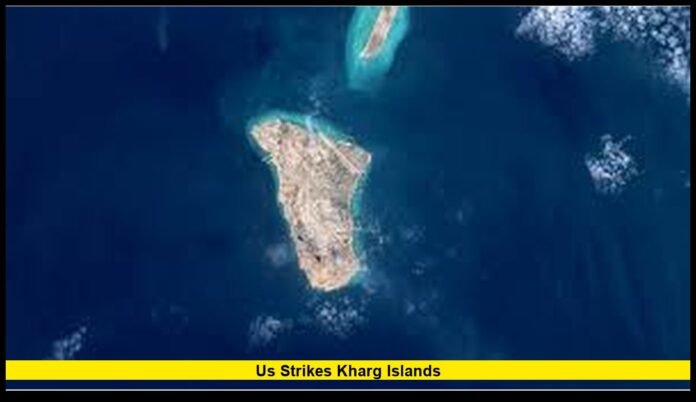

The situation surrounding us strikes kharg island has rapidly escalated into one of the most significant geopolitical developments of the year, drawing global attention as U.S. military forces carried out targeted operations on Iran’s strategically vital Kharg Island. The move has intensified already high tensions in the Persian Gulf, raising urgent questions about energy security, regional stability, and what may come next.
A New Phase in U.S.-Iran Tensions
The latest military action marks a sharp turn in the ongoing standoff between the United States and Iran. U.S. forces conducted coordinated strikes aimed at specific military targets on Kharg Island, a location long known for both its strategic military importance and its central role in global oil exports.
According to official updates, the operation focused on disabling key defense-related infrastructure. These included storage areas, radar systems, and fortified positions believed to support Iran’s regional military capabilities. The strikes were precise and limited in scope, signaling a calculated effort rather than an all-out offensive.
This development follows weeks of mounting friction in the region, with increased military presence and repeated warnings from both sides.
Follow along for deeper insights into how this situation could reshape global markets and international relations.
Why Kharg Island Is So Critical
Kharg Island is not just another location on the map—it is the backbone of Iran’s oil export system. A significant portion of the country’s crude oil shipments flows through this single island, making it one of the most sensitive energy hubs in the world.
Positioned in the northern Persian Gulf, Kharg Island serves as a primary loading point for tankers transporting oil to international markets. Its infrastructure includes vast storage facilities, export terminals, and shipping operations that are essential to maintaining Iran’s economic output.
Because of this, any military activity near or on the island carries immediate global consequences. Even when oil facilities are not directly targeted, the perception of risk alone can disrupt markets and trigger widespread concern.
Markets React to Rising Risk
The response from global oil markets was swift. Prices surged as traders reacted to the possibility of further escalation in a region that handles a substantial share of the world’s energy supply.
U.S. crude prices climbed sharply, while international benchmarks followed suit. Investors and analysts are closely monitoring the situation, particularly for signs that future actions could impact oil infrastructure directly.
The uncertainty is driving volatility. Even without physical damage to energy facilities, the threat of disruption in such a critical region is enough to shift market dynamics dramatically.
Strategic Restraint in Target Selection
One of the most notable aspects of the operation is what was not targeted. U.S. forces avoided oil terminals and export infrastructure, focusing instead on military objectives.
This approach reflects a broader strategy: apply pressure without triggering a global economic crisis. By limiting the scope of the strikes, the United States appears to be sending a strong message while attempting to avoid destabilizing energy markets.
This balancing act is delicate. On one hand, it demonstrates military capability and resolve. On the other, it seeks to prevent unintended consequences that could ripple through global economies.
However, the situation remains fluid, and the possibility of expanded operations cannot be ruled out if tensions continue to rise.
The Strait of Hormuz: A Global Chokepoint
At the center of the crisis lies the Strait of Hormuz, one of the most important shipping routes in the world. A large percentage of global oil passes through this narrow passage, making it a critical artery for international trade.
Any threat to the strait has immediate global implications. Even minor disruptions can lead to sharp increases in energy prices and broader economic instability.
The current situation has heightened concerns about the security of this vital route. Military activity near Kharg Island is closely tied to broader efforts to ensure that shipping lanes remain open and secure.
For countries heavily dependent on oil imports, the stakes could not be higher.
Iran’s Position and Potential Response
Iran has responded strongly to the strikes, signaling that it is prepared to defend its interests. Officials have warned that continued military pressure could lead to retaliation, particularly if key infrastructure is threatened.
The country’s leadership has emphasized its control over regional waters and its ability to respond to perceived aggression. This stance adds another layer of uncertainty to an already tense situation.
Regional observers are watching closely for any signs of escalation. Military movements, public statements, and shifts in strategy could all signal the next phase of the conflict.
The risk of miscalculation remains a major concern, as even a limited incident could trigger a broader confrontation.
A Pattern of Increasing Pressure
The current strikes are not isolated. They follow earlier military actions that targeted similar sites on Kharg Island in recent weeks.
This pattern suggests a sustained effort rather than a one-time response. Each operation builds on the previous one, increasing pressure while testing the limits of escalation.
The repeated focus on Kharg Island highlights its importance as both a military and economic asset. It also underscores the strategic calculations being made by both sides.
As tensions continue to build, the likelihood of further actions remains high.
Global Economic Implications
The impact of these developments extends far beyond the Middle East. Energy markets, shipping industries, and financial systems around the world are feeling the effects.
Higher oil prices can lead to increased costs for transportation, manufacturing, and everyday goods. This, in turn, can contribute to inflation and economic uncertainty.
Countries that rely heavily on Gulf oil are particularly vulnerable. Any prolonged disruption could force governments to adjust policies, seek alternative suppliers, or tap into strategic reserves.
The interconnected nature of the global economy means that events in one region can quickly affect markets worldwide.
Military Presence and Regional Stability
In response to rising tensions, military activity in the region has increased. Naval forces, surveillance operations, and defensive measures are all being reinforced.
This buildup reflects the seriousness of the situation. It also highlights the potential for the conflict to expand beyond its current scope.
Allied nations are closely monitoring developments, with some expressing concern about the risk of a wider regional crisis. Diplomatic efforts are ongoing, but progress remains uncertain.
The presence of multiple military forces in a confined area increases the risk of unintended incidents, making the situation even more complex.
Diplomatic Efforts and Uncertain Outcomes
Despite the military developments, diplomatic channels remain active. Efforts are underway to reduce tensions and prevent further escalation.
However, the effectiveness of these efforts is unclear. The combination of military action and strong political messaging suggests that both sides are holding firm to their positions.
Negotiations in such a high-stakes environment are challenging. Each move is carefully calculated, and any concession can be seen as a sign of weakness.
The coming days will be critical in determining whether diplomacy can keep the situation from escalating further.
What to Watch in the Coming Days
Several key developments will shape the trajectory of this crisis:
- Additional military actions or responses
- Changes in oil market trends
- Statements from regional and global leaders
- Activity in the Strait of Hormuz
- Shifts in diplomatic negotiations
Each of these factors will provide clues about where the situation is heading and how it might affect global stability.
Conclusion: A Critical Moment in Global Affairs
The unfolding events tied to us strikes kharg island represent a pivotal moment in international relations. The combination of military action, economic impact, and geopolitical tension has created a situation that demands close attention.
While the strikes themselves were targeted and limited, their implications are far-reaching. The balance between pressure and restraint will play a key role in determining what happens next.
For now, the world is watching as one of the most strategically important regions faces renewed uncertainty.
Stay informed and keep checking back as this developing story continues to shape global headlines.
What are your thoughts on this rapidly evolving situation? Share your perspective and stay connected for ongoing updates.