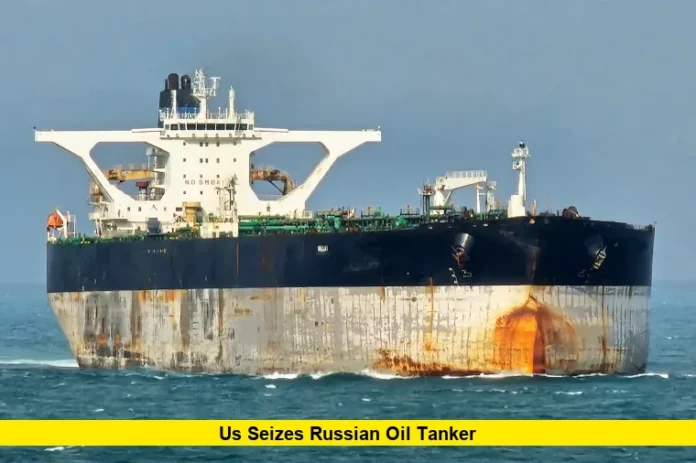

American forces have captured a Russian-flagged oil vessel in a stunning military operation that unfolded across thousands of miles of Atlantic waters this week. The dramatic confrontation saw US Navy SEALs board and take control of the tanker on Wednesday morning, ending a tense pursuit that began in late December and involved Russian submarines, international surveillance aircraft, and dangerous winter storms.
The tanker at the center of this international incident started its journey under the name Bella 1 but changed its identity to Marinera during its desperate flight from American authorities. What makes this case extraordinary is not just the distance covered or the military assets deployed, but the fact that Russian warships actively tried to protect the fleeing vessel as it raced through the North Atlantic.
Wednesday’s seizure marks a turning point in how the United States enforces economic sanctions on the water. This operation shows that Washington is prepared to chase down sanctioned vessels anywhere in the world, regardless of what flag they fly or which military forces attempt to shield them.
The Chase Begins in Venezuelan Waters
The confrontation started on December 20 when the Bella 1 approached the coast of Venezuela. American intelligence had been tracking the vessel for months because of its involvement in transporting oil for Hezbollah and other sanctioned entities. The ship’s history includes moving more than 7 million barrels of Iranian crude and 4 million barrels of Venezuelan oil to Chinese ports between 2021 and 2025.
When the US Coast Guard ordered the vessel to stop for inspection near Venezuelan territorial waters, the crew made a calculated decision. Rather than submit to a boarding party, the captain reversed course and fled into open ocean. This single choice triggered what would become one of the longest maritime pursuits in recent American law enforcement history.
The crew knew exactly what they were doing. Within hours of fleeing, workers began painting a massive Russian flag on the ship’s hull. By January 1, the vessel had been registered in Russia’s maritime records under the new name Marinera. Moscow approved this registration with remarkable speed, bypassing the usual safety inspections and administrative procedures that normally take weeks or months.
Coast Guard Cutter Pursues Through Brutal Weather
The US Coast Guard Cutter Munro became the tip of the spear in this pursuit. For more than two weeks, the crew of the Munro tracked the fleeing tanker through some of the worst weather the Atlantic can offer in winter. Massive storms with towering waves battered both vessels as they maintained their deadly game of cat and mouse.
Homeland Security Secretary Kristi Noem later praised the Munro’s crew for their persistence under brutal conditions. These Coast Guard personnel never lost sight of their target, even when weather conditions made surveillance difficult and dangerous. The crew worked around the clock, coordinating with aircraft overhead and naval assets positioned throughout the region.
The tanker tried multiple evasion tactics during this period. The crew shut off the ship’s transponders, making it invisible to commercial maritime tracking systems. They transmitted false position data when the transponders were active, trying to confuse pursuers about their actual location. These are classic shadow fleet tactics used by vessels trying to evade international sanctions.
Russian Military Deploys to Protect the Vessel
The situation escalated dramatically when Russian military forces arrived on the scene. A Russian submarine surfaced in the vicinity of the fleeing tanker, while several warships took up positions nearby. The message from Moscow was clear: they considered this vessel to be under their protection and were willing to use military assets to demonstrate that point.
This created an extremely delicate situation for American commanders. US forces were now operating in close proximity to Russian military vessels in international waters. Any miscalculation could have triggered a confrontation between two nuclear-armed powers over a single oil tanker.
Multiple nations contributed surveillance assets to track the increasingly crowded patch of ocean. American P-8 Poseidon aircraft flew missions from Royal Air Force bases in Britain, using their sophisticated radar and tracking equipment to maintain constant observation. Irish aircraft monitored the situation as the vessels passed near Irish waters. French patrol planes also participated, sharing intelligence with American forces.
The United Kingdom played a particularly important role. British Defense Secretary John Healey confirmed that his country provided operational support including flight basing and aerial surveillance. This cooperation reflects the deep military partnership between Washington and London, particularly regarding sanctions enforcement against Russia.
Navy SEALs Execute the Boarding Operation
The actual seizure operation occurred around 7 a.m. Eastern Time on Wednesday in international waters between Iceland and the United Kingdom. Navy SEALs from the elite SEAL teams flew to the location aboard helicopters operated by the 160th Special Operations Aviation Regiment, the Army’s premier aviation unit known for supporting the most sensitive special operations missions.
The SEALs fast-roped onto the deck of the Marinera in a carefully choreographed operation. Within minutes, they had secured the bridge and engine room, taking control of the vessel from a crew that offered no physical resistance. The entire boarding happened without shots being fired, a testament to both the training of the American forces and the decision by the crew not to escalate the situation further.
Interestingly, Russian military vessels maintained their positions in the area during the boarding but did not interfere. This suggests that despite their presence, Moscow had decided not to risk a direct military confrontation with US forces over this particular vessel.
US European Command announced the successful seizure shortly after it occurred. The crew members aboard the tanker now face potential federal prosecution in the United States for violating Coast Guard orders and participating in sanctions evasion schemes.
Second Tanker Captured in Caribbean Waters
While the Marinera drama played out in the North Atlantic, a second operation unfolded simultaneously in the Caribbean Sea. US forces intercepted the Motor Tanker Sophia in the pre-dawn hours of Wednesday, conducting what officials described as a textbook boarding operation.
Unlike the Marinera, which was empty at the time of capture, the Sophia was fully loaded with oil. The vessel had been engaged in what authorities called illicit activities, presumably loading or preparing to transport sanctioned crude oil from Venezuela.
The Department of Homeland Security coordinated this operation with the Department of Defense, demonstrating the multi-agency approach that characterizes current enforcement efforts. US Southern Command, which oversees military operations in Central and South America and the Caribbean, announced that the boarding occurred without incident.
Secretary Noem highlighted these twin operations as proof that American forces can conduct complex maritime interdictions anywhere in the world. The fact that both occurred within hours of each other required precise planning and coordination across multiple military commands and civilian agencies.
White House Defends Legal Authority for Seizure
Questions about the legality of boarding a Russian-flagged vessel in international waters emerged immediately after the operation became public. International maritime law generally prohibits one nation from boarding another nation’s vessels on the high seas unless specific conditions are met, such as suspicion of piracy or human trafficking.
White House Press Secretary Karoline Leavitt addressed these concerns directly during a briefing. She explained that the administration considers the Marinera to have been flying a false flag, which rendered it stateless under international maritime law. A federal court had issued a seizure warrant for the vessel based on its sanctions violations and criminal activities.
The false flag argument hinges on how the vessel obtained its Russian registration. Because the crew painted the flag and changed the registration while actively fleeing from law enforcement, rather than through proper channels with legitimate ownership changes, the White House argues the flag was fraudulent. Under maritime law, a stateless vessel loses the protections normally afforded to ships flying recognized national flags.
Attorney General Pam Bondi announced that federal prosecutors are reviewing the case to determine what charges should be brought against crew members. The potential charges include failure to comply with lawful Coast Guard orders, participation in sanctions evasion networks, and possibly other crimes related to the vessel’s history of transporting oil for designated terrorist organizations.
Moscow Responds With Outrage and Legal Arguments
Russia’s reaction combined diplomatic protests with legal arguments about maritime law. The Russian Transport Ministry issued a strong statement declaring that US forces had violated the 1982 UN Convention on the Law of the Sea. Ministry officials argued that freedom of navigation applies on the high seas and that no state has authority to use force against properly registered vessels from other nations.
The ministry emphasized that Russia had granted the tanker temporary authorization to sail under the Russian flag on December 24, following proper procedures. From Moscow’s perspective, this made the Marinera a legitimate Russian vessel entitled to protection under international law.
Contact with the ship was lost immediately after American forces boarded, according to Russian officials. The Foreign Ministry demanded that the United States treat all crew members, particularly any Russian nationals aboard, with dignity and ensure their prompt return home.
Senior Russian politicians used even stronger language. Senator Andrei Klishas from the ruling United Russia party described the American action as piracy. Leonid Slutsky, who chairs the State Duma Committee on International Affairs, told Russian media that the seizure clearly violated maritime law and UN conventions governing navigation.
This rhetoric reflects broader tensions between Washington and Moscow, but it also highlights genuine legal debates about the limits of sanctions enforcement in international waters. Some maritime law experts have questioned whether the US had sufficient legal grounds to board the vessel, particularly after it received Russian registration.
Part of Larger Venezuelan Oil Embargo Strategy
The tanker seizure fits into a comprehensive military and economic pressure campaign targeting Venezuela’s oil industry. This campaign intensified significantly in recent weeks following the capture of former Venezuelan President Nicolás Maduro on January 3.
After Maduro’s detention, at least 16 tankers fled Venezuelan ports in panic. Many of these vessels immediately began using evasion tactics. Some transmitted false names and position data. Others completely disabled their Automatic Identification System transponders, going dark to avoid detection by satellites and maritime patrol aircraft.
Several sanctioned tankers have attempted to gain protection by switching to Russian registration. At least three vessels changed their flags from countries like Comoros and Guyana to Russia in recent weeks. The Malak became the Sintez, the Dianchi was renamed Expander, and the Veronica now sails as Galileo. All three received quick approval from Russian maritime authorities.
Secretary of State Marco Rubio explained the strategic logic behind these enforcement operations. Venezuelan authorities now understand that their ability to export oil and generate revenue depends on cooperating with Washington. The seized oil becomes leverage in negotiations between the two governments.
This represents a fundamental shift in US policy toward Venezuela. Rather than simply imposing sanctions and hoping for compliance, the Trump administration has deployed military forces to physically prevent oil shipments and capture vessels that violate American law.
Defense Department Signals Worldwide Enforcement
Secretary of Defense Pete Hegseth made clear that geography poses no limit to enforcement operations. He stated publicly that the blockade of sanctioned Venezuelan oil remains in full effect anywhere in the world. This commitment signals that vessels cannot escape consequences by fleeing to distant waters or seeking protection from other nations.
The Marinera case illustrates this principle perfectly. The tanker was empty when captured, carrying no oil and posing no immediate threat to American interests. Yet US forces pursued it across the Atlantic for weeks because of what the vessel represents: a node in the shadow fleet network that enables sanctioned nations to evade international restrictions.
Defense officials calculate that aggressive enforcement like this serves multiple purposes. It punishes specific violations, deters future sanctions evasion, and demonstrates American resolve to allies and adversaries alike. The message to other shadow fleet operators is simple: changing your flag and running will not save you.
Britain has already sanctioned more than 500 Russian vessels as part of coordinated efforts to combat shadow fleet operations. UK officials report that these combined enforcement actions have contributed to a 27 percent drop in Russian oil revenues since late 2024, showing that persistent pressure can achieve strategic objectives.
International Maritime Law Remains Contested
The seizure has reignited debates about what authority nations have to enforce their laws on the high seas. Chris Reynolds, former head of the Irish Coast Guard, publicly questioned whether the United States should have been allowed to board the tanker. He described the situation as very serious and argued that the Marinera had the right of free passage through international waters.
Reynolds noted that international conventions permit boarding foreign vessels in only narrow circumstances, such as suspected piracy, slave trading, or unauthorized broadcasting. Sanctions violations typically do not fall into these categories, which raises questions about the legal foundation for the US action.
However, American officials maintain that the seizure was lawful under US domestic law and that the vessel’s false flag designation removed its protected status under international law. The warrant issued by a federal court provided domestic legal authority, while the stateless determination addressed international law concerns.
This legal gray area creates uncertainty for maritime operators and nations alike. If the United States can board vessels registered in other countries by declaring their flags false or fraudulent, what prevents other nations from using similar logic? Could China or Russia declare American-flagged vessels stateless and board them in international waters?
These questions have no easy answers, which is why maritime law experts worry that aggressive enforcement actions could undermine the predictability and stability of international maritime regulations. The consequences extend beyond this single case to affect shipping operations worldwide.
Shadow Fleet Networks Face Increased Scrutiny
The incident highlights the enormous challenge that shadow fleets pose to international sanctions regimes. These networks of vessels operate specifically to move oil, weapons, and other goods for sanctioned nations while evading detection and enforcement.
Shadow fleet vessels employ sophisticated evasion tactics. They frequently change names and flags, sometimes multiple times per voyage. They disable transponders that would reveal their locations to tracking systems. They conduct ship-to-ship transfers in remote waters, moving cargo between vessels to obscure the origin and destination of goods.
The crews operating these ships often come from countries with weak regulatory oversight. Vessel owners hide behind layers of shell companies registered in jurisdictions with opaque corporate structures. This makes it extremely difficult to identify who actually owns and controls these vessels.
Flag-hopping, the rapid switching of ship registrations between different countries, has become particularly common. Nations with minimal registry requirements and lax enforcement become havens for ships trying to evade international law. The Marinera’s quick Russian registration exemplifies this problem.
Maritime security analysts estimate that hundreds of vessels operate as part of various shadow fleets serving Russia, Iran, Venezuela, and North Korea. These ships collectively move billions of dollars worth of sanctioned goods each year, undermining international efforts to pressure these regimes through economic restrictions.
Political Divisions Emerge in Washington
The aggressive enforcement approach has sparked political debate in Congress. As senators received classified briefings about operations related to Venezuela, partisan divisions became apparent. Democrats questioned the long-term strategy and raised concerns about the legal basis for military actions conducted without explicit congressional authorization.
Senate Minority Leader Chuck Schumer criticized what he described as a lack of clear planning for subsequent steps. Some Democratic senators have indicated they may force a vote on war powers this week to potentially restrict further military operations without congressional approval.
Republicans generally support the enforcement operations, arguing they demonstrate strength and resolve in dealing with hostile nations. They contend that the seizures fall within existing legal frameworks for maritime interdiction and sanctions enforcement, requiring no additional congressional authorization.
This political split reflects broader disagreements about presidential authority to use military force for law enforcement purposes. The Constitution grants Congress the power to declare war and regulate international commerce, but presidents have long claimed inherent authority to protect American interests through military action.
Venezuela Negotiations Include Oil Transfer Deal
President Donald Trump announced Tuesday that Venezuela would transfer between 30 and 50 million barrels of oil to the United States. This announcement indicates that active negotiations are occurring regarding Venezuelan energy resources and suggests the seized tankers may be part of a larger deal.
Venezuela possesses some of the world’s largest proven oil reserves, but production has collapsed due to years of mismanagement, corruption at the state oil company PDVSA, and international sanctions. The country’s oil industry desperately needs investment and technical expertise to restore production to previous levels.
The Trump administration clearly views Venezuelan oil as strategically valuable. Rather than simply seeking to punish Venezuela through sanctions, the current approach combines military pressure with negotiations aimed at securing access to these energy resources.
Former President Maduro had accused the United States of plotting to steal Venezuelan oil, but his capture appears to have fundamentally altered the political landscape. Whatever government emerges in Caracas will need to accommodate American interests if it wants to restore oil exports and generate revenue.
Long-Term Implications for Maritime Enforcement
The successful Marinera seizure after a weeks-long pursuit demonstrates that the United States is willing to expend significant military resources to enforce sanctions. The operation required sustained surveillance, international coordination, elite special operations forces, and the acceptance of potential confrontation with Russian military assets.
This sets a precedent that will influence maritime operations for years to come. Shadow fleet operators now know that American forces will pursue them across oceans and conduct boardings even when other nations attempt to provide protection. The deterrent effect could be substantial if consistently applied.
However, questions remain about sustainability and scalability. Can the United States maintain this level of enforcement pressure indefinitely? What happens when dozens of vessels scatter simultaneously, each requiring surveillance and potential interdiction? Will American allies continue supporting operations that risk confrontation with Russia and other major powers?
The involvement of Russian submarines and warships in attempting to shield the Marinera indicates that enforcement operations may increasingly involve direct standoffs between major military powers. While Wednesday’s operation concluded without violence, future incidents might not resolve so peacefully.
Maritime insurance companies, shipping firms, and oil traders are already adjusting their behavior based on this case. The risk of seizure now factors into calculations about whether to participate in sanctioned oil trades. Even vessels that successfully evade capture face higher insurance costs and operational risks.
Have thoughts on how far America should go to enforce oil sanctions? Drop your perspective in the comments and stay tuned for breaking updates as this situation develops.