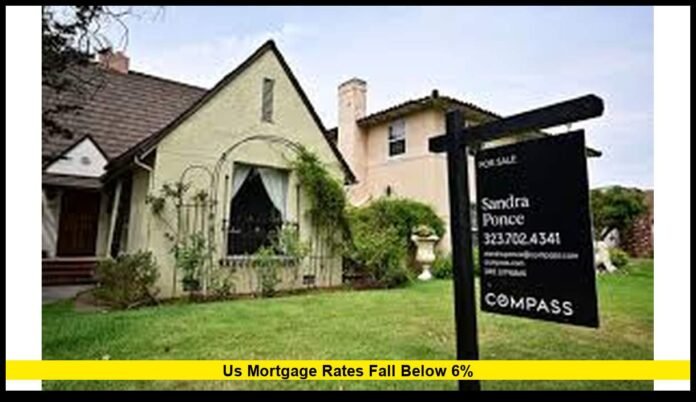

US mortgage rates fall below 6% at a pivotal moment for the housing market, giving buyers renewed purchasing power just as the spring season begins. The shift marks a meaningful change after months of elevated borrowing costs that slowed transactions and limited affordability.
Crossing this threshold influences nearly every part of the housing ecosystem. Buyers gain flexibility, sellers see increased activity, lenders adjust strategies, and builders monitor demand signals closely. Even small movements in mortgage pricing reshape monthly payments and long-term borrowing costs.
The timing is especially important. Spring traditionally drives the highest volume of home sales in the United States, making rate direction a major factor in market momentum.
A Turning Point for Housing Affordability
Mortgage rates directly determine how much home buyers can afford. When borrowing costs decline, purchasing power rises immediately.
A drop below 6% reduces monthly payments compared with higher rate periods. That change allows buyers to consider homes that were previously out of reach.
Affordability improvements influence:
- Loan qualification levels
- Debt-to-income ratios
- Buyer confidence
- Offer activity
- Time on market
For many households, affordability is the single biggest barrier to homeownership. Rate relief can quickly change decision timelines.
What Drove Mortgage Rates Lower
Several economic factors contributed to the recent shift.
Inflation Trends
Mortgage pricing reacts strongly to inflation expectations. Slower price growth reduces pressure on long-term interest rates, which lenders use to set mortgage pricing.
Bond Market Movement
The 10-year Treasury yield serves as a benchmark for mortgage rates. When bond yields decline, mortgage rates often follow.
Market Expectations Around Policy
Financial markets constantly adjust expectations regarding future monetary policy. Even without immediate changes, shifting expectations influence mortgage pricing.
Competitive Lending Environment
As seasonal demand increases, lenders compete for borrowers. Competitive pressure can lead to lower advertised rates and incentives.
Current Mortgage Rate Landscape
Rates vary by loan type and borrower profile. Credit score, down payment, and loan structure all affect final pricing.
| Loan Category | Typical Position |
|---|---|
| 30-year fixed | Below 6% range |
| 15-year fixed | Generally lower than 30-year |
| Adjustable-rate loans | Lower initial rates |
| Government-backed loans | Often competitive for qualified buyers |
Borrowers rarely receive the headline average rate. Individual offers depend on financial qualifications and lender programs.
Immediate Effects on Buyers
Lower mortgage rates change buyer behavior quickly.
Buyers who paused their search often return once affordability improves. Monthly payment calculations look more manageable, which increases confidence.
Buyer advantages now include:
- Greater purchasing power
- Lower monthly payments
- Improved qualification margins
- Expanded home search range
- Increased negotiating flexibility
First-time buyers respond strongly to rate movements because they rely heavily on financing.
Seller Activity May Increase
Seller decisions are closely tied to buyer demand. When financing becomes easier, listing activity often follows.
Lower rates can lead to:
- More showings
- Faster offers
- Reduced price reductions
- Improved listing confidence
- Stronger seasonal demand
However, many homeowners still hold extremely low mortgage rates from earlier years. That reality continues to limit available inventory.
Inventory Remains the Key Constraint
Housing supply plays a major role in how rate changes affect the market.
Limited inventory keeps competition elevated even when borrowing costs fall. Several factors continue to restrict supply:
- Owners reluctant to give up low mortgages
- Construction costs
- Labor shortages
- Land availability challenges
- Population growth in certain regions
Rate improvements may gradually encourage more listings, but supply shifts typically occur slowly.
Refinancing Interest Begins to Reappear
Rate drops revive refinancing conversations.
Borrowers who purchased when rates were higher may explore opportunities to reduce payments. Refinancing interest usually rises in stages rather than instantly.
Common refinance motivations include:
- Lower monthly payments
- Shortening loan term
- Removing mortgage insurance
- Accessing home equity
- Adjusting loan structure
Borrowers often wait for consistent rate stability before acting.
Regional Differences Across the Country
Rate changes affect markets differently.
High-cost regions see significant affordability impact because payment differences are larger. In expensive areas, even small rate moves reshape buying power.
Faster responses often appear in:
- Coastal metropolitan markets
- Rapid-growth suburban areas
- Competitive Sun Belt cities
Slower responses may occur where inventory is rising or price growth is cooling.
Local economic conditions also influence how quickly buyers react.
Builders Watch Financing Trends Closely
Homebuilders track mortgage rates as a leading demand indicator. Lower borrowing costs can support new construction sales.
Builders may respond by:
- Increasing production plans
- Offering rate buydowns
- Expanding incentives
- Adjusting pricing strategies
- Accelerating community launches
New construction buyers depend heavily on financing, making rate direction especially important.
The Psychological Impact on Buyers
Housing decisions involve emotion as well as math.
A move below a major rate threshold signals improvement after a period of affordability pressure. Buyers often interpret this as a sign that conditions are stabilizing.
Confidence can drive activity faster than economic fundamentals alone.
Many households delayed purchases while waiting for clearer signals. Rate relief provides that signal.
Long-Term Affordability Still Depends on Prices
Mortgage rates influence payments, but home prices remain a major factor.
In many regions, price growth continued despite higher borrowing costs. That means affordability gains from rate declines may be partially offset by elevated home values.
Buyers must evaluate:
- Total monthly payment
- Property taxes
- Insurance costs
- Maintenance expenses
- Future financial flexibility
Affordability involves the full cost of ownership, not just interest rates.
Buyer Strategies in the Current Environment
Rate movement creates opportunity, but preparation remains critical.
Smart buyer steps include:
- Securing pre-approval early
- Comparing multiple lenders
- Monitoring daily rate changes
- Evaluating total loan costs
- Considering rate lock timing
Buyers who prepare before making offers often move faster in competitive markets.
Flexibility also matters. Rate fluctuations can occur during the home search process.
Lender Competition Is Increasing
When borrower demand rises, lenders adjust quickly.
Current trends include:
- Promotional rate offers
- Discount points incentives
- Streamlined application processes
- Expanded loan programs
- Increased refinance marketing
Competition among lenders can improve borrower options and pricing.
Shopping around remains one of the most effective ways to secure better terms.
First-Time Buyer Momentum
First-time buyers are highly sensitive to interest rate changes.
A drop below 6% may allow more households to qualify for loans that previously exceeded affordability limits.
Benefits for first-time buyers include:
- Improved loan eligibility
- Better payment stability
- Expanded entry-level inventory access
- Increased program participation
Many first-time buyers delayed decisions during higher rate periods. Their return can significantly influence transaction volume.
Investor Interest May Shift
Real estate investors closely track borrowing costs. Lower rates can improve return calculations and financing feasibility.
Potential investor activity includes:
- Rental property purchases
- Small multifamily acquisitions
- Build-to-rent projects
- Portfolio expansion
Investors also consider rental demand, property values, and operating costs when evaluating opportunities.
Market Signals to Watch Next
Several indicators help measure whether lower rates are translating into real housing activity.
Important signals include:
- Mortgage application volume
- Pending home sales trends
- Listing traffic
- Builder contract activity
- Days on market
These metrics typically shift weeks after rate movement.
Risks That Could Affect Rate Direction
Mortgage rates rarely move in a straight line.
Several factors could influence future direction:
- Inflation data surprises
- Labor market strength
- Global economic conditions
- Financial market volatility
- Policy expectations
Short-term fluctuations are normal even during broader downward trends.
Borrowers should prepare for movement rather than stability.
The Role of Economic Confidence
Consumer confidence influences housing demand. When households feel financially secure, they are more likely to make long-term commitments such as purchasing a home.
Lower mortgage rates can support confidence by improving affordability projections.
Employment stability, wage growth, and savings levels also play important roles in housing decisions.
What This Means for the Spring Market
Spring typically drives the highest transaction volume each year. Rate improvements arriving at this moment can reshape seasonal momentum.
Possible outcomes include:
- Increased buyer competition
- Faster pending sales
- Stabilizing price trends
- Higher showing activity
- Improved builder sales
The extent of these effects depends on inventory availability and economic conditions.
How Sellers Can Respond
Sellers benefit from understanding financing trends affecting buyers.
Practical seller strategies include:
- Pricing realistically
- Preparing homes for faster activity
- Monitoring competing listings
- Considering timing carefully
- Evaluating buyer financing strength
Homes that are well prepared often attract stronger offers when demand rises.
Long-Term Mortgage Rate Outlook
Mortgage rates are influenced by structural economic forces. While declines improve affordability, extremely low levels seen in earlier years were tied to unique conditions.
Future expectations center on:
- Gradual cycles of movement
- Periods of volatility
- Sensitivity to inflation data
- Ongoing policy influence
Housing markets adapt to changing rate environments over time.
Key Takeaways From the Shift
The moment US mortgage rates fall below 6% represents a meaningful change for housing sentiment, affordability, and buyer behavior.
Major takeaways:
- Affordability improves immediately
- Buyer activity may increase
- Refinancing interest is returning
- Inventory remains limited
- Market confidence is improving
Even modest rate changes can influence housing decisions nationwide.
Looking Ahead
The coming months will reveal whether this shift marks a sustained trend or a temporary movement.
Housing participants will watch:
- Economic data releases
- Mortgage application trends
- Listing activity
- Builder sales pace
- Consumer confidence indicators
Preparation and flexibility remain essential for both buyers and sellers.
Conclusion
The moment US mortgage rates fall below 6% arrives at a critical point for the U.S. housing market. Buyers gain renewed purchasing power, sellers may see stronger interest, and lenders adjust offerings as demand evolves.
While challenges remain, the change in borrowing costs has already influenced market momentum. If rates stay near this level, the spring housing season could bring increased activity across many regions.
Are you noticing more buyer interest or more listings where you live? Share your perspective and keep following housing trends as the market continues to shift.
FAQs
1. Why are mortgage rates important for homebuyers?
Mortgage rates determine monthly payments, loan eligibility, and overall affordability, making them one of the biggest factors in buying decisions.
2. Does a rate drop guarantee lower home prices?
No. Rates influence affordability, but home prices depend on supply, demand, and local market conditions.
3. Should buyers wait for lower mortgage rates?
Timing depends on personal finances, local inventory, and long-term plans rather than rate movement alone.
Disclaimer:
This content is for informational purposes only. Mortgage rates change frequently and vary by borrower profile, lender terms, and market conditions. Readers should consult qualified financial or mortgage professionals before making real estate or borrowing decisions.