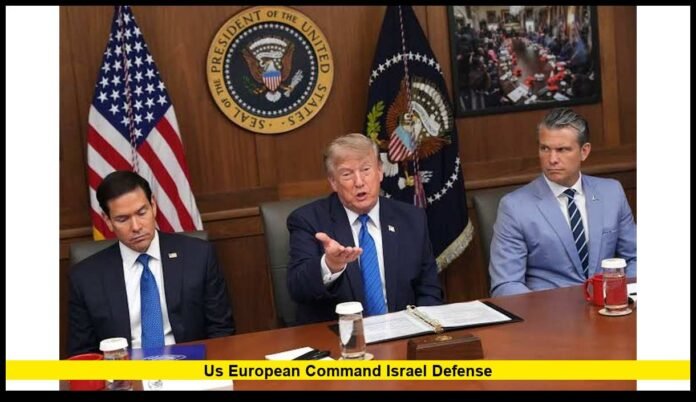

The US European Command Israel defense relationship continues to play an important role in America’s broader security strategy despite organizational changes that shifted Israel into the U.S. Central Command’s area of responsibility several years ago. As of August 2026, close military coordination between the United States and Israel remains focused on missile defense, intelligence sharing, naval operations, logistics, and regional stability. Ongoing security challenges across the Middle East have kept American and Israeli defense officials engaged in maintaining a strong defensive posture while ensuring that U.S. forces remain prepared for evolving threats.
The partnership has developed over decades and now includes advanced technology, joint exercises, integrated air defense planning, and extensive operational cooperation. While military priorities continue to evolve, protecting regional stability and strengthening deterrence remain central objectives for both countries.
Understanding the Role of U.S. European Command
The United States European Command, commonly known as USEUCOM, is one of the Department of Defense’s geographic combatant commands. Headquartered in Stuttgart, Germany, it oversees U.S. military operations across Europe while also coordinating activities in nearby strategic regions.
Although Israel officially became part of the U.S. Central Command’s area of responsibility in 2021, USEUCOM continues supporting many operations that involve the eastern Mediterranean. This continued involvement exists because naval deployments, logistics networks, intelligence capabilities, and European military partnerships often overlap with security missions involving Israel.
Military commands frequently cooperate across regional boundaries. Modern security challenges rarely remain limited to one geographic area, making coordination between different combatant commands increasingly important.
Why Israel Remains Strategically Important
Israel occupies one of the most significant strategic positions in the Middle East. Its location connects Europe, Asia, and Africa while sitting close to major international shipping routes and regional conflict zones.
For the United States, Israel remains one of its closest security partners. The relationship includes military cooperation, intelligence sharing, defense technology development, and joint planning for regional emergencies.
Several factors explain Israel’s strategic importance:
- Geographic access to the eastern Mediterranean
- Advanced military capabilities
- Extensive intelligence networks
- Strong air and missile defense systems
- Long-standing defense cooperation with the United States
- Shared security interests throughout the region
Because of these factors, military coordination continues regardless of changes in command structures.
How USEUCOM Continues Supporting Israel
Although Central Command now leads direct military coordination with Israel, USEUCOM still performs several important supporting functions.
These responsibilities include:
- Coordinating naval operations in the Mediterranean
- Supporting logistics and transportation
- Sharing intelligence with European allies
- Planning multinational military exercises
- Managing regional communications
- Coordinating with NATO partners when appropriate
These efforts ensure that military resources remain available whenever regional security conditions require rapid action.
Missile Defense Remains a Top Priority
Missile defense has become one of the most important aspects of U.S.-Israel military cooperation.
Modern missile threats vary significantly in speed, range, altitude, and guidance technology. Because of this, no single defense system can intercept every type of incoming weapon.
Instead, Israel relies on multiple defensive layers designed to address different threats.
Iron Dome
Iron Dome protects populated areas from short-range rockets and artillery attacks.
The system quickly detects incoming projectiles, calculates their likely impact point, and launches interceptors only when necessary.
This selective interception approach helps conserve valuable interceptor missiles.
David’s Sling
David’s Sling fills the gap between short-range and long-range missile defense.
It protects against:
- Medium-range ballistic missiles
- Cruise missiles
- Large rockets
- Certain aircraft threats
The system provides another defensive layer before longer-range systems become necessary.
Arrow Weapon System
The Arrow defense system focuses on long-range ballistic missile threats.
Arrow interceptors operate at high altitude and are designed to destroy incoming missiles before they reach populated areas.
This capability provides another critical layer within Israel’s integrated defense network.
Patriot Missile Batteries
Patriot systems continue supporting air defense by protecting military installations and other important locations against various aerial threats.
The Patriot system has undergone several upgrades over the years, improving radar performance, interception capability, and command systems.
American Military Support
The United States contributes significantly to Israel’s defensive capabilities through close military cooperation rather than direct operational control.
Support includes:
- Intelligence sharing
- Radar integration
- Early-warning systems
- Joint planning
- Military technology cooperation
- Weapons research
- Logistics coordination
- Training exercises
This cooperation strengthens both nations’ ability to respond quickly during periods of heightened tension.
Naval Forces Strengthen Regional Security
American naval forces operating in the Mediterranean continue playing an essential role in regional defense.
Destroyers equipped with the Aegis Combat System can perform several important missions simultaneously.
Their capabilities include:
- Ballistic missile defense
- Air defense
- Maritime surveillance
- Intelligence collection
- Protection of commercial shipping
- Fleet escort operations
Because these ships are highly mobile, commanders can reposition them quickly as regional conditions change.
Read More – Why Does Israel Want to Attack Iran? Understanding the Security Concerns and Rising Tensions
The Importance of the Eastern Mediterranean
The eastern Mediterranean remains one of the world’s most strategically significant waterways.
Its importance extends far beyond military operations.
The region supports:
- International shipping
- Energy transportation
- Commercial trade
- Naval access
- Humanitarian operations
- Regional diplomacy
Maintaining security in these waters benefits both military operations and the global economy.
Joint Military Exercises Improve Readiness
Military exercises represent one of the strongest parts of U.S.-Israel defense cooperation.
Training allows soldiers, sailors, airmen, and commanders to practice complex scenarios before actual emergencies occur.
Exercises commonly include:
- Missile interception drills
- Air defense coordination
- Search and rescue operations
- Cybersecurity scenarios
- Intelligence sharing
- Medical response
- Command and control procedures
These activities improve coordination while identifying opportunities to strengthen future operations.
Intelligence Sharing Supports Faster Decisions
Modern military operations depend heavily on timely intelligence.
The United States and Israel maintain close intelligence cooperation involving multiple organizations and technologies.
Information may include:
- Missile launches
- Drone activity
- Maritime movements
- Airspace monitoring
- Cyber threats
- Terrorist activity
- Regional military developments
Rapid information sharing allows leaders to make informed decisions before threats become more serious.
Technology Continues Changing Modern Defense
Military cooperation today involves far more than troops and equipment.
Advanced technology has transformed nearly every aspect of defense planning.
Areas receiving significant attention include:
Artificial Intelligence
Artificial intelligence assists military analysts by processing enormous amounts of information quickly.
These systems help identify unusual activity while improving response times.
Satellite Surveillance
Space-based systems provide continuous monitoring across large geographic areas.
Satellite imagery supports planning, intelligence gathering, navigation, and disaster response.
Cybersecurity
Protecting military computer networks remains a major priority.
Cyber defense helps safeguard communications, operational planning, and critical infrastructure.
Secure Communications
Modern military operations require encrypted communications that remain reliable even during challenging operational conditions.
Cooperation Between USEUCOM and CENTCOM
Israel’s transfer to Central Command did not eliminate cooperation with European Command.
Instead, responsibilities became more specialized.
Today:
- CENTCOM leads most operational coordination involving Israel.
- USEUCOM supports activities involving Europe and the Mediterranean.
- Intelligence organizations cooperate across both commands.
- Logistics networks remain interconnected.
- Military planning often includes both headquarters.
This structure allows greater flexibility when responding to regional developments.
Logistics Keep Military Operations Running
Military operations depend on extensive logistical support.
Behind every deployed aircraft, ship, or missile battery stands a complex transportation network.
Logistics include:
- Fuel supplies
- Ammunition
- Spare parts
- Medical equipment
- Food
- Transportation
- Communications equipment
- Maintenance support
Without effective logistics, even the most advanced military forces cannot sustain long-term operations.
European Allies Continue Supporting Regional Stability
European nations remain important security partners for the United States.
Many countries contribute through:
- Intelligence cooperation
- Air surveillance
- Maritime patrols
- Joint exercises
- Logistics support
- Cybersecurity cooperation
USEUCOM coordinates many of these multinational activities, helping improve interoperability among allied militaries.
Regional Challenges Continue Evolving
Military planners continue monitoring several security developments throughout the Middle East.
These include:
- Ballistic missile programs
- Drone technology
- Maritime security concerns
- Cyber operations
- Regional military modernization
- Protection of commercial shipping routes
Each issue requires continuous assessment as technologies and operational environments evolve.
Defense Research Strengthens Long-Term Security
The United States and Israel continue cooperating on advanced defense research.
Joint projects focus on improving future military capabilities through innovation.
Research areas include:
- Missile interception
- Radar technology
- Artificial intelligence
- Autonomous systems
- Electronic warfare
- Sensor integration
- Command software
- Air defense improvements
These investments help prepare both countries for future security challenges.
Maintaining Military Readiness
Readiness involves much more than maintaining military equipment.
It requires continuous investment in:
- Personnel training
- Equipment maintenance
- Intelligence analysis
- Leadership development
- Operational planning
- Communications
- Logistics
- Medical readiness
Military organizations regularly evaluate these areas to ensure forces remain prepared for unexpected situations.
Economic Importance of Regional Stability
Security in the eastern Mediterranean also affects international commerce.
Safe shipping routes support:
- Global trade
- Energy markets
- Commercial transportation
- Supply chains
- International investment
Military cooperation helps reduce security risks that could disrupt these important economic activities.
Looking Ahead
The partnership between the United States and Israel continues adapting to changing security conditions while maintaining its long-standing foundation.
Although organizational responsibilities have evolved over recent years, cooperation remains strong across intelligence, logistics, missile defense, military planning, and advanced technology.
USEUCOM continues supporting regional security through its coordination with European allies, Mediterranean operations, and logistical capabilities, while Central Command oversees Israel’s primary operational relationship within the Middle East.
Together, these organizations contribute to a broader security framework designed to strengthen deterrence, improve readiness, and support stability across one of the world’s most strategically important regions.
As regional security challenges continue changing, close cooperation between the United States and Israel is expected to remain an essential component of American defense policy and military planning.
What are your thoughts on the future of U.S.-Israel military cooperation? Share your opinion in the comments and stay tuned for more verified defense and security updates.