
The United States Congress serves as the lawmaking branch of the federal government and has been at the heart of American democracy since the Constitution took effect in 1789. Every major federal law, spending bill, and many of the nation’s most significant policy decisions pass through Congress before they can take effect. Whether the topic is healthcare, taxes, national defense, infrastructure, technology, or immigration, lawmakers in Washington play a critical role in shaping the country’s future.
The institution was designed to balance power, represent the interests of citizens from every state, and provide oversight of the executive branch. While political disagreements often dominate headlines, Congress performs thousands of responsibilities each year beyond partisan debates, including writing legislation, reviewing federal agencies, approving government funding, and responding to national emergencies.
For anyone trying to understand how the federal government operates, learning about Congress is an essential starting point.
The Origins of America’s Legislative Branch
When the U.S. Constitution was written in 1787, its framers wanted to avoid giving too much authority to a single individual or institution. Instead, they created three separate branches of government, each with specific responsibilities and the ability to limit the powers of the others.
Congress became the legislative branch, responsible for making laws rather than enforcing or interpreting them. This separation of powers remains one of the defining features of the American political system.
The first Congress met in New York City in 1789 before the federal government eventually moved to Washington, D.C. Since then, Congress has overseen the passage of thousands of laws affecting virtually every aspect of American life.
Its responsibilities have expanded alongside the nation’s growth, but its constitutional foundation has remained remarkably stable for more than two centuries.
Why Congress Has Two Chambers
Rather than creating a single legislative body, the Constitution established a bicameral system consisting of the Senate and the House of Representatives.
The arrangement was the result of compromise between larger and smaller states during the Constitutional Convention.
The House reflects population differences among states, ensuring that more populous states receive greater representation.
The Senate, meanwhile, gives every state equal representation regardless of size, allowing smaller states to have the same voting strength as larger ones in that chamber.
For most legislation to become law, both chambers must approve identical language before it is presented to the president.
This dual approval process encourages debate, negotiation, and careful review before federal laws are enacted.
The House of Representatives
The House currently includes 435 voting members distributed among the states according to population.
Representatives serve two-year terms, meaning every House seat is contested during each federal election cycle.
Because members seek reelection frequently, they often maintain close relationships with their districts and focus heavily on local concerns.
The House has several constitutional responsibilities that distinguish it from the Senate.
Among them are:
- Introducing revenue and tax legislation
- Beginning impeachment proceedings
- Electing the president under certain constitutional circumstances when no candidate secures an Electoral College majority
The Speaker of the House presides over chamber proceedings and serves as one of the most influential political leaders in the federal government.
Committee chairs, party leaders, and whips also play important roles in managing legislative business.
The Senate
The Senate consists of 100 members, with each state electing two senators.
Unlike representatives, senators serve six-year terms. Elections are staggered so that roughly one-third of Senate seats are contested every two years.
This system provides continuity while still allowing voters to influence the chamber regularly.
The Senate possesses several exclusive constitutional powers, including:
- Confirming Cabinet secretaries
- Confirming ambassadors
- Confirming federal judges
- Confirming Supreme Court nominees
- Ratifying international treaties
- Conducting impeachment trials
The Vice President of the United States serves as President of the Senate and casts a vote only when the chamber is evenly divided.
Day-to-day legislative leadership typically falls to the Senate Majority Leader, supported by party leadership from both sides of the aisle.
How Elections Shape Congress
Every member is elected directly by voters rather than appointed.
Representatives run within individual congressional districts, while senators compete in statewide elections.
Election outcomes determine not only who represents each state or district but also which political party controls committee leadership, legislative priorities, hearing schedules, and floor debates.
Changes in congressional control often influence the pace and direction of federal policymaking.
The Role of Political Parties
The Democratic Party and Republican Party remain the two dominant political organizations within Congress.
Party leadership coordinates legislative priorities, negotiates with the opposing party, assigns committee positions, and helps guide bills through the legislative process.
Although lawmakers generally vote alongside their parties on major issues, bipartisan cooperation remains common on many topics affecting national interests.
Veterans’ services, disaster relief, transportation projects, agricultural programs, and certain public safety initiatives often receive support from members across the political spectrum.
Committees Drive Most Legislative Work
Although televised floor debates receive considerable public attention, most legislative work occurs in congressional committees.
Committees specialize in specific policy areas, allowing lawmakers to develop expertise while reviewing complex proposals.
Major committees examine subjects such as:
- Defense
- Foreign affairs
- Agriculture
- Energy
- Commerce
- Transportation
- Education
- Homeland security
- Judiciary
- Finance
- Appropriations
Committee members conduct hearings, question experts, receive testimony from government officials, analyze proposed legislation, and recommend whether bills should move forward.
Some proposals undergo extensive revisions before reaching the House or Senate floor.
Others never leave committee at all.
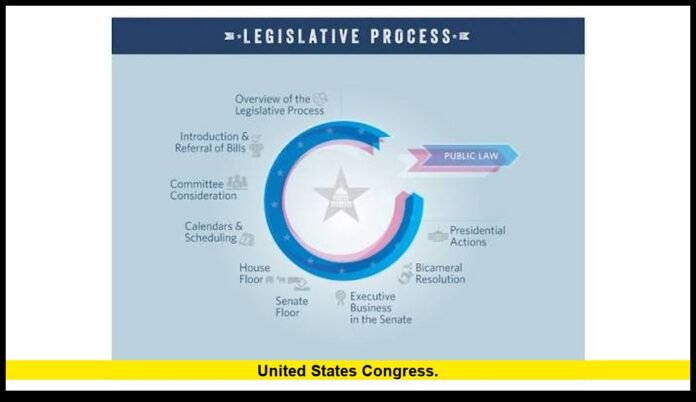
The Legislative Process
Passing federal legislation is intentionally difficult.
The Constitution requires multiple stages of review to ensure proposals receive careful examination.
Most bills follow a process that includes:
- Introduction by a member
- Committee referral
- Hearings and amendments
- Committee approval
- Debate before the full chamber
- Floor vote
- Review by the second chamber
- Reconciliation of differences
- Presidential action
The president may sign legislation into law or veto it.
Congress can override a veto with a two-thirds majority in both chambers, although such overrides are relatively uncommon.
Because both chambers must agree on identical legislative language, negotiations frequently continue until compromise is reached.
Oversight Responsibilities
Congress performs much more than legislative duties.
One of its most important constitutional responsibilities is overseeing the executive branch.
Oversight activities help ensure federal agencies administer laws as Congress intended.
Members regularly examine:
- Federal spending
- Agency performance
- Regulatory actions
- National security programs
- Emergency responses
- Government contracts
- Public administration
Committees frequently summon Cabinet officials, military leaders, agency directors, economists, and outside experts to testify during public hearings.
These proceedings often receive national attention when they involve significant policy disputes or government investigations.
Federal Spending Authority
Congress controls federal spending through the appropriations process.
Each year lawmakers debate funding levels for agencies and programs throughout the federal government.
Appropriations legislation determines funding for:
- Defense
- Veterans’ benefits
- Transportation
- Scientific research
- Education
- Healthcare
- Homeland security
- Infrastructure
- Agriculture
- Environmental programs
Budget negotiations frequently become some of the most closely watched events in Washington because they directly affect government operations.
When spending legislation is delayed, lawmakers sometimes pass temporary funding measures while negotiations continue.
National Security and Foreign Policy
Although the president directs much of America’s foreign policy, Congress maintains substantial constitutional authority in this area.
Lawmakers review military funding, authorize defense programs, oversee intelligence activities, and debate international security matters.
The Senate also reviews treaties negotiated by the executive branch before they can receive constitutional approval.
These responsibilities ensure legislative participation in many of the nation’s most important national security decisions.
Public Interest and Congressional Activity
Congress attracts significant public attention because its decisions influence nearly every American household.
Legislation debated each year often addresses issues including:
- Tax policy
- Healthcare access
- Prescription drug costs
- Artificial intelligence
- Data privacy
- Border security
- Immigration
- Consumer protections
- Education
- Energy development
- Economic growth
- Workforce development
Businesses, state governments, nonprofit organizations, and individual citizens closely monitor congressional activity because federal legislation can reshape regulations, markets, and public services.
Current Priorities
Congress continues working on several major legislative priorities during the current session.
Among the issues receiving considerable attention are government funding, defense policy, tax legislation, border security, artificial intelligence regulation, cybersecurity, healthcare affordability, energy production, and long-term fiscal planning.
Many proposals remain under committee consideration or negotiation between both chambers.
Legislation does not become federal law until it successfully completes the constitutional process, meaning numerous proposals discussed publicly may still undergo significant revisions before final action.
When negotiations continue, no final outcome should be assumed until official votes have been completed.
Transparency in the Legislative Process
One of Congress’s defining characteristics is its public accessibility.
Committee hearings, debates, recorded votes, reports, and legislative calendars are generally available to citizens.
This transparency allows voters to evaluate the work of their elected officials and better understand how federal laws are developed.
Public participation also plays an important role.
Constituents regularly contact members regarding pending legislation, attend town halls, submit testimony during hearings, and communicate concerns affecting their communities.
These interactions help lawmakers understand the priorities of the people they represent.
Challenges Facing Modern Lawmakers
Today’s Congress addresses issues that previous generations could scarcely imagine.
Rapid advances in artificial intelligence, cybersecurity threats, digital privacy concerns, global economic competition, energy transitions, and evolving national security risks require lawmakers to balance innovation with effective regulation.
At the same time, Congress must continue addressing longstanding priorities such as infrastructure, healthcare costs, Social Security, Medicare, veterans’ services, education funding, and disaster preparedness.
Successfully navigating these issues often requires months of committee work, negotiations, bipartisan discussions, and public debate.
While disagreements are inevitable in a representative democracy, the legislative process was intentionally designed to encourage deliberation before major national decisions are made.
Why Congress Continues to Shape the Nation
Few institutions have a broader influence on American life than Congress.
Its decisions determine federal spending priorities, establish national policies, oversee government agencies, approve key appointments, and create laws that affect businesses, families, workers, students, and communities across the country.
Although political headlines often focus on partisan conflict, Congress also performs countless routine responsibilities that keep the federal government functioning. Committee work, oversight, constituent services, appropriations, and bipartisan negotiations form the foundation of its daily operations.
As the United States continues facing new economic, technological, and geopolitical challenges, Congress will remain central to the nation’s policymaking process. Its constitutional role, legislative authority, and oversight responsibilities ensure that it continues to influence the direction of the country for generations to come.
Follow the latest developments in Washington and share your perspective in the comments as Congress continues shaping the policies that affect Americans every day.