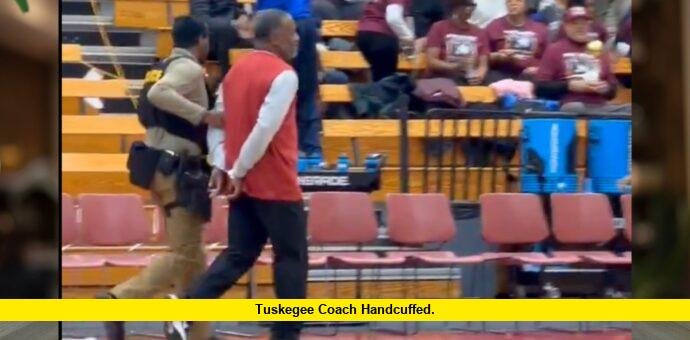

In a moment that stunned players, fans, and the broader college basketball community, tuskegee coach handcuffed following a tense postgame incident at an HBCU rivalry matchup on Saturday, January 31, 2026. The incident unfolded moments after the final buzzer at Morehouse College, when Tuskegee University men’s basketball head coach Benjy Taylor was briefly restrained by a law enforcement officer during the traditional postgame handshake line. What should have been a routine conclusion to a conference game quickly turned into a national talking point about safety, authority, and event management in college sports.
The incident occurred after Tuskegee fell 77–69 in a Southern Intercollegiate Athletic Conference contest. As both teams lined up for postgame acknowledgments, tensions escalated on the court, drawing the attention of security and officials stationed nearby.
Stay with us as we break down what happened, how the university and coach responded, and why this moment is resonating far beyond one basketball game.
What Happened After the Final Buzzer
According to multiple eyewitness accounts and video footage circulating publicly, the situation developed during the handshake line. Individuals who were not part of the basketball teams, including members of the host school’s football program, entered the court area alongside players.
Coach Taylor appeared visibly concerned about the growing crowd and the potential for conflict. He moved toward a law enforcement officer positioned courtside, seeking assistance to manage what he believed was an unsafe situation for his players and staff. The exchange between the coach and the officer escalated quickly.
Within moments, the officer placed handcuffs on Coach Taylor and escorted him away from the court and into a nearby hallway. The scene unfolded in full view of players, spectators, and cameras, creating a wave of shock throughout the gym.
No Arrest and No Charges
Despite the dramatic nature of the incident, Coach Taylor was not arrested and did not face any criminal charges. The handcuffs were removed shortly after, and he later rejoined his team before traveling back with them that same evening.
While the legal outcome was brief, the emotional and symbolic impact of seeing a college coach restrained on the court has proven far more lasting. The moment quickly spread across social media platforms, igniting widespread discussion and reaction.
Coach Taylor’s Response
In the hours following the game, Coach Taylor addressed the incident, expressing deep frustration and disappointment over how the situation was handled. He emphasized that his actions were driven by concern for the safety and well-being of his student-athletes during a chaotic postgame environment.
He also noted the emotional toll of being restrained in front of his players, many of whom look to him not just as a coach but as a mentor and leader. Taylor described the experience as one he never expected to face while performing his professional duties.
His comments resonated with many in the college sports world who viewed the incident as an overreaction in a setting that called for de-escalation rather than force.
Legal Representation and Next Steps
Following the incident, Coach Taylor retained civil rights legal counsel to review the circumstances surrounding his treatment. His legal team is examining whether proper procedures were followed and whether his rights were violated during the encounter.
The decision to pursue legal review has added another layer to the unfolding situation, shifting attention toward broader issues of authority, accountability, and how law enforcement interacts with coaches and staff at collegiate sporting events.
Tuskegee University Stands Firmly Behind Its Coach
Tuskegee University released a statement expressing full support for Coach Taylor. University leadership praised his commitment to his players and emphasized that his actions were consistent with his role as a head coach responsible for student safety.
The university also acknowledged concerns about postgame security management and indicated that it would work with conference partners to ensure clearer protocols and safer environments moving forward. Administrators stressed the importance of preventing similar incidents and maintaining respect and professionalism at all athletic events.
Reaction Across College Sports
The response from fans, former athletes, and commentators has been swift and divided, though a significant portion has voiced support for Coach Taylor. Many have questioned why a situation involving a coach requesting assistance escalated to physical restraint.
Others have pointed to the intensity of rivalry games and the need for strict control of who is allowed on the playing surface during and after contests. The incident has become a flashpoint in ongoing discussions about crowd control, authority, and communication during emotionally charged sporting events.
Broader Implications for HBCU Athletics
Beyond one game and one coach, the situation has sparked deeper reflection across HBCU athletics. These programs often carry rich traditions, passionate rivalries, and strong community ties, all of which can heighten emotions on game day.
The incident has prompted renewed calls for consistent security training, clearer postgame procedures, and improved coordination between athletic departments and law enforcement. Many believe these steps are essential to protect players, coaches, and fans while preserving the spirit of competition.
What Comes Next
As legal reviews continue and conference officials evaluate event protocols, attention remains focused on ensuring that college athletic environments remain safe, respectful, and well-managed. Tuskegee University has indicated it will advocate for changes aimed at preventing similar confrontations in the future.
The moment when the tuskegee coach handcuffed after a basketball game will likely remain a defining image in discussions about sports, authority, and responsibility for years to come.
What are your thoughts on this incident and how postgame situations should be handled? Join the conversation and stay connected as developments continue.