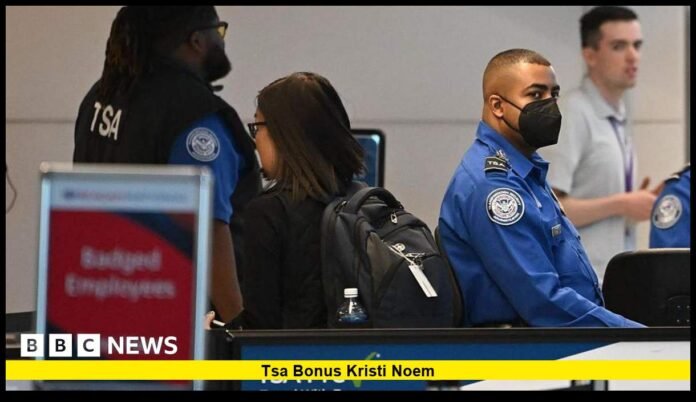

The announcement of the TSA bonus Kristi Noem delivered in mid-November has become one of the most discussed federal workforce developments of the year. Within the first 20 words of this article, the phrase stands out because it marks a significant moment for Transportation Security Administration employees who worked through the recent 43-day government shutdown. The decision to award $10,000 bonuses to certain TSA officers follows weeks of national disruption, heavy workloads, and intense scrutiny over how federal agencies would respond once operations resumed.
This article provides a detailed, factual, and current overview of what the bonuses are, who qualifies, how the program is being implemented, how TSA officers have reacted, and what this means for travelers, airports, and the broader federal workforce. All information reflects the most up-to-date developments as of today.
Background: Why TSA Officers Were Awarded Bonuses
The United States recently experienced a prolonged 43-day government shutdown, the longest in American history. During the shutdown, tens of thousands of federal workers—including TSA officers—were required to report to duty without pay. Essential airport security operations continued, but morale rapidly deteriorated as workers struggled to cover basic living costs while simultaneously managing heavier-than-usual workloads.
The shutdown caused widespread effects on air travel:
- Staffing shortages led to longer security lines.
- Some airports reported higher worker call-outs.
- Security lane closures occurred at peak travel times.
- Travelers experienced multiple delays, cancellations, and operational slowdowns.
Despite these challenges, many TSA officers continued to show up daily, accept extended shifts, and support colleagues who were unable to work due to financial strain. Once the shutdown ended and DHS operations restarted, the agency reviewed how employees performed during the crisis. That process led to the announcement that qualifying TSA personnel would receive $10,000 bonuses for what was described as “exceptional service” during the shutdown period.
What the $10,000 TSA Bonuses Include
The newly introduced bonus structure is one of the most substantial one-time awards TSA officers have ever received. Below is a clear breakdown of the program:
• Bonus Amount
Each qualifying Transportation Security Officer (TSO) will receive a $10,000 payment. This is a flat amount rather than a percentage-based award. It applies equally to full-time officers who meet the criteria.
• Eligibility Criteria
While the agency has not provided hyper-detailed numerical scoring, officials explained several core factors used to determine eligibility:
- Officers who consistently reported to work throughout the 43-day shutdown.
- Officers who volunteered for additional shifts or unusual duty assignments.
- Officers who supported understaffed teams or assisted with airport disruptions.
- Officers who maintained strong performance evaluations during the shutdown period.
Importantly, the department clarified that “perfect attendance” was not the sole measure. Instead, supervisors evaluated employees based on overall contribution, dedication, and commitment to mission continuity.
• Funding
The payments are being issued using carryover funds from the federal fiscal year that ended shortly before the shutdown began. This means the bonuses did not require new congressional authorization.
• Timing and Distribution
DHS leadership officially kicked off the program with bonus presentations at a major international airport earlier this month. Dozens of TSA officers received physical checks during the event, while others will receive electronic disbursements in the coming weeks as payroll processing completes.
How Many TSA Officers Will Receive the Bonus?
Although TSA employs roughly 50,000 officers nationwide, officials have not released the exact number of recipients. Because eligibility depends on shutdown-period performance, only a portion of the total workforce is expected to receive the award.
Several factors influence how many officers will ultimately qualify:
- Staffing levels across different airports.
- How heavily individual locations were affected by call-outs.
- The extent of extra hours or assignments worked by officers.
- Operational needs during the shutdown.
Given the significant financial commitment, analysts expect that the program will be targeted rather than universal. The exact size of the group will likely become clear only after all payments have been processed.
Why This Bonus Matters for TSA Employees
For TSA officers, the 43-day shutdown was financially and emotionally exhausting. Many workers faced:
- Missed paychecks
- Delayed rent or mortgage payments
- Increased childcare challenges
- Commuting expenses they struggled to cover
- Emotional burnout and heightened workplace stress
The $10,000 bonus serves multiple purposes:
- Financial Recovery: It helps officers recoup losses suffered during the shutdown.
- Morale Boost: It signals official recognition of the hard work employees put in.
- Retention Incentive: TSA has historically faced high turnover rates; bonuses help encourage continuity.
- Reinforcement of Mission Value: Officers who stayed on the job during the shutdown kept national security operations functioning during a critical period.
For many, the bonus feels like long-overdue recognition of the essential role TSA plays in protecting U.S. airports and passengers.
Impact on Travelers and Airport Operations
A highly motivated TSA workforce benefits travelers in many ways. The bonus program aims to stabilize the system after an exceptionally turbulent period.
Stronger Staffing Reliability
The shutdown exposed how fragile airport security operations can become when frontline federal workers face financial uncertainty. By issuing bonuses, DHS intends to:
- Strengthen officer retention.
- Reduce scheduling instability.
- Encourage long-term commitment from experienced staff.
Improved Passenger Experience
Travelers commonly express frustration with long lines and inconsistent wait times. TSA leadership believes morale improvements and a more stable workforce will:
- Shorten security lanes.
- Reduce unexpected lane closures.
- Improve screening efficiency.
- Strengthen customer service interactions.
National Security Benefits
Airports remain high-priority national security environments. When officers feel supported and recognized, the agency’s readiness increases. Bonuses serve as a signal that DHS intends to prioritize operational strength moving forward.
Reactions From TSA Officers and the Public
The reaction among TSA officers has been overwhelmingly positive. Many employees expressed relief, gratitude, and optimism for future workforce recognition. Supervisors at multiple airports noted visible morale improvements since the announcement.
Public reaction has been mixed but generally supportive. Travelers who experienced severe delays during the shutdown say that workers who kept the system functioning under financial strain deserve recognition. Some citizens have raised questions about budget impact and federal spending priorities, but others argue that frontline employees earned every cent.
Why the Program Carries Broader Workforce Significance
The TSA bonus Kristi Noem announcement could shape federal workforce policy in several ways:
1. A Potential Precedent for Future Shutdowns
While shutdowns are always unpredictable, the bonus program may set a standard for how frontline federal employees are recognized if future disruptions occur.
2. A Shift in Federal Workforce Culture
For years, many TSA officers have pushed for higher pay, better benefits, and stronger union protections. Large bonuses could influence future negotiations and compensation structures across DHS.
3. A Message to All Federal Agencies
Other agencies affected by the shutdown—including border security, federal law enforcement, and administrative staff—are watching closely. The move could inspire similar recognition programs elsewhere.
4. Implications for Budget Planning
Using carryover funds avoids immediate budget strain, but repeated or expanded programs in the future would require long-term financial planning.
Timeline of Events
• Day 1–10 of Shutdown:
TSA reports rising call-outs as the first missed paycheck approaches.
• Day 11–25:
Major airports experience long lines and intermittent lane closures. Officers begin working extended shifts.
• Day 26–40:
Morale reaches critical lows. Travelers report significant delays nationwide.
• Day 43:
Shutdown ends and DHS leadership begins a multi-week review of TSA operations.
• After Shutdown Ends:
DHS determines eligibility criteria and allocates funding for the bonus program.
• Mid-November:
The official announcement is made public. First wave of officers receives their checks.
Lingering Questions About the Program
Although much is known, several points remain unclear:
How will eligibility disputes be handled?
Workers who believe they were overlooked may pursue internal reviews.
Will similar bonuses be extended to other DHS agencies?
As of now, no broader program exists, but the possibility remains open.
Will TSA implement more permanent pay increases?
Officers have long advocated for structural pay reform. This bonus does not replace those discussions.
Could this bonus influence TSA recruitment campaigns?
The agency has struggled to recruit younger workers. Recognition programs may help.
Long-Term Impact on the Travel Industry
The travel sector depends heavily on reliable airport security operations. Acknowledging and compensating TSA officers has broader implications for airlines, airports, and tourism.
Airlines Benefit From Stability
Fewer delays and more predictable lines reduce both costs and customer frustration.
Airports Depend on Efficient Screening
When TSA staff shortages occur, airport operations slow down dramatically. Bonuses help reinforce the workforce.
Travel Confidence Increases
Passengers feel more secure when the TSA workforce is stable, motivated, and fully staffed.
Closing Thoughts
The TSA bonus Kristi Noem announced marks one of the most significant acknowledgments of TSA workforce dedication in recent years. It recognizes the extraordinary sacrifices officers made during the historic 43-day shutdown and reinforces the critical role they play in national security and travel infrastructure. As the bonuses continue to roll out, the nation will watch closely to see how the program shapes morale, performance, and future federal workforce policies.
If you have thoughts on the bonus program or your own experience traveling during the shutdown, feel free to share your perspective below.