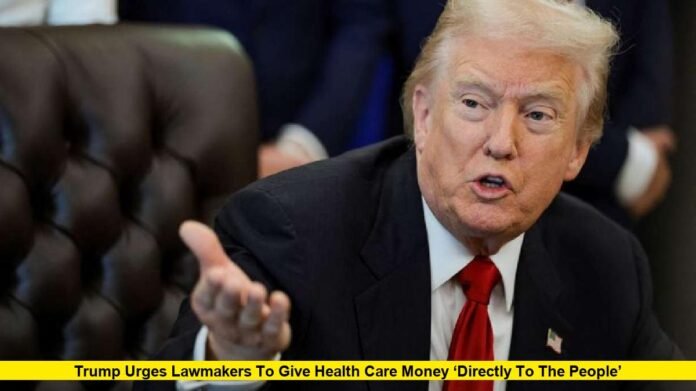

Trump urges lawmakers to give health care money ‘directly to the people’, marking one of the most direct challenges yet to the current structure of federal health-care funding. His call triggered nationwide discussion as leaders in Washington debate how to handle ongoing subsidy commitments, rising insurance costs, and the broader future of the health-care system. The message landed at a pivotal moment, and its impact continues to shape political and policy conversations across the country.
A Clear Push for a Different Direction
Trump’s demand focuses on a single core idea: instead of distributing federal funds through large insurance companies, the government should place that money into the hands of Americans themselves. His argument centers on the belief that individuals can make better choices when they have direct control of their health-care dollars. The proposal also takes aim at what he describes as excessive influence and profit among major insurance providers.
The timing of this call is important. Lawmakers are currently discussing whether to extend or modify existing subsidies that help millions afford coverage. As those talks continue, Trump’s message highlights frustrations with the current model and introduces a more consumer-driven alternative. By urging a direct transfer of funds, he is pushing leaders to rethink how government dollars are used in one of the nation’s most vital sectors.
Why the Call Is Resonating Nationally
The idea came forward as many families face rising premiums, even with subsidy support. The cost of coverage remains a top concern across the United States, and frustrations about affordability have intensified the policy debate. Trump’s message taps into that concern by suggesting that the current system is too complex and too dependent on companies that operate between consumers and the government.
Several factors are fueling attention around this proposal:
- Millions rely on federal subsidies to pay for insurance.
- Premiums and deductibles remain high for many households.
- The structure of the current marketplace can feel restrictive.
- Political divides over long-term health-care reform remain deep.
These conditions have created an environment where an alternative approach—one that reduces the role of intermediaries—has gained fresh interest.
How Direct Funding Could Function
The concept itself is simple, though transforming it into a functioning national program would require substantial change. In Trump’s vision, funds that are currently sent to insurers would instead be redirected to individuals. Americans would then use that money to purchase health services, select private plans, or manage coverage based on personal needs.
The mechanics could include:
- Monthly payments directed to individual accounts
- Credits used to purchase coverage outside traditional exchanges
- Flexible tools that allow Americans to combine funds with employer plans or private options
Such a model could shift decision-making power from insurers and government marketplace structures to consumers. It also introduces the potential for expanded plan options, more variation in cost structures, and greater competition among providers.
However, this type of shift would require lawmakers to establish clear rules, timelines, and safeguards. Without structure, a sudden transition away from the current subsidy model could leave many unsure of how to navigate changes or maintain existing coverage.
Supporters’ Arguments in Favor of the Shift
Those aligned with Trump’s message see several potential benefits. They argue that direct payments:
- Give consumers more autonomy
- Reduce dependence on large insurance entities
- Encourage competition that could lower costs
- Allow families to tailor coverage to their needs
- Streamline federal spending by limiting administrative layers
Supporters often describe the idea as more efficient and more responsive to real-world needs. They believe that Americans can make better choices when they control their own health-care dollars.
In addition, the idea appeals to people who feel that marketplace plans are limited or overpriced. By placing funds directly into the hands of individuals, the system could encourage new plan options and improved service among providers competing for customers.
Concerns and Obstacles That Still Need Resolution
Even with strong enthusiasm from some corners, the proposal raises significant questions. Major structural changes require extensive planning, and critics warn that a rapid shift could create instability.
Issues that require clarity include:
- How current enrollees would move from one system to another
- How states would adjust regulatory frameworks
- How insurers would respond to a loss of direct federal revenue
- How low-income families would be protected from cost spikes
- How federal agencies would administer a new distribution model
Many also express concerns about continuity of coverage. The existing marketplace supports millions of Americans, and any new system must ensure that they retain access to care throughout a transition.
The Political Landscape Around This Proposal
Trump’s message entered an already tense political environment. Leaders across the country are debating long-term health-care policy, and discussions about subsidies remain central to those talks.
Among Republicans, the call has found strong support from lawmakers who favor smaller government involvement in insurance markets. They welcome a model that places more power with consumers and reduces dependence on federal marketplace structures.
Democrats, on the other hand, have cautioned against major changes without clear protections in place. They emphasize the importance of stable, affordable coverage and worry that a shift away from established systems could result in lost benefits or coverage gaps.
Because health care remains one of the most sensitive issues in national politics, the proposal has already become a focal point in broader budget and policy negotiations. As leaders attempt to balance cost concerns and public demand for reliability, Trump’s call continues to shape the direction of the conversation.
How Americans Could Be Affected
If implemented, the proposal would directly influence how individuals interact with the health-care system. The impact would extend beyond the marketplace and into everyday decision-making.
Potential benefits include:
- More control: Individuals would decide how to allocate health-care funds.
- Broader options: Coverage choices may expand beyond traditional marketplace plans.
- Simplified systems: Families may find it easier to manage costs when funds come directly to them.
At the same time, risks include:
- Uncertain pricing: Insurers may adjust premiums or restructure offerings.
- Transition confusion: Millions could struggle to understand new rules.
- Coverage gaps: Some may lose continuity if they cannot navigate the shift quickly.
Because of these potential changes, lawmakers face pressure to plan carefully and communicate clearly, ensuring that Americans do not face sudden or avoidable disruptions.
A Policy Idea That Could Reshape the System
The proposal marks a major departure from longstanding U.S. health-care policy. For decades, federal funds have flowed through insurers, not individuals. A shift toward direct payments would rewrite that structure and alter the relationship between consumers, providers, and government agencies.
As discussions continue, the debate now centers on a fundamental question: Should federal health-care dollars support insurer-based structures, or should they support individuals directly?
The answer will shape future legislation, influence market behavior, and determine how millions of Americans access coverage.
Looking Ahead
Lawmakers will soon decide whether to extend current subsidies, redesign them, or introduce a new funding model that aligns with Trump’s call. The outcome of these discussions will have a lasting impact on affordability, access, and the long-term direction of the U.S. health-care system.
Trump’s message has intensified the urgency of these conversations. As pressure builds on Congress to address rising health-care costs, the idea of sending funds directly to Americans has become a central part of national debate.
The coming months will reveal whether the proposal gains traction, evolves into legislation, or influences compromises within broader reform efforts.
As this debate unfolds, we invite you to share your thoughts on how this shift could affect your family, your coverage, and the future of health care in America.